Blog Directory CineVerse

Why "Mockingbird" still matters

Wednesday, December 21, 2022

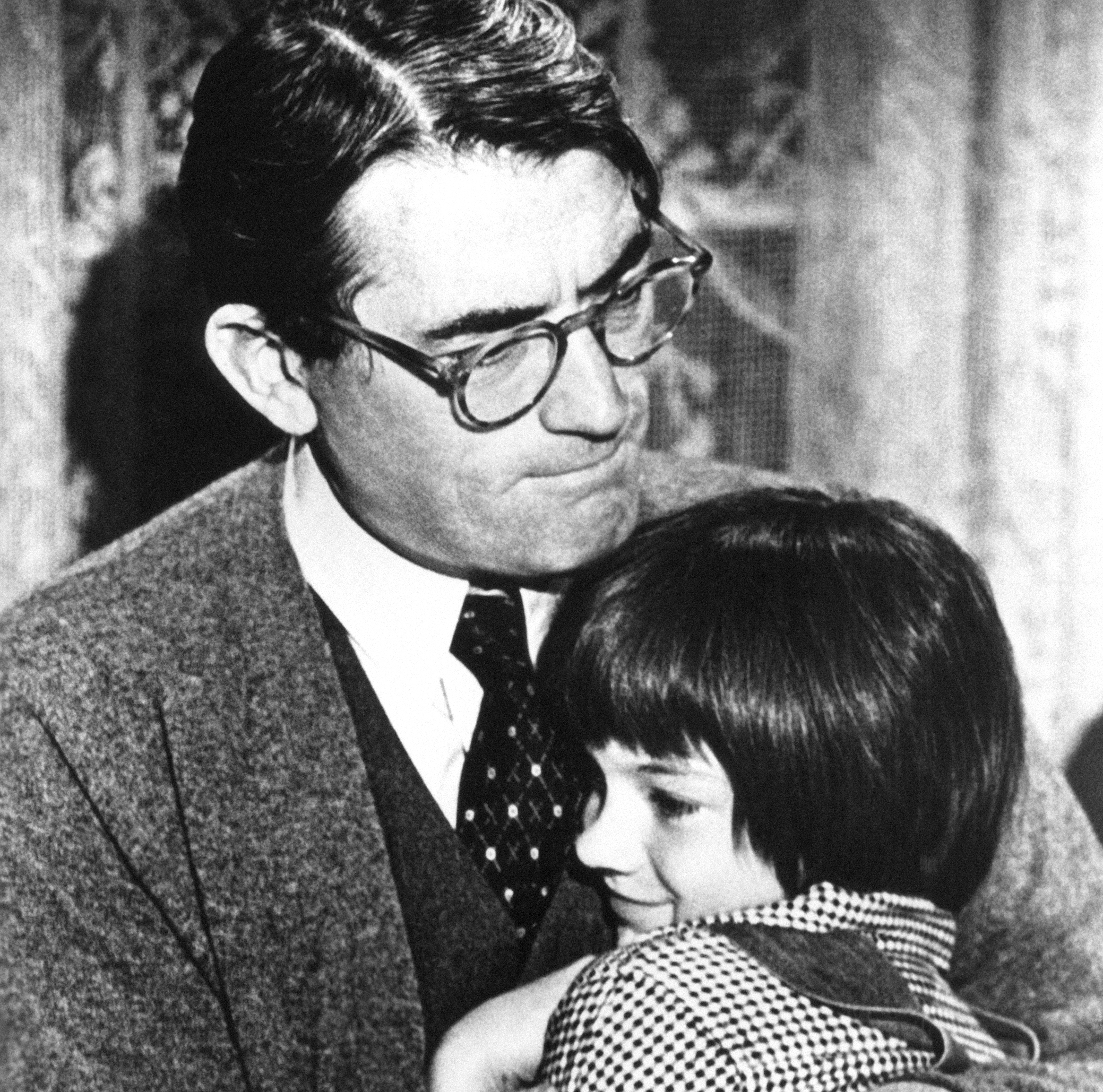
Last week, our CineVerse film discussion group gave its verdict on To Kill a Mockingbird, which marks a 60th anniversary this month. Spoiler: The group loved it. For proof, read a summary of our major talking points gathered below and lend an ear to a recording of our group discussion (available here; note that the current episode of the Cineversary podcast, found here, also honors this film on its 60th birthday).

Has this picture stood the test of time? Why is it worth honoring 60 years after its release, and why and how does To Kill a Mockingbird still matter?

  • It’s one of the best films about serious adult matters ever told and shown from a child’s perspective, thanks to director Robert Mulligan adhering closely to the book by consistently presenting Scout and Jem’s point of view and keeping the camera at relatively low angles, often looking up and in awe of adults.
  • Likewise, the performances are among the finest and most believable of any child actors ever cast in a Hollywood film. Mary Badham as Scout (nine years old at the time), John Megna as Dill (also nine), and Philip Alford as Jem (around age 13) are each excellent in their roles. Interestingly, despite their fine acting, Badham and Alford didn’t parlay these performances into a long-running acting career.
  • It feels relevant and important today because more Americans in the 21st century have increasingly come to reckon with our nation’s shortcomings about racial relations and our problematic history of racial inequality. While Mockingbird has some elements modern audiences may consider troubling, including the concept of an impossibly perfect white savior and the fact that the black characters largely remain on the periphery, this is a morality tale that debatably hasn’t lost any of its power to remind viewers how challenging life proved for African-Americans at this time in history, and how truly segregated our country was.
  • To Kill a Mockingbird also persists as one of the finest and most faithful translations of a beloved and widely read novel ever made. Consider how often movie adaptations of books fail to live up to readers’ expectations or do justice to the quality of the source material. This is a rare but prime example of a film that could be equal to the book it is based on. Original authors are often dissatisfied with big-screen versions of their work, but Harper Lee expressed her delight with the finished film product.
  • Additionally, the opening title sequence is distinctive and different for an early 1960s film, showcasing close-up views of childhood objects, including crayons, jacks, coins, and figurines as well as quick sketches and colorings made by the hands of a youngster. Immediately, we are immersed in the imaginative world of a child, which sets the tone and the narrative expectations right from the start.
  • Lastly, the bygone milieu recreated, that of a small town in 1930s era Alabama, looks and feels authentic, thanks to the fine attention to detail in the areas of architecture, costumes, and visual elements emblematic of the Great Depression coupled with the crisp black-and-white canvas rendered expertly by cinematographer Russell Harlan.

What influence did this movie had on the cinema or filmmakers who may have been inspired by it?

  • The film version of Mockingbird was released at a time of strong racial tensions and before the passage of civil rights legislation. Although predecessors like The Jackie Robinson Story, and No Way Out in 1950, The Defiant Ones in 1958, and All the Young Men, and Sergeant Rutledge in 1960 tackled themes of racism, inequality, and segregation before Mockingbird’s release in 1962, the latter film proved especially controversial and eye-opening because it wasn’t afraid to revisit a time of rampant prejudice, discrimination, and violence in the American South and suggest highly sensitive concepts like falsely accusing a black man of attempting to rape a white woman.
    • Per film critic James Berardinelli: “The early '60s were a powder keg, with acts of bigotry and racial hatred peppering the evening news as the Civil Rights movement gained momentum. For a film as clear-eyed and unflinching as this one to arrive in theaters during such a turbulent period is nothing short of astounding. To Kill a Mockingbird confronts prejudice head-on, and illustrates that justice is not always color-blind. This is one instance when right does not triumph, and everyone in the audience is aware of it.”
  • While it’s difficult to definitively track the influence of Mockingbird on subsequent films, it likely made it easier for later movies to explore similar uncomfortable topics that were overdue for cinematic treatment. In the immediate years following this film, for example, we saw the release of several similar social message movies, many groundbreaking, such as Free, White, and 21, and Gone Are the Days! from 1963; Black Like Me, and Nothing But a Man in 1964; A Patch of Blue in 1965; and In the Heat of the Night, and Guess Who’s Coming to Dinner in 1967.
  • Films directly inspired by Mockingbird include Broken (2013) and Just Mercy (2019).

Regarding Gregory Peck’s performance as Atticus Finch, is this possibly the most perfect example of a role a Hollywood actor was born to play?

  • A major reason Mockingbird has remained evergreen is the exemplary portrayal by Gregory Peck. This is a textbook example of an actor born to play a role. The dignity, intelligence, grace, quiet strength, and restraint Peck imbues this part with help explain why he was a shoo-in to win the Academy award for best actor for his performance of Atticus Finch.
  • Harper Lee said: “That film was a work of art, and there isn’t anyone else who could play the part.” And Peck remarked in an interview: “I felt I could climb into Atticus’s shoes without any playacting, that I could be him.”
  • What has helped make this character so popular and indelible is that Atticus doesn’t pontificate, speechify, or come across in the least as self-righteous or superior, even though he is assumedly better educated, more articulate, and intrinsically smarter than just about any other character in the story. He’s also extremely likable because he isn’t an authoritarian patriarch, an overconfident or egotistical lawyer, or an easily flustered/overly emotional man. He demonstrates extreme patience and flexibility with his kids, the ability to turn the other cheek when insulted or challenged, and admirable humility among those who look up to him.
  • Peck’s look, voice, and mannerisms are also impressive. The thespian was blessed with a strong chin that projects confidence, penetrating eyes that ferret out the truth, a deep, resonant voice that commands respect, and imposing stature (Peck was 6’3”) that gave him symbolic hierarchy over adjacent performers. And he was long considered one of the most handsome actors in Hollywood history.

What significant messages or themes from Mockingbird are worth examining?

  • The value of empathy. Atticus tells Scout: “You never really understand a person until you consider things from his point of view . . . until you climb into his skin and walk around in it.” The central message at the core of Mockingbird is that it’s important not to prematurely judge or condemn others – whether that means Tom Robinson, Boo Radley, or Scout’s schoolmate. By looking at matters from the other person’s perspective, especially those considered inferior by or outcast from society, we can avoid succumbing to mob mentality, groupthink, or rash actions.
  • Giving voice to the voiceless. Atticus is Tom Robinson’s defense attorney, but he also stands as an unofficial spokesperson of sorts for the African-American townspeople who are relegated to the upper gallery of the courthouse and discouraged from speaking out or objecting to their treatment by whites in this community. Likewise, Boo Radley utters no words, but Atticus, the sheriff, and Scout speak for him and come to his defense.
  • Coming of age and loss of innocence. This tale is primarily told from the point of view of Scout and Jem, two younger children who are taught strong values by their father and learn hard truths about life and flawed humanity over the course of about a year and a half. We see Scout begin her life as a school student, and she is quickly taught that empathy is the antidote to violence. Scout and Jem also discover how ugly and toxic racism is and how dangerous and evil some grownups can be. And all of the myths and legends they perpetuated about Boo Radley disappear once they learn how selfless, kind, protective, and misunderstood Radley truly is.
    • The kids come to realize that human beings are capable of both good and evil, that bias, hate, and lies can easily destroy the innocent, and that society has an often unfair pecking order that elevates some above others.
    • This loss of innocence theme is also tied to Atticus’ memorable words about how it’s a sin to kill a mockingbird, with the bird in this context signifying innocent characters in the narrative like Tom Robinson and Boo Radley who don’t deserve to be silenced or die.
    • Recall, too, how Atticus tells Jem: "There’s a lot of ugly things in this world, son. I wish I could keep ‘em all away from you. That’s never possible." His children are beginning to understand the cruel and callous nature of some human beings, further proof of this transition away from the purity and simplicity of young childhood.
  • True leadership, as well as survivability, requires grace under pressure and a steady aim. Atticus’ hidden sharpshooting prowess, revealed when he kills the mad dog that endangers his family, is representative of his aptitude for zeroing in on and hitting a target, whether that be a literal or figurative target.
    • This act also symbolizes how Atticus wants to nullify an encroaching threat to his children and his town: literally, it’s a rabid canine, but figuratively the animals serves as foreshadowing for an even deadlier and more infectious evil—mob mentality driven by racism.

Despite the film’s widespread popularity and positive reviews, why have some have pointedly criticized the work as dated and racially problematic?

  • In his 2001 review, Roger Ebert wrote: ‘To Kill a Mockingbird,’ set in Maycomb, Alabama, in 1932, uses the realities of its time only as a backdrop for the portrait of a brave white liberal… It expresses the liberal pieties of a more innocent time, the early 1960s, and it goes very easy on the realities of small-town Alabama in the 1930s.” He adds that, during the sequence where Atticus drives out to inform Tom’s wife of her husband’s death, “The black people in this scene are not treated as characters, but as props, and kept entirely in long shot. The close-ups are reserved for the white hero and villain.”
  • Village Voice critic Andrew Sarris wrote in his 1963 review: “As usual, the Negro is less a rounded character than a Liberal construct, a projection of the moral superiority Negroes supposedly attain through their suffering and degradation…Brock Peters tries hard to break through the layers of moral whitewash, but he is finally smothered by Peck’s unctuous nobility.”
  • On the other hand, DVD Savant critic Glenn Erickson posited the following: “To Kill a Mockingbird actually plays better now than it did in 1962; although it sticks to the formula of appreciating the problems of minorities from a white perspective, it has a sensitivity uncommon even today. Gregory Peck's Atticus Finch may be a paragon of virtue but he's no superman, and the movie never stoops to easy emotional effects… Many 60s movies that 'took on' the civil rights issue now seem too preachy, or suffer from Stanley Kramer-itis, the illness that makes self-anointed do-gooders unduly proud of the rightness of their goals. Atticus Finch is personally committed to his beliefs, but he's not asking the world to see things his way anywhere except the courtroom. The movie doesn't pretend that his appeal to the decency of his peers will make a big difference on their deep-set prejudices. The black townfolk banished to segregated seats in the courtroom rise to show their respect for Finch, but no groundswell of emotion overturns the verdict. The script doesn't go for cheap effects or easily-bought epiphanies.”
  • One defense of Mockingbird from its detractors is that you have to ponder how the characters and events are conveyed through the eyes and recollections of Scout and Jem, a six-year-old and a 10-year-old, respectively. Scout in particular idolizes her father as a somewhat larger-than-life figure. It’s easier to accept, then, that while the children can be trusted as reliable narrators, the world and figures around them may be depicted as slightly exaggerated, which is perhaps why Atticus has such a robust white savior aura about him, why Ewell seems like the embodiment of the devil (not excusing his abhorrent nature), and why, possibly, the black characters are marginalized.
    • Paul Sherman of TCM wrote: “The movie is most of all about how Scout and big brother Jem have their eyes opened to the world around them, with the realization of racial injustice being just one part of that bigger scope.” Remember that it is Atticus who opens their eyes, so it makes sense that he would be given greater significance at the expense of the African-American characters.
  • Furthermore, the conclusion and aftermath of the trial are downbeat and stark. Tom is found guilty, Ewell gets away with the crimes of false accusation and beating his daughter, and we are told that Tom died trying to escape (when it’s easier to believe, in the 21st century, that Tom was secretly killed by the mob or the police while in custody). In other words, this story doesn’t attempt to soften the harsh racist realities of what living in a small town in the deep South must have been like for African-Americans during the Great Depression.
  • Additionally, how realistic would it have been for Harper Lee or Robert Mulligan to change the story and give more voice, presence, or screen time to any of the African-American characters? Again, if this is a somewhat subjective telling through Scout and Jem’s POV, it stands to reason that they would have pared down their memories of this age to their most essential truth: that their father was a hero and an important role model because he stood up for the innocent and disadvantaged. So it makes sense that Atticus commands the most attention in this story as a noble and valiant figure. The other reality is that the town is segregated, so Jem and Scout likely would not have had much interaction with African-American characters, other than the cook Calpurnia.
  • Lastly, albeit this story and film aren’t perfect, and it’s easier to poke holes in its good intentions 60 years later thanks to our increased intolerance of racism and a better understanding of race relations throughout American history, let’s not forget that this movie was a rare example in the early 1960s of a social message picture about discrimination. Even if Atticus Finch commands the spotlight at the expense of relatively voiceless black characters, the net sum gain remains substantial. At the very least, this film spoke to white audiences in the early 1960s about social inequality and how most black Americans couldn’t get a fair trial. Hopefully, it made many whites more aware of these injustices 60 years ago and continues to do so today. Put another way, the central message remains unimpeachable.

What is To Kill a Mockingbird’s greatest gift to viewers?

  • One of Mockingbird’s greatest gifts is that it serves as a familial wish-fulfillment vehicle for audiences, presenting many viewers with an ideal father they never had.
    • While he’s certainly not superhuman or flawless (remember, Atticus does wear glasses, he doesn’t keep the closest tabs on his kids, and he loses the trial), Finch possesses many of the traits, values, and behaviors that virtually anyone would want if they were designing the nearly perfect patriarch: patience, tolerance, inclusivity, warmth, courage, self-discipline, eloquence, decency, and integrity.
    • It’s little wonder, then, why Atticus Finch placed number one on the American Film Institute’s list of the greatest film heroes a few years back, or why he was named the most inspiring character in literature according to a poll of UK adults taken in 2016. (For that matter, Harper Lee’s work was voted America’s best-loved novel in a 2018 PBS survey.)
    • Finch’s unflappable dignity coupled with Peck’s stoic good looks make it easy to understand why Atticus is the ultimate father figure to children everywhere, why men continually seek to model from his example, and why women get weak-kneed just thinking about him. The world would be a much better place if we all had just a little more Atticus in us.

Read more...

Cineversary podcast traces Mockingbird's grand flight across 60 years

Monday, December 19, 2022

In Cineversary podcast episode #54, host Erik Martin learns afresh why it’s a sin To Kill a Mockingbird, as he honors the 60th anniversary of this remarkable work. Joining him this month is Chris Hite, a film professor at Allan Hancock College and an award-winning filmmaker, animator, and screenwriter of movies like FireStorm ’77: The True Story of the Honda Canyon Fire (2021). Erik and Chris pay homage to Mockingbird and explore why it’s worth celebrating six decades later.

To listen to this episode, click here or click the "play" button on the embedded streaming player below. Or, you can stream, download, or subscribe to Cineversary wherever you get your podcasts, including Apple Podcasts, Spotify,
Chris Hite
Stitcher
, Castbox, Google Podcasts, Pocket Casts, PodBean, RadioPublic, and Overcast

Learn more about the Cineversary podcast at anchor.fm/cineversary and email show comments or suggestions to cineversegroup@gmail.com.

Read more...

The edge of fourteen

Monday, December 12, 2022

What’s the greatest film yet made about and featuring generation Z? The answer could easily be Eighth Grade, Bo Burnham’s stellar 2018 effort that stars Elsie Fisher as a 13-year-old struggling to fit in and navigate the turbulence that is early adolescence. Last week, the CineVerse crew graded this examination of teen angst and named it to the honor roll among coming-of-age films (a recording of our group discussion is available here). Our assessment? Read on.

What struck you as interesting, unexpected, memorable, refreshing, or curious about Eighth Grade?

  • It’s one of the most honest and authentic movies about the adolescent experience ever created. It helps that the filmmakers cast real eighth graders and that director Bo Burnham carefully researched this age group, watching YouTube vlogs made by teens, including those created by Fisher, who plays Kayla.
    • It’s further to the movie’s credit that it casts believable-looking adolescents, including a pimply-faced and slightly pudgy lead actress.
  • Plenty of previous rite-of-passage pictures and movies about teenagers offer happy endings and resolutions to conflicts characters face earlier in the story. But Eighth Grade dares to present a story about a teen with an uncertain future – a girl who doesn’t necessarily experience an epiphany or life-changing event in the course of the story. Eighth Grade presents a series of vignettes across two weeks of a teenager’s life and isn’t trying to make a grand statement that can be universally applied.
    • Niles Schwartz, Slant Magazine reviewer, wrote: “Coming-of-age films typically mandate that its heroes charge confidently into the future. While Kayla finds that confidence here, Burnham’s screenplay is thankfully not so sentimental that it guarantees that life will get any easier for her.”
  • Some of these slice-of-life moments are cringy and uncomfortable – often in humorous but also sometimes disturbing ways. The good news is that the film isn’t mean-spirited or snarky toward its characters.
    • Deep Focus Review writer Brian Eggert wrote: “Although the humor sometimes places Kayla or her father at the center of a joke, they’re never the butt of the joke or mocked. That distinction is significant to maintain the film’s astounding balancing act between a coming-of-age comedy and a heartrendingly precise depiction of teenage insecurity. It allows Kayla’s inner life, however transitory and small in the grand scheme, to carry gravity.”

Major themes

  • Coming-of-age and the difficulties transitioning into full-blooded adolescence. Much has changed for Kayla in the three years since she entered middle school, and even more is about to change as she progresses to high school, a period that could be better or worse than what she experienced in eighth grade.
  • The young current generation depicted in Eighth Grade certainly has its unique challenges that Gen X and Boomers didn’t face, including living two lives—one online and one in the real world—and keeping up with modern technology. But most of the key difficulties explored are universal and relatable, such as the need to feel accepted, the resentment and exasperation kids feel toward their parents, and the desire to explore/experiment with sexuality.
  • Fake it till you make it. Kayla projects an image of confidence, happiness, and wisdom in her YouTube videos, but in reality, she suffers from anxiety, low self-esteem, poor self-image, and self-doubt. We see her pretend to be comfortable and in control among her peers, but deep down she is unsure and vulnerable. This film stresses the crucial importance among teenagers to fit in and feel liked and accepted by other adolescents.
  • The importance of having a self-dialogue. Kayla has very few followers on her YouTube channel, and equally few social media likes and friends in general. But she serves as her own best friend, in a way, by talking to herself in videos, including time capsule footage she creates for her future self. While the pre-middle school video she creates painfully reminds her that she hasn’t forged friendships nor made the progress she had hoped by this point, these self-pep talks may help to buoy her confidence and put her physical and personal growth in proper perspective.
  • The priceless value of parental support. Kayla may not appreciate her dad’s efforts, but the hug she gives him during the campfire scene indicates how imperative a part her dad plays in her life. Mark may appear to some as too lenient, permissive, and tolerant of her disrespect, but the patience he demonstrates with his daughter and the unconditional love he expresses verbally and nonverbally underscore how supportive and nurturing he truly is. This movie demonstrates how treacherous a tightrope many parents have to walk with their teenagers and how easy it is for mom and dad to misunderstand matters and often make things worse.
  • We are often stronger than we give ourselves credit for, even at vulnerable times. Recall how Kayla has the courage to attend Kennedy’s pool party (even though she knows she will be alienated), later confronts Kennedy about being snubbed, and isn’t afraid to approach and talk to Aiden, her secret crush. Kayla demonstrates agency, confidence, and honesty, despite her insecurities and relatively quiet nature.

Similar works

  • The Edge of Seventeen
  • Lady Bird
  • Welcome to the Dollhouse
  • John Hughes films about teenagers, including Pretty in Pink, Sixteen Candles, and The Breakfast Club
  • Pump Up the Volume
  • Thirteen
  • Booksmart
  • The Perks of Being a Wallflower
  • Mustang
  • Moonlight
  • Pin Cushion
  • Mean Girls
  • The 400 Blows

Read more...

One downright different kind of diner

Tuesday, December 6, 2022

If “quirky,” “offbeat,” and “eclectic” are more your taste when it comes to movies, you’ll probably get a kick out of Bagdad Café, a 1987 independent feature and international production directed by Percy Adlon that boasts a diverse cast and a script that’s difficult to predict. Our CineVerse directive last week was to fine tooth comb this flick; a summary of our discussion follows (to listen to a recording of our group discussion, click here).

What did you find Memorable, Interesting, Surprising, Significant, Impressive, Laudable, or Eye-opening about Bagdad Cafe?

  • This is a refreshing story and production, blending cultural and racial diversity with Americana and American iconography.
    • Bagdad Café is a film that isn’t afraid to mix disparate elements like an overweight German woman (played by an actress not afraid to show nudity), a headstrong African-American small business owner, a Native American sheriff and cook, an oddball tattoo artist, blue-collar truck drivers, a boomerang-throwing drifter, a classical piano-playing black teenage father, and a roadside rundown motel and diner. Consider how the word Bagdad makes us think of the Middle East, yet it was a real ghost town in California. Throw in a haggard-visaged and crookedly smiling actor associated with tough guy roles (Jack Palance), now playing a bohemian free spirit, and you’ve got a curious but delightful concoction of unexpected components that somehow gel.
    • Roger Ebert wrote: “(Director Percy Adlon) is saying something in this movie about Europe and America, about the old and the new, about the edge of the desert as the edge of the American Dream. I am not sure exactly what it is, but that is comforting; if a director could assemble these strange characters and then know for sure what they were doing in the same movie together, he would be too confident to find the humor in their situation. The charm of Bagdad Cafe is that every character and every moment is unanticipated, obscurely motivated, of uncertain meaning and vibrating with life.”
  • The narrative has a slapdash feel to it, as if the filmmakers are making it up as they go along and seeing where things go. Yet this approach serves the picture by making it unpredictable, idiosyncratic, and non-formulaic.
  • While the filmmakers aren’t necessarily showy or ostentatious in their style and visuals, the movie employs curious choices like canted camera angles (as if to suggest the disorienting and off-kilter environment or mindsets of the characters) and oversaturated/exaggerated colors, especially shots of the painted Mohave Desert.
  • The film was positively reviewed and well received enough to warrant a spinoff television series in 1990 that lasted two seasons, starring Whoopi Goldberg, Cleavon Little, and Jean Stapleton.
  • Interestingly, the story ends quite abruptly – on a beat that a viewer would expect would provide more closure or a follow-up conclusion scene.

Major themes

  • A fish out of water, or a stranger in a strange land. Jasmin, a Bavarian wife on vacation in California, decides abruptly to leave her husband and immerse herself in the tiny but colorful subculture of Bagdad.
  • The merits of making a fresh start. Jasmin teaches Brenda the value of starting anew without a husband and selflessly serving others.
  • Soul sisters: Jasmin and Brenda are about as different as possible when it comes to race, background, culture, and physical appearance. But eventually, the women bond and synergize their talents for hosting and entertaining.
  • There’s magic to be found in even the unlikeliest of places. With her sleight-of-hand tricks, showmanship, and amiable charm, Jasmin demonstrates that even a location as desolate and seemingly forgettable as Bagdad and its namesake café can conjure up enchantment and mysterious delights.
  • Like the boomerang thrown by the drifter, life can come full circle on you in good and unexpected ways. Jasmin is forced to leave but eventually returns. Brenda parts with her husband but is reunited later. Jasmin leaves her husband but gets a new one.

Similar works

  • Stranger Than Paradise
  • Two novels: The Ballad of the Sad Café by Carson McCullers, and Another Roadside Attraction by Tom Robbins
  • Paris, Texas
  • Coen brothers films like Blood Simple and Raising Arizona
  • Postmark Paradise
  • Chocolat
  • Local Hero
  • Mary Poppins
  • Whatever Happened to Shirley Valentine

Other films by Percy Adlon

  • Sugarbaby
  • Salmonberries
  • Younger & Younger
  • Hawaiian Gardens
  • Mahler on the Couch

Read more...

When David met Sarah

Tuesday, November 29, 2022

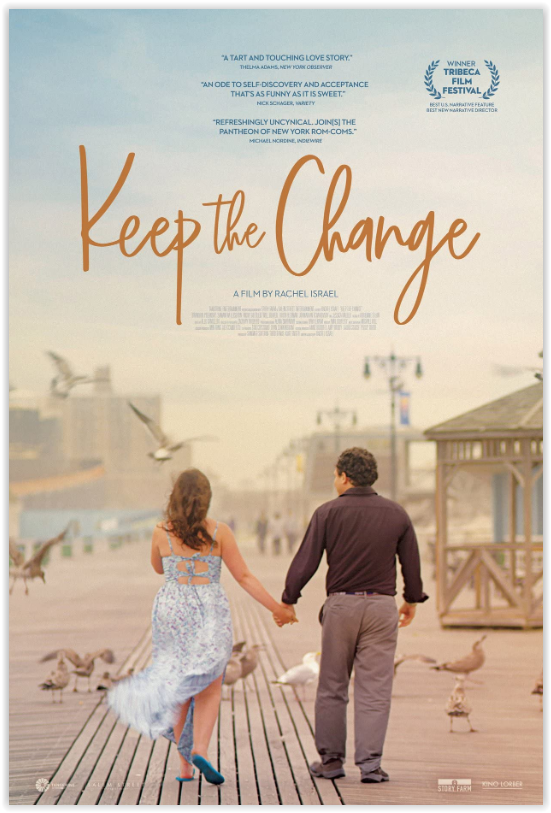
Entertainment offerings depicting autistic characters seeking romance have started to emerge over the last several years, as evidenced by the popularity of Netflix’s Love on the Spectrum and documentaries like Autism in Love. A worthy cinematic example is Keep the Change, a 2017 romantic comedy directed by newcomer Rachel Israel that defies expectations and proves to be as funny and refreshing as it is touching and truthful. Last week, our CineVerse assignment was to parse this picture carefully and mine its merits, which are summarized below (click here to listen to a recording of our group discussion).

What struck you as memorable, impactful, resonant, and unexpected about Keep the Change?

  • This is certainly a romcom, but it doesn’t fall into many of the traps and protectable formulas that many romantic comedies suffer from. There isn’t a “meet cute,” the two primary characters aren’t necessarily adorable leads – each has issues and problematic quirks – there isn’t a lovable sidekick, there is no speechifying, soliloquy-giving, or grand gesture, and the ending isn’t guaranteed to be happy.
  • Wisely, the filmmakers chose to cast autistic individuals at different levels on the autism spectrum, including non-professional actors, which adds authenticity and veracity to the movie and its characters. The performers playing David and Sarah are more or less being themselves without having to act much.
  • The picture doesn’t try to evoke pity for autistic individuals or overtly manipulate us emotionally. Instead, it presents these characters organically and naturally by casting real people with autism.
  • Additionally, Keep the Change isn’t trying to be a message movie or the “definitive cinematic statement on autism.” It tells a simple story about love and friendship featuring two characters who happen to be autistic.
  • The film has plenty of comedic moments that tonally balance the dramatic portions.

Major themes

  • The universality of the human experience, despite disability. This is a film that is intended to open our eyes to how differently-abled people really aren’t that different from most of us. They can feel and express the same emotions as any of us, including joy, sadness, shame, physical attraction, and anger. While some autistic individuals are more highly functioning than others, many are capable of living relatively independently and engaging in meaningful relationships and interests.
  • Opposites attract. Sarah and David are distinctly different personalities who don’t necessarily have much in common other than physical desire and a need for companionship. But they learn to compromise and express empathy. David, while seemingly suffering from a milder form of autism, can be offputting with his controversial sense of humor and outspoken nature, while Sarah, although optimistic and complimentary, can be socially awkward and naïve.

Similar works

  • Atypical
  • Love on the Spectrum (Netflix reality TV show)
  • A Kid Called Po
  • Adam
  • Autism in Love (documentary)
  • Extremely Loud & Incredibly Close
  • Please Stand By
  • Jack of Red Hearts

Read more...

Here's looking at you, Casablanca

Sunday, November 20, 2022

This week, one of the most cherished films in the classic Hollywood canon marks an 80th anniversary. What makes Casablanca so timeless, and why is it worth celebrating eight decades later? The CineVerse group attempted to answer these and other key questions about this 1942 standout earlier this month (listen to a recording of our group talk, click here; to listen to the current Cineversary podcast episode on this film, click here). Below is a summary of our major discussion points.

Why is Casablanca worth celebrating 80 years later? Why does this movie still matter, and how has it stood the test of time?

  • Casablanca could be the finest example of a studio assembly line product being churned out during the golden age of Hollywood. Many scholars and critics marvel at the picture’s construction and quality, particularly considering the luck and happenchance nature of its making and reception. Consider that Casablanca was filmed in under three hurried months. Many screenwriters, including Casey Robinson, were called in to help doctor the screenplay. Several of the actors didn’t care for the director or each other. Furthermore, this was just another production on Warner Brothers’ docket, with no great expectations from the makers involved. And the U.S. getting involved in World War II and the Nazis entering Casablanca shortly before the film’s release made the movie timely and relevant to modern audiences.
  • It boasts an outstanding ensemble cast, including colorful supporting characters portrayed by veteran character actors. This film could have the most effective lineup and the deepest bench of any picture up to that time or even since, thanks to the inclusion of Claude Rains, Peter Lorre, Sidney Greenstreet, Dooley Wilson, Conrad Veidt, S.Z. Sakall, Madeleine LeBeau, Joy Page, John Qualen, and Leonid Kinskey.
  • Casablanca features top-notch behind-the-camera talent, too, among them director Michael Curtiz, crafty producer Hal Wallis, skilled writers Howard Koch and brothers Julius and Philip Epstein, genius composer Max Steiner, ace director of photography Arthur Edeson, and savvy future director Don Siegel.
  • The ending is not predictable. In fact, it’s exceptionally complicated, ambiguous, and poignant, and the fact that the conclusion was written at the last minute, with the actors unaware of how the denouement would unfold, speaks to how affecting and seemingly spontaneous some of the performances are.
  • The dialogue is surprisingly cynical and often sparse, which has helped make Casablanca evergreen. This film is among the most quotable in history, enriched with a multitude of great lines, including:
    • "Here's looking at you, kid."
    • "Of all the gin joints in all the towns in all the world, she walks into mine."
    • "We'll always have Paris."
    • "Round up the usual suspects."
    • "I think this is the beginning of a beautiful friendship."
    • “Ilsa, I’m no good at being noble, but it doesn’t take much to see that the problems of three little people don’t amount to a hill of beans in this crazy world. Someday you’ll understand that.”
  • It checks the boxes in several categories: It’s quite possibly the best romance film, the most patriotic movie, the most perfectly cast, and maybe the best screenplay ever.
  • With its genre-blending, Casablanca offers something for everyone: romance, melodrama, comedy, music, action, and even political commentary. Thematically, the film also beautifully melds idealism, intrigue, and romance. And tonally, the pessimism is offset by humanism and sentimentality.
  • Arguably, this is the film that reminds most Americans, nostalgically, about World War II, in that its plot greatly involves that strife and was released just after the United States got involved; thus, it wistfully evokes a bygone, unforgettable era that history and posterity won’t allow us to forget.
  • Its centerpiece song “As Time Goes By” further helps make Casablanca ageless.
    • Deep Focus Review author Brian Eggert wrote: “The song wisps the characters away from the past where love was easy and time seemed to float. The song elicits the same reaction for viewers because as it plays, we remember the joyful experience of the whole film and escape into the pleasant simplicity of The Golden Age of moviemaking—as much a product of an unsound but strangely proficient and industrialized studio system the film may be. As time goes by, the song and Casablanca itself stay with us and mature through nostalgia and their enduring hypnotic spell.”

In what ways was Casablanca influential? Were any movies or filmmakers inspired by this work?

  • Casablanca represented a sea change in American movies for its time. It helped steer Hollywood toward a new era of moral sophistication in which the protagonist’s motivations and past actions are blurry and suspect. Rick exudes the classic traits of a prototype anti-hero, at least until the story’s close. Some believe this approach prefigured the onset of film noir and its darkly-tinged characters capable of both virtue and vice.
  • The emotionally complex and unresolved conclusion may have inspired later films. It’s not a classic Hollywood happy ending for its time: There are no easy choices, nor is there a clear resolution.
    • Neither Ilsa nor Rick knows what the other is thinking or feeling about one another, and no one necessarily “lives happily ever after.” Every major figure has to ultimately make sacrifices by the conclusion, but doing so guarantees their redemption as characters and our admiration as viewers.
    • We don’t know by the end whom Ilsa loves more; she has not professed her undying amore for one man. Nor do we know Rick’s true motivations: Is he giving up on Ilsa because he knows he can’t compete with Laszlo? Is he enacting some kind of emotional revenge on her for Ilsa abandoning him? Is Rick selflessly choosing the greater good?
    • The ending involves a painful decision and a conflict between personal love and political idealism. If you interpret the conclusion as a straightforward propagandistic moral that sacrifice is necessary to win the war, you may believe that it’s an upbeat and inspirational ending. But if you are more heavily invested in Rick and Ilsa’s love story, it’s hard not to feel torn and somewhat deflated after she flies off with Lazlo. True, there's a lighthearted capper in how Rick befriends Louis with the hint that they will escape to freedom together, but we are left to ruminate on “what-ifs” and “if-onlys.”
    • Ultimately, the finale suggests that the crux of the whole film rests on the sudden, developing friendship between Rick and Louis, and how that relationship, per DVD Savant critic Glenn Erickson, “acts as a ballast to Rick’s relationship with Ilsa…The film is really a political romance between Rock and (Louis), as they circle and test one another to see who’s worthy and who’s not. When it comes time to act, their combined cool saves the day. Each makes a dramatic choice to step away from their cynical detachment and take a stand. With these two sharpies in charge…we know there’s hope for the future.”
  • Films inspired by Casablanca include Passage to Marseilles (reuniting Bogart, Curtiz, Rains, Lorre, and Greenstreet), To Have and Have Not, Sirocco, The Marx Brothers’ A Night in Casablanca, Play it Again, Sam, and Havana.

What is noteworthy about the filmmakers, especially the choices of producer Hal Wallis and director Michael Curtiz?

  • While he was considered a journeyman director who wasn’t known for stamping his films with a particular style, Curtiz has an impressive curriculum vitae, helming several other classics such as Captain Blood, The Adventures of Robin Hood, The Sea Hawk, Angels With Dirty Faces, Yankee Doodle Dandy, Mildred Pierce, Life With Father, and White Christmas.
  • Hal Wallis is often credited with being the primary creative force behind Casablanca, curating the story from a failed stage play and guiding its construction carefully by choosing the director, writers, cast, and crew responsible for its creation.
  • The film moves effortlessly and invisibly between shots and scenes thanks to a steadily moving camera, an economy of well-composed shots, and terrific old Hollywood studio system talent that knew how to manufacture a product efficiently.
  • According to Turner Classic Movies writer Bret Wood: “Casablanca embraced what is now known as "invisible style." Rather than dazzling the eye with eye-catching visuals and histrionic acting, it seduces the viewer by creating a seamless, lush universe that gradually envelops the audience. Hardly an effortless accomplishment, "invisible style" required an absolute mastery of the various cinematic elements by its collaborators.”

What major themes or messages can be culled from Casablanca?

  • Selfless sacrifice. Each major character, by the end of the film, must choose to forfeit something for the sake of defeating the Nazis: Rick chooses to let Ilsa go; Ilsa decides to get on the plane with Lazlo, and Louis elects to protect the three lovers.
  • The choice of neutrality in both love and war. Rick and Louis must decide whether or not to fight the Nazis, and Rick and Ilsa have to choose whether to rekindle their romance and remain together or sacrifice for the greater good of the war and her marriage.
  • The inescapability of the past. Rick, Isla, and Louis cannot evade their memories or their previous romance. Rick is reminded of Ilsa by music and her re-entry into his life; Ilsa is torn between her past lover and her current lover; and Louis realizes that he, like Rick, must leave Casablanca and join the French resistance after aiding Rick.
  • The power of good luck. Gambling, and the promise it offers to those seeking to escape Casablanca, is prevalent at Rick’s café, where wagers are made and games of chance involving human lives are played. Recall how Sam sings the song “Knock on Wood,” which is a reference to a popular idiom that means you hope good fortune will persist.
  • Political allegory. The film plays like a well-timed fable about America’s stance on World War II. Before 1942, the United States, like Rick, tried to remain neutral and sidestep the world conflict. (Remember Rick’s line: “I’ll bet they’re asleep all over America,” which is a veiled reference to this isolationism.) But following Pearl Harbor, and after Elsa suddenly re-enters Rick’s life, more Americans, like Rick, embraced the ethical value of sacrifice and the importance of political idealism over personal desire and self-preservation.
  • The anti-hero turned hero. Rick is one of cinema’s most memorable early anti-heroes throughout most of the movie in that he has positive and negative qualities; he’s a multifaceted, mysterious personality (as evidenced by how many names he is called by others) with a shady past and seemingly selfish motives. “I stick my neck out for no one,” and “I’m the only cause I’m interested in” are two telling lines delivered by Rick. But once he makes the moral decision to help Laszlo and Ilsa, he becomes a heroic figure.
  • Living in exile. Casablanca is a city replete with foreigners, most of whom can’t return home due to the war. America represents a promised land on the far side of the desert, while Casablanca symbolizes a purgatorial oasis in the desert, with Rick’s Café standing as a neutral sanctuary for all.
  • A classic lover’s triangle.

What is Casablanca’s greatest gift to viewers?

  • Casablanca’s greatest present to film fans could be its proud pedigree as a standout in the romance genre. It placed tops on the American Film Institute’s 100 Greatest Love Stories Of All Time List for good reasons.
    • The tortured romantic tale at the heart of this movie, the bittersweet backstory involving Rick and Ilsa’s whirlwind relationship, and the array of conflicting feelings and wartime motivations that tug at them from different directions after she reenters Rick’s life—including jealousy, attraction, anger, compassion, loyalty, betrayal, patriotic pressure, and altruism—coalesce to create an emotionally resonant cinematic experience.
    • But what particularly helps distinguish this work from other romantic dramas of its era, or any era, is that there is no obvious happy ending. Soul mates though they may be, Ilsa and Rick must part, for the greater good, before the credits roll. However, their unselfish choices make their characters all the more deserving of empathy and appreciation. Instead of expressing idealized romantic affection they ultimately demonstrate unconditional love by letting each other go and realizing that their personal story doesn’t even warrant a trifling footnote in the pages of history that are being written. Theirs is a love where time, place, and circumstance conspire against them, and it is these oppositional forces that add crucial dramatic weight to the narrative and the performances.
    • Part of the brilliance that buoys Casablanca is that it’s a film of temporal relevance for 1942—a time when the tides of war were in the Nazi’s favor, uncertainty about the global conflict and its repercussions prevailed, and a mysterious foreign locale with an exotic name like Casablanca could concomitantly command both the box office and newspaper headlines. Using this intriguing setting and topical context as the backdrop of a love story provides a priceless gravitas that has helped Casablanca defy Father Time and the dustbin of popular entertainment irrelevance.

Read more...

Cineversary podcast explores why Casablanca gets better as time goes by

Thursday, November 10, 2022

Kenneth Turan and David Thomson
For Cineversary podcast episode #53, host Erik Martin revisits one of the most beloved and critically acclaimed films ever made: Casablanca, which celebrates an 80th birthday this month. In this installment, he’s joined by David Thomson, a renowned film critic, cinema historian, and author of Sleeping with Strangers: How the Movies Shaped Desire; as well as Kenneth Turan, film critic for National Public Radio, former film critic for the Los Angeles Times, and author of Not to Be Missed: Fifty-Four Favorites From a Lifetime of Film. Erik and his guests return to Rick’s Café Americain to hear Sam play it again and to examine why Casablanca continues to resonate and how it has transcended time.

To listen to this episode, click here or click the "play" button on the embedded streaming player below. Or, you can stream, download, or subscribe to Cineversary wherever you get your podcasts, including Apple Podcasts, Spotify, Stitcher, Castbox, Google Podcasts, Pocket Casts, PodBean, RadioPublic, and Overcast.

Learn more about the Cineversary podcast at anchor.fm/cineversary and email show comments or suggestions to cineversegroup@gmail.com.

Read more...

Le Samourai passes the white glove test

Monday, November 7, 2022

Jean-Pierre Melville isn’t a name well known by many, but perhaps it should be considering how influential his 1967 masterwork Le Samourai has become in the 55 years since its release. The CineVerse spotlight shone strong on this French feature last week, which generated and engaged dialogue about the various virtues of this picture (to listen to a recording of our group discussion, click here). Highlights of our conversation are recapped below.

What did you find interesting, unanticipated, memorable, or curious about Le Samourai?

  • The title is a bit off-putting in that it makes us think of a classic Japanese samurai—a highly skilled fighter/killer; yet samurai typically follow a code of ethics and personal honor and were often pledged to protect and defend, not necessarily kill, especially not as a mercenary.
  • This is an exercise in style over substance to some extent, a film with a relatively simple plot and spare dialogue but which carries a vibe of detached coolness, relying heavily on the quiet stoicism and poker-faced magnetism of Costello, as suavely played by Alain Delon.
  • It’s a film assumedly set in modern times (1967, that is), yet it isn’t anchored to anything that would make it feel dated.
    • Director Jean-Pierre Melville said: “I don’t want to situate my heroes in time; I don’t want the action of a film to be recognizable as something that happens in 1968. That’s why in Le samouraï, for example, the women aren’t wearing miniskirts, while the men are wearing hats—something, unfortunately, that no one does anymore. I’m not interested in realism. All my films hinge on the fantastic. I’m not a documentarian; a film is first and foremost a dream, and it’s absurd to copy life in an attempt to produce an exact re-creation of it. Transposition is more or less a reflex with me: I move from realism to fantasy without the spectator ever noticing.”
  • The director, in the words of Roger Ebert, “uses character, not action, to build suspense. Consider a scene where one of the underworld hirelings calls on Costello, to apologize and hire him for another job, and Jef stares at him with utterly blank, empty eyes. ‘Nothing to say?’ the goon says. ‘Not with a gun on me.’ ‘Is that a principle?’ ‘A habit.’"

Major themes

  • Abiding by a personal code. Jef is an impassionate killer with nerves of steel, an antihero with negative qualities; but we admire the extent to which he conducts himself with professionalism, intuitively sniffs out his enemies, and evades capture and death. The fastidious way he dons white gloves prior to a killing shows how savvy he is at his craft and dedicated he remains to his routine.
    • Costello also follows a samurai-like bushido code in that he’s willing to both commit suicide at the conclusion and, at the same time, abort the killing of a woman he admires (the pianist, Rey’s wife). Why does he choose not to kill her? Perhaps it’s because she protected him earlier during police questioning. Why does he choose to be cornered and killed by the police? Maybe it’s because he has accepted his doomed fate, realizing that it’s only a matter of time until the police catch him, and he wants to go out on his own terms.
  • Honor among thieves. Jef has several accomplices and complicit friends who are willing to help him even if it means breaking the law.
  • Deceit, double-crossing, and betrayal. Jef’s client attempts to have him killed after they fear the police will capture him. Rey also hires Jef to kill his wife for reasons undisclosed.
  • The hunted becomes the hunter. Costello turns the tables on Rey, who previously hired him to murder the nightclub owner, by killing Rey.
  • Isolation and alienation. Recall the film’s opening quote: “There is no solitude greater than a samurai's, unless perhaps it is that of a tiger in the jungle."

Similar works

  • Point Blank
  • Blast of Silence
  • The French Connection
  • The Conversation
  • Bullit
  • The Driver
  • Ghost Dog: The Way of the Samurai
  • Thief and Heat by Michael Mann
  • Leon: The Professional

Other films by Jean-Pierre Melville

  • Army of Shadows
  • The Silence of the Sea
  • Bob the High Roller
  • The Doulos
  • The Red Circle

Read more...

All aboard for zombie mayhem--South Korean style

Tuesday, November 1, 2022

Fast-moving zombies invade a bullet train: Sounds like a great premise for a modern horror film. And it certainly is, as evidenced by Yeon Sang-ho's Train to Busan from 2016, which has quickly become a critical and fan favorite among fright films. Our CineVerse group took a ride aboard this runaway thriller last week and arrived at the following conclusions (to hear a recording of our group discussion, click here).

How is Train to Busan different from other zombie films, and what did you find unexpected, refreshing, memorable, or distinctive about it?

  • It entraps its vulnerable characters within a confined space, in this case a high-speed train.
  • Although it wasn’t the first to do so, this film features rapid-moving zombies instead of slow, shambling creatures.
  • It introduces a new tweak to the zombie mythos: the living dead need to see their intended victims clearly, which means darkness is their enemy.
  • For a zombie film and horror movie, the emotional stakes are surprisingly high. The filmmakers slather on sentimentality, sorrow, and emotional trauma by giving us characters we care about and killing them off in devastating ways. The anguished cries of Seok-Woo and his daughter at the conclusion are incredibly moving.
  • There are several outstanding set pieces and action sequences, particularly in the scene where the train occupants depart at the station but must rush back to the safety of the train when pursued by zombies; later when the three men must fight three train cars loaded with the living dead to reunite with their loved ones; and toward the end when the last survivors make daring escapes from beneath the wrecked train and onto a getaway train.
  • Train to Busan has a political subtext that comments on the corruption and controversy swirling around the South Korean government and its then-President Park Genu-hye, who was eventually removed from office after public uproar later in the same year this film was released.

Major themes

  • Selfish self-preservation at all costs versus altruism, teamwork, and selfless sacrifices. Train to Busan suggests that, for the human race to survive, we need to think of others first, cooperate as a group, and make beneficent self-sacrifices. Consider that the final three survivors endured mostly because others acted heroically and gave their lives for their survival.
    • Seok-Woo, who earlier tells his daughter to “only watch out for yourself,” is humbled and changed by her unselfishness and compassion.
  • The benefits of active versus passive parenting. Seok-Woo isn’t present much in his daughter Soo-An’s life, and she’s resentfully aware of this. But by forgoing a day at work to escort her to her mother, remaining by her side as a stalwart protector through the zombie invasion, and ultimately sacrificing himself for her survival, she comes to love and appreciate her father and his character is redeemed.
  • Unchecked capitalistic greed can lead to catastrophe. It’s hinted in the film that Seok-Woo’s soulless fund-managing on behalf of his avaricious clients can cause others to suffer, and the zombie outbreak may have been caused indirectly by lax or hubristic practices by Seok-Woo’s employer.
  • Human beings can be more evil and dangerous than movie monsters. The most disgusting and despicable character in Train to Busan isn’t a zombie at all (at least, until his demise)—it’s the businessman Yon-suk, who evades death and minimizes his risk by treating others as expendable and manipulating the guilable.
  • The importance, and vulnerability, of the nuclear family. It’s no trivial matter that the final three survivors are a man, his daughter, and a pregnant woman who becomes the girl’s surrogate mother. Collectively, they stand a better chance of survival. The father must forfeit his life so that the other two can endure, and in so doing ensure continuity of the nuclear family.
  • Xenophobia, class warfare, and distrust of the government.

Similar works

  • Snowpiercer
  • 28 Days Later, World War Z, Zombieland, the Dawn of the Dead remake, and other modern living dead films featuring fast-moving zombies
  • George Romero’s original zombie trilogy: Night of the Living Dead, Dawn of the Dead, and Day of the Dead
  • Action thrillers in which the characters are trapped aboard a vessel, including Snakes on a Plane, Horror Express, Howl, and Alien Express
  • Contemporary disaster films like San Andreas, 2012, and The Day After Tomorrow
  • Steven Spielberg’s War of the Worlds remake featuring a similar absent father character who must protect his children from disaster
  • The Mist
  • The Cassandra Crossing
  • Children of Men

Other films by Yeon Sang-ho

  • Seoul Station, and Peninsula, the respective prequel and sequel to Train to Busan
  • Psychokinesis
  • The King of Pigs, and The Fake, two earlier animated features

Read more...

  © Blogger template Cumulus by Ourblogtemplates.com 2008

Back to TOP