Blog Directory CineVerse

Hitchcock casts a long shadow of excellence across this 80-year-old film

Friday, January 20, 2023

Alfred Hitchcock called Shadow of a Doubt his favorite among all the pictures he directed. And it's easy to see why: Here is a film endowed with richly layered characters; a brooding atmosphere of infiltrating evil contrasting against a bright and cheery family milieu; memorable performances by Joseph Cotton and Teresa Wright—perhaps the best of their careers, with Cotton playing against type as Uncle Charlie, a rare villain role in his acting career—and masterfully composed shots imbued with stylized lighting that evoke the very best of the classic Hollywood period and the encroaching influence of film noir.

We at CineVerse took a fresh drive behind the wheel of this cinematic vehicle last week and had plenty to talk about, as summarized below (to listen to a recording of our group discussion, click here; to hear the latest Cineversary podcast episode celebrating Shadow of a Doubt’s 80th anniversary, click here).

Has the movie stood the test of time? Why is it worth honoring 80 years after its release, and why and how does Shadow of a Doubt still matter?

  • This is a memorable milestone in Hitch’s oeuvre thus far because he infuses cynicism, pessimism, and mistrust into his depiction of a wholesome, clean-cut, old-fashioned sleepy little burg. The pessimism and cynicism about small-town USA are remarkable when you ponder that this is a film shot and released in the middle of World War II, a time when America and Hollywood tried to emphasize positive, morale-boosting messages.
    • David Keyes of The Cinemaphile Blog wrote: “This thoughtful 1943 noir – about a mysterious family man with a dark history – emerges, even now, as a watershed moment…Movies about characters with those sorts of dubious backgrounds had, up to that point, belonged almost exclusively to the world of B-movies, and major film studios dared not touch on subjects perceived as cynical for fear of undercutting broad appeal.”
  • What makes Shadow work so well? Hitch builds mood, atmosphere, and disquiet in a seemingly benign, charming, and comfortable Everytown USA locale. The suspense here is a slow builder, insidiously creeping into a place the characters feel safe, invading a middle-class home and usurping the safety and values of Norman Rockwell-era America. This is apple pie Americana, but with a burnt crust, a critique of assumed American innocence.
  • Several critics regard Shadow of a Doubt as possibly the purest distillation of Hitchcock’s style and common themes and the director’s first American masterpiece; consider that he had already directed five films in the States prior to Shadow. Even though his first U.S. feature, Rebecca, won the Academy Award for Best Picture, much of that glory is shared with producer David O. Selznick. Many feel this is a more personal work that surpasses Rebecca and stands as his finest American feature up to this point in his filmography.
  • It matters that the screenplay was co-written by Pulitzer Prize-winning playwright Thornton Wilder, a talent purposely chosen by Hitchcock to weave a wistful but twisted vision of a small town that is threatened by a secret dark force. While several people contributed to the story, Wilder was an ideal hand-picked choice by Hitchcock because he was the author of Our Town, a popular play that depicts everyday life in a small American town and that uses minimal props and scenery. Shadow of a Doubt seems cut from this same cloth.

Can you trace any influence this movie had on the cinema or filmmakers who may have been inspired by it?

  • Orson Welles’ The Stranger (1946) and David Lynch’s Blue Velvet (1986), movies that also explore danger lurking in seemingly safe suburban communities, are two inheritors of the plot and design of Shadow of a Doubt.
  • The Stepfather (1987), Bad Influence (1990), The Man Who Wasn’t There (2001), What Lies Beneath (2000), Seven (1995), and Stoker (2013) are six contemporary examples, and The Usual Suspects (1995) invokes Shadow of a Doubt somewhat in the character of Keyser Soze, who walks with a fake limp much like Charlie emerges from the train with a hobble and a cane.
  • There were also two remakes: Step Down to Terror (1958) and a 1991 made-for-TV feature also called Shadow of a Doubt.
  • It’s noteworthy that Hitchcock admired the low-budget horror films of RKO producer Val Lewton, including Cat People (1942), The Leopard Man, and The Seventh Victim (both 1943), which each depict malignancy and menace lurking about in everyday settings with modern Americans and/or small towns.

Hitchcock said that Shadow of a Doubt was his personal favorite among the films he directed. Why do you believe he held it in such high regard?

  • Biographer Donald Spoto called this film “the first spiritually autobiographical film of (Hitchcock’s) career.” To provide context, the director’s mother grew gravely ill back in England while the screenplay was written, with her son not able to visit due to the challenges of traveling abroad during World War II. During production, she passed away, and Hitchcock poured a lot of his heart and soul into the movie, especially its more idealized vision of domestic bliss found in Santa Rosa, California.
  • Note that, like Hitch’s own mom, the mother character is named “Emma.” Interestingly, Emma represents the last time a major maternal character (the mother of the lead character or villain) is shown in a positive light in a Hitchcock film; most subsequent mothers would exhibit evil or undesirable qualities.
  • Hitchcock shot most of the picture on location in Santa Rosa, the setting of the story; he appreciated the amiable nature of this town and its people, making the shoot a pleasant one.
  • Unlike some of Hitchcock’s other works of suspense, this one has more fully realized characters, especially the two Charlies, who form a symbiotic relationship. Hitchcock was quoted as saying he was particularly fond of this movie because “it was one of those rare occasions where you could combine character with suspense. Usually in a suspense story, there isn’t time to develop character.”
  • Interestingly, the plot is far from airtight or completely credible. Ruminate on how Uncle Charlie evades capture several times, how improbable it is that a niece would kill her uncle or permit him to leave town in exchange for her keeping quiet about his secret, and how the detectives are dimwitted amateurs who don’t abide by jurisdictional boundaries. Yet, plausibility isn’t what Hitchcock is going for here.

What directorial choices by Hitchcock in Shadow of a Doubt are most impressive?

  • Here, the artist prioritizes subtlety and simplicity over grandiose visuals, sensationalistic storytelling, glamorous starlets or marquee stars, showy set pieces, or gimmicky techniques, which causes us to focus more on the central thematic conflicts and the well-developed characters. Recall how Joe Newton says to his friend Herbie when discussing a detective story, “those writers from the other side get too fancy,” which serves as an in-joke about how this screenplay was kept simple and written by Americans (half true). The plot is lean, the setting is relatively mundane, there isn’t much action, and all the characters aside from Uncle Charlie are middle-class normies who lead uninteresting lives.
    • The personification of Uncle Charlie is a primary fuel that drives the engine here, as he emerges as a fascinatingly complex individual with idiosyncrasies and curious traits that create an unpredictable but colorful character. He’s irresponsible about loose cash and not exactly careful about covering his incriminating tracks, despite saying that it’s the little details that are most important to him. He’s outspoken and verbally insensitive, as when he makes callous remarks about Joe and his job at the bank, yet he’s careful not to reveal too much about his past. And though he’s capable of terrible acts of violence and psychopathic tendencies, he’s beloved and trusted by his family.
    • Peter Bogdanovich said in an interview that Hitchcock never makes his villains cliché, that “he goes out of his way to give this (Uncle Charlie) character as much depth as possible.”
  • Consider Hitchcock’s ability to insinuate disturbing violence, infuse a subversive tone, and suggest the slightest hint of incestuous sexuality without depicting anything graphically. We are never shown Uncle Charlie strangling any of his victims, and the most inappropriately creepy he gets with his niece is when he gifts her a ring and puts his arms around her. Yet the implications and potentialities of these sins churn the waters enough to make it a tense journey for viewers.
    • Recall how often the director places Uncle Charlie in profile, often in a close-up or medium shot. In these shots, he faces left or right, at roughly 90 degrees from the lens and other characters in the shot, perhaps suggesting that there are multiple sides to the uncle’s character, including a side we can’t figuratively or literally see in that moment.
  • As further evidence of the director’s visual savvy, he repeats dreamlike imagery of dancers waltzing hauntingly in Uncle Charlie’s mind, employs a dramatic push zoom to emphasize the ring on Young Charlie’s finger, and uses canted camera angles to suggest a world made crooked by the uncle’s presence. And it’s a nice touch to have Uncle Charlie break the fourth wall by turning to look directly at the camera—at us—in a key shot.
  • As with so many of his works, Hitchcock compounds suspense often by giving the audience more information than the protagonist—in this case, by hinting at a dark side to Uncle Charlie that his niece doesn’t learn about until midway through the picture. He further builds tension by suggesting that exposing the truth about Uncle Charlie will harm the Newton family.
  • Also, the filmmakers cleverly use a comedic subplot to relieve and subtextually comment on the tension: the humorous friendship between Joe Newton and Herbie, who regularly meet to discuss the perfect murder.

What significant messages or themes from Shadow of a Doubt are worth examining?

  • Rot and infection beneath a pristine surface. Santa Rosa is an idyllic small town with friendly traffic cops, residents who know your name, and kids who respect their elders and say bedtime prayers. Yet this village is not as wholesome as it looks since a mysterious stranger came into town. Shadow of a Doubt is about the intrusion of evil into a typical American household via a Trojan horse of sorts. And the unsettling nature of this relationship is that the murderer is a relative who shares the same blood and genes as the decent, morally upstanding family members whose home he has infiltrated. This suggests that every other member of that clan—particularly Young Charlie—can become infected with or victimized by Uncle Charlie’s malevolence. Hitchcock said that the overarching theme of Shadow of a Doubt is: “Love and good order is no defense against evil.”
    • Hitchcock makes the viewer second guess the sanctity and unimpeachable ideals of small-town society by permitting Uncle Charlie’s dark influence and negative worldview to seep into Young Charlie’s mind.
    • The uncle tries to taint her perception of the town and the people she loves, telling her: “You live in a dream. You're a sleepwalker, blind. How do you know what the world is like? Do you know the world is a foul sty? Do you know, if you rip off the fronts of houses, you'd find swine? The world's a hell.”
    • In the same scene at the restaurant, young Charlie sees as a cautionary figure the morose waitress who serves them—a reflection of what she could become in the years ahead.
    • Young Charlie, a kind, chaste, gentle teenager, also finds a festering and violent animosity within herself that compels her to threaten violence. She tells her uncle: “Go away or I’ll kill you myself.”
  • Twinning, doubling, and doppelgangers. We have two Charlies at opposite ends of the spectrum: one young, one old; one sweet and innocent, one devious and devilish; one from the west coast, the other from the east coast. Visually, the film links them by using symmetrical shots and poses, cross-cutting action that juxtaposes one with the other, and mirrored events like both attempting to send telegrams. The uncle even remarks: “We’re sorta like twins.” Young Charlie conjures up a sinister twin of herself, as well, when she says, “Go away or I’ll kill you myself,” suggesting a darker facet of her personality.
  • A human monster in plain sight. Uncle Charlie is depicted as a kind of horrific psychological vampire. Ponder how he prefers to lie in the dark behind curtains, evades capture by the two gumshoes, doesn’t appear winded from the chase, insists on not being photographed, and seems to possess a telepathic power to communicate with his niece. Later, a character mentions the story of Dracula.
  • Toxic misogyny. Uncle Charlie says: “Women are fools—they fall for anything,” and “The cities are full of women, middle-aged widows, husbands dead, husbands who've spent their lives making fortunes, working and working. And then they die and leave their money to their wives, their silly wives. And what do the wives do, these useless women? You see them in the hotels, the best hotels, every day by the thousands. Drinking the money, eating the money, losing the money at bridge. Playing all day and all night. Smelling of money. Proud of their jewelry but of nothing else. Horrible, faded, fat, greedy women... Are they human or are they fat, wheezing animals, hmm? And what happens to animals when they get too fat and too old?”
    • According to film scholar Michael Ryan: Uncle Charlie “uses his sex appeal for power and power alone. Not even for money-- which he acquires from his serial murders only to dismiss it. What he wants is to be superior to the human race and control everyone, especially women. He is absolutely isolated. He seduces only to conquer— and destroy.”
  • Subversion and perversity. Hitchcock subtly suggests a sexual conflict between the two Charlies. She tells him: “We're not just an uncle and a niece. It's something else. I know you. I know that you don't tell people a lot of things. I don't either. I have the feeling that inside you somewhere, there's something nobody knows about.” Also, remember how the uncle gives his niece a ring as a gift and places it on her finger in a manner slightly similar to a wedding proposal. And after she learns the truth about him, she appears more as a jilted lover betrayed by him than a disappointed niece.
  • Shadows and doubt. The film is aptly named, as we see shadows fall across the screen as foreshadowing elements, such as the darkness that falls across the train when it pulls into the Santa Rosa depot and the black billowing smoke it belches out; the high contrast lighting sometimes used in scenes with Uncle Charlie; and the visible doubt that creeps into Young Charlie’s face in several later scenes.
  • Suppression is the lesser of all evils. Young Charlie must squelch her urge to kill or unmask Uncle Charlie to preserve the appearance of normality and wholesomeness that Santa Rosa requires to maintain stability, reputation, and purity. Remember that Uncle Charlie’s crimes go unpunished and unexposed; he’s given a hero’s funeral at the end, which prevents the town from being forever stained.
    • Slant Magazine critic Fernando Croce posited: “Shadow of a Doubt is about awakening, the simultaneous darkening and enlarging of the world…Young Charlie must muffle her knowledge as to not disturb the order of things…Hitch’s habit of taking us to the edge of the abyss and then returning us with a wink, so often resulting in unconvincing happy endings, here seals one of his most pitiless visions of a monstrous cosmos admitted only to be denied.”
  • Dark secrets and skeletons in the family closet.

Are there any problematic elements that don’t pass muster 80 years later?

  • Younger sister Ann seems a bit too precocious and articulate to be believable.
  • We see Uncle Charlie pass over a stack of forty $1,000 bills to the banker, a denomination that has long been out of circulation. Today, that would be like carrying $689,000 in your pocket adjusted for inflation.
  • More problematic are silly plot movers like Young Charlie being afraid to tell her parents or the authorities that her uncle is trying to kill her and the detectives agreeing not to arrest him in town to spare a scandal.
  • One obvious creaky component is the black porter on the train, yet another example of a classic Hollywood film in which characters of color were often limited to tiny roles as servants to whites.

What is Shadow of a Doubt’s greatest gift to viewers?

  • This is a film that truly picks up steam as it progresses, hitting a higher gear by the midway point, which is when Young Charlie discovers the unsavory facts about her uncle and we witness her sunny disposition depart, replaced by distrust, fear, and hatred. Earlier, the niece had expressed disbelief and exhibited naivete about her uncle’s seemingly shady side, but as the tale progresses she demonstrates savvy intuition, healthy skepticism, cautious agency, and bravery in standing up to Uncle Charly. All of these qualities help her survive and keep the town’s purity and incorruptibility intact. It’s this transformation of Young Charlie that serves as one of Shadow of a Doubt’s greatest gifts.
  • Thematically, this is an exceptional loss of innocence and coming-of-age story in which a wide-eyed, gullible girl comes to realize that the world isn’t simply black and white—it has layers of gray that can cloud your judgment. She learns that some of the people populating this sophisticated world—including trusted kin—may harbor evil secrets and terrible sins that can leave a harmful residue on loved ones. Young Charlie is forced to grow up quickly and shield her family from this danger, even stifling the truth at the very end when unsuspecting townspeople gather to mourn her uncle’s death. Fortunately, despite her pseudo telepathic connection to Uncle Charlie and the fact that, as he says, “the same blood runs through our veins,” Young Charlie ultimately won’t be corrupted by his hate or negativity, and she’ll have her family and a partner in the detective to remind her that the world is full of good people.
  • The way Hitchcock and his collaborators slowly but consistently erode Young Charlie’s veneer of blind bliss and familial exuberance, thickening her skin for the harsher realities and lethal dangers to come, makes for a captivating character study. The uncle may be the more fascinating figure in Shadow of a Doubt. But the niece’s conversion from an innocent adolescent to an awakened young adult burdened by the unspeakable—a shameful family secret she’ll probably need to take to her grave—help elevate this film to masterpiece status in the eyes of many.

Read more...

Cineversary podcast celebrates 80th birthday of Hitchcock's Shadow of a Doubt

Tuesday, January 17, 2023

In Cineversary podcast episode #55, host Erik Martin and guest Carrie Rickey, former film critic for The Philadelphia Inquirer, explore the hidden rot beneath the white picket fences of a small town and the sinister secrets that threaten to destroy an all-American family as they celebrate the 80th birthday of Alfred Hitchcock’s Shadow of a Doubt.
Carrie Rickey
To listen to this episode, click here or click the "play" button on the embedded streaming player below. Or, you can stream, download, or subscribe to Cineversary wherever you get your podcasts, including Apple Podcasts, Spotify, Stitcher, Castbox, Google Podcasts, Pocket Casts, PodBean, RadioPublic, and Overcast.

Learn more about the Cineversary podcast at anchor.fm/cineversary and email show comments or suggestions to cineversegroup@gmail.com.

Read more...

Why Rules still rules

Monday, January 9, 2023

Jean Renoir’s The Rules of the Game (1939) set new cinematic rules of its own that many filmmakers followed and still abide by. Often ranking just behind Citizen Kane on the Sight and Sound poll conducted every 10 years, this masterwork can be challenging to fully appreciate on first watch. Last week, our CineVerse group honed in on what makes Rules such a fantastic film (a recording of our group discussion is available here). Here’s an outline of our discussion points.

What did you find memorable, distinctive, unexpected, or different about The Rules of the Game?

  • The film is an audiovisual wonder for a 1939 feature.
    • Years before Orson Welles and Greg Toland astounded the film world with deep focus photography in Citizen Kane, Renoir was experimenting with this technique in The Rules of the Game, creating remarkable shots that often feature the foreground, middle ground, and background in focus, with all three planes occupied by characters and action. It helps that Renoir shot within expansive rooms and deep corridors that enable the players greater spatial latitude.
    • In addition, the fluidity of camera movement is impressive throughout Rules, as evidenced by plentiful pans, trucks, and graceful moves between rooms and characters. In fact, it’s estimated that half of the shots in the film involve a moving camera. Long before mobile cameras were invented, the filmmakers seemed to flit and float between spaces with a nimbleness and elegance that makes the picture feel more kinetic and alive. Equally impressive is that Renoir doesn’t overly rely on reverse shots or close-ups; two-shots dominate in Rules, but the camera movements break up any monotony that excessive two-shots would otherwise create. Renoirs flowing camera allows the narrative to unfold more efficiently.
    • The sound design and audio approach in Rules are also extraordinary for the time, as we often hear overlapping dialogue and simultaneous background sounds that break from the linear audio conventions of that era.
  • Interestingly, two-thirds of the movie was unscripted, thanks to Renoir permitting his players to improvise their dialogue. Renoir also revised his script during shooting and enabled his actors to fine-tune their characters as shooting progressed. Consequently, much of what we see feels organic, spontaneous, and authentic, including many of the performances, conversations, and actions.
  •  The hunt serves as the standout sequence of the movie, haunting us with its quickening shots, sudden and percussive violence, and disturbing realism (these are real animals actually being killed).
    • Criterion Collection essayist Alexander Sesonske wrote: “The centerpiece of Renoir’s intricate structure, the pivot on which the action turns, the symbolic core of his critique of French society, is the hunt, the scene that most clearly reveals the volcano that seethes beneath the dancers. In a film whose shots often run for a minute or more, here fifty-one shots appear in less than four minutes, in a mounting rhythm of cutting and movement that culminates in an awesome barrage of gunfire as, in twenty-two shots—fifty-three seconds—twelve animals die. Surely one of the most powerful scenes in all of cinema.”
  • Arguably, there is no main protagonist or antagonist, no hero or villain of the story. This is more of an ensemble piece in which the rules themselves are the villain and source of conflict.
  • While the film on one hand serves as a scathing criticism of these characters and what they represent, it also shows their good attributes. Renoir demonstrates empathy and humanism for these characters, making many pitiable and tragic in counterbalance to their immoral and negative qualities.
  • Likewise, the film has interesting tonal shifts, largely because Renoir shows his characters' negative and positive sides.
    • Slant Magazine reviewer Chuck Bowen wrote: “Jean Renoir’s The Rules of the Game has been part of the film canon for so long that it’s valuable to remind audiences how gloriously alive and just plain fun it is. Low comedy walks hand and hand with tragedy and beauty throughout; the film is frothy one minute, nearly apocalyptic the next, and so you’re never fully allowed to gather your bearings. The Rules of the Game has a tone that could be symbolized by the escalating merry-go-round that prominently plays into the climax of Strangers on a Train—up and down, all around and seemingly totally out of control…The Rules of the Game is so graceful with its volley of character trade-offs, both romantic and platonic, that you can’t help but fall in a kind of love with it, a qualified love that still understands the sourness, the sadness, that gently informs every part of the film.”

Major themes

  • Social hierarchy and class distinctions. This story shows two social classes: the upper-middle-class that occupies the upstairs, as represented by Robert, Christine, Andre, Genevieve, and Octave; and the working/servant class who dwells downstairs, exemplified by Schumacher, Marceau, and Lisette. This is a tale of the haves and the have-nots and the contrasts between these classes, but it also compares them by presenting “matched opposing pairs.”
    • Sesonske further wrote: “For characters, (Renoir) began with…jealous husband, faithful wife, despairing lover, and intervening friend. Doubling this group then yielded the central opposing pairs in The Rules of the Game: matched sets of husbands, wives, lovers, mistresses, and friends—one set among the masters, the other among the servants, thus evoking one of Renoir’s perennial themes, the relations among classes.
  • The dangers of moral indifference. The Rules of the Game was intended as an allegorical critique of the haute bourgeoisie and ruling class in France in the late 1930s, whose apathy about and appeasement of the spreading Nazi threat resulted in disastrous consequences for France and Europe. The hunting scene and its disturbing visuals serve as a metaphor for the real-world brutality coming to Europe as well as a foreshadowing of the later killing of Andre, an innocent victim of violence.
    • Consider the scene where Schumacher is chasing after Marceau with a gun on the upper level as bullets whiz around the upper-class occupants, most of whom don’t seem distressed by this threat of violence and injury.
    • Ponder, too, how Robert downplays Andre’s killing as an accident, convincing his party attendees that these unfortunate circumstances will all be sorted out later. No one expresses shock or alarm about the death or the chaos that has ensued earlier.
    • Additionally, recall the “dance of death” performed by the party attendees dressed as skeletons and ghosts as Saint-Saëns’ “Danse Macabre” music plays. This dance is another example of how the upper class is acting frivolously and silly, even mocking death metaphorically as Hitler’s forces begin to close in around Europe.
    • Renoir said of his film: “It was shot between Munich and the war, and I shot it absolutely impressed, absolutely disturbed by the state of mind of a part of French society, a part of English society, a part of world society. And it seemed to me that a way of interpreting this state of mind, to the world hopefully, was not to talk of that situation, but tell a frivolous story… I had desired to do something like this for a long time, to show a rich, complex society where—to use a historic phrase—we are dancing on a volcano.”
  • Playing by and breaking the rules. This film suggests that there are often unfair and inconsistent rules set by society and played in the game of love.
    • This group of characters – standing in for French society – conforms to etiquette, codes, and conventions that other societies would find immoral, such as the freedom to cheat on your partner and have both secret and open affairs that prioritize sexual satisfaction. Two characters – Andre and Schumacher – break these rules by expressing romantic love and devotion to one person, acting idealistically and sincerely, and (in the case of Schumacher) adhering to marriage vows with utter seriousness. It’s no coincidence, then, that these two characters suffer the biggest consequences by the conclusion.
    • This theme may also help explain Octave’s famous quote: “The awful thing about life is this: Everybody has their reasons.” Substitute the word “reasons” with “rules” and it’s easy to decipher that life and love are difficult to navigate when everybody sets and plays by their own rules.
  • Insiders vs. outsiders. Robert, Christine, Genevieve, and most of their guests are privileged elite—“insiders” who are part of society’s established order and who abide by its rules and conventions. Andre, Octave, Marceau, and Schumacher are outsiders who don’t neatly fit into this clique and are eventually cast out of or leave the world of the insiders. Yet, Renoir isn’t so cut-and-dried and simplistic here; in this film, insiders can also be outsiders and vice versa.
    • Roger Ebert wrote: “It is Robert who understands the game and the world the best, perhaps because as a Jew he stands a little outside of it. His passion is for mechanical wind-up mannequins and musical instruments, and there is a scene where he unveils his latest prize, an elaborate calliope, and stands by proudly as it plays a tune while little figures ring bells and chime notes. With such a device, at least everything works exactly as expected…The finished shot, ending with Robert's face, is a study in complexity, and Renoir says it may be the best shot he ever filmed. It captures the buried theme of the film: That on the brink of war they know what gives them joy but play at denying it, while the world around them is closing down joy, play and denial.”

Similar works

  • Gosford Park
  • Smiles of a Summer Night
  • The Hunt
  • Summer Light
  • Scenes From the Class Struggle in Beverly Hills
  • The Decline of the American Empire
  • The Big Chill
  • The Discreet Charm of the Bourgeoisie
  • Dangerous Liaisons

Other major works by Jean Renoir

  • Grand Illusion
  • The Human Beast
  • The River
  • Boudu Saved From Drowning
  • The Lower Depths
  • La Marseillaise

Read more...

One is the loneliest number

Tuesday, January 3, 2023

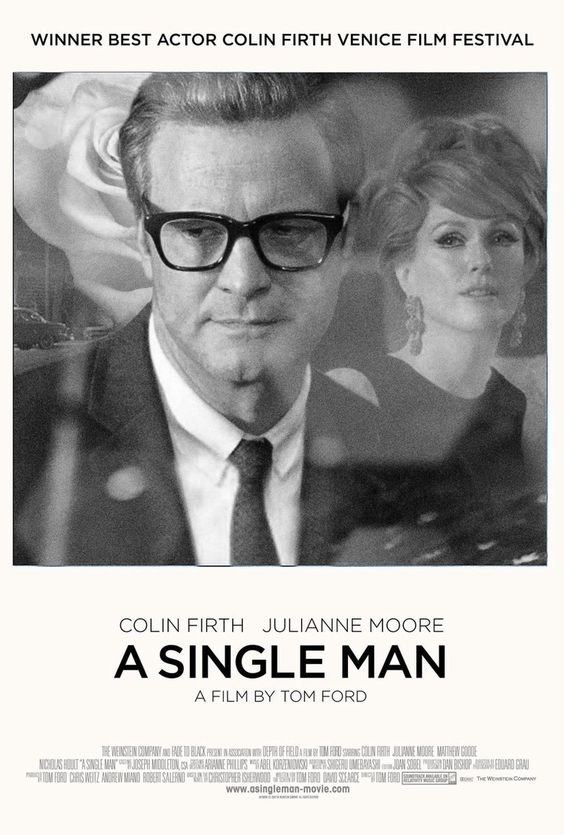
In A Single Man, the 2009 directorial debut of fashion designer Tom Ford, Colin Firth commands our attention as a George Falconer, a professor privately mourning the death of his male partner in the early 1960s. Focusing on a day in the life of this anguished soul—the day when George has decided to take his life—A Single Man uses vignettes, flashbacks, and dreamlike imagery to present an unshakable portrait of grief and trauma. Last week, CineVerse’s mission was to unravel the emotional mysteries behind this film, as summarized below (click here to enjoy a recording of our group discussion).

What was distinctive, surprising, memorable, or curious about A Single Man?

  • The tone is mostly melancholy and downbeat throughout, partly because we know George is planning suicide eight months after his lover has died but also because of the circumstances: George is a closeted gay man in middle age who depressingly has no meaningful relationships outside of his friendship with Charlotte.
  • The filmmakers employ a wide range of film stocks and color palettes to visually express George’s experiences. We often see scenes and characters muted and desaturated of color, insinuating George’s depression; other shots can pop with a chromatic panache, implying that George finds new optimism or vibrancy in certain people he encounters.
  • The narrative bounces around in time, presenting flashbacks of George’s life with Jim as well as surreal snatches of George’s dreams and haunting visions.

Major themes

  • Coping with grief and the pain of loss. This is a story about what it takes to endure personal tragedy.
  • Keeping secrets, and the challenges of grieving as a closeted gay man during a time of repression and cultural disapproval of homosexuality.
  • Trying to find new meaning and truths after life-changing loss. George recognizes beauty, vibrancy, and new promise in people he encounters on his last day on earth, including Kenny, Carlos, and Jennifer, which suggests that there is hopefulness and optimism after great sorrow.
  • The unpredictability and unfairness of life. Spoiler: George decides not to commit suicide, but apparently succumbs to a heart attack anyway.
  • Drowning helplessly in pain. We see recurrent imagery of a naked George submerged, struggling to survive or surface from the water and being unable to call out for help. We also view George swimming naked with Kenny in the ocean, reminding us of this drowning motif.
  • The inability to truly know and understand someone else. We hear Kenny say that life is what we perceive, which may not be accurate.

Similar works

  • Brokeback Mountain
  • 8 ½
  • Beginners
  • Blue
  • The Hours

Read more...

Kringle all the way

Friday, December 30, 2022

Like Santa Claus himself, Miracle on 34th Street seems to defy age as a Christmastime classic. Since 1947, it has been delighting audiences of all ages and winning over new generations of viewers, many of whom consider it every bit the equal to It’s a Wonderful Life as the ultimate yuletide flick.

Directed by George Seaton for 20th Century Fox, Miracle was a box-office winner thanks to a heartwarming script, seasonally sweet music scored by Cyril J. Mockridge, and an impeccable cast that includes Edmund Gwenn as the quintessential yet-to-be-topped Kris Kringle, Maureen O’Hara as Doris Walker, a very young Natalie Wood as her idealistic daughter Susan Walker, and John Payne as lawyer Fred Gailey.

Originally titled “The Big Heart,” Miracle on 34th Street, written by Valentine Davies, tells the story of a Macy’s store Santa Claus who converts the customers into believers of St. Nick and the altruistic Christmas spirit. Convincing the skeptical Doris and her daughter Susan, however, isn’t so easy, especially when he is put on trial to settle once and for all whether or not he is the real Kris Kringle.

The CineVerse faithful celebrated the 75th anniversary of Miracle on 34th Street last week and arrived at the following conclusions (to hear a recording of our group discussion, click here).


Why is this movie worth celebrating 75 years later? Why does it still matter, and how has it stood the test of time?

  • It’s sentimental at heart, but also not afraid to be worldly and cynical. It exposes the commercialization of Christmas, as well as the ties between law and politics and the dangers of pop psychology (trying to psychoanalyze someone without being qualified).
  • For a film that revels in nostalgia and sentimentalism, it’s surprisingly modern in its fast pace, hustle and bustle, values and attitudes; it also helps that the Macy’s Day Parade scenes were shot on location during the actual parade in late 1946, lending a more authentic, credible feel.
  • It never fully answers the central question of whether or not this film’s Kris Kringle is the real Santa Claus. Yes, he wins his court case and the hearts of Susan and her family, but the movie leaves open enough doors to suggest that this can all be rationally explained and that this is just a kindly old man who simply believes he’s Santa Claus. Or, it can suggest that this is the real Kris Kringle who has magical powers, such as the ability to bring Susan to the dream home she wanted. It balances that fine line between fantasy and reality; you can interpret it either way.

What elements from this movie have aged well, and what elements are showing some wrinkles?

  • Miracle feels relatively modern and resonant in several ways. 
    • It presents a more secular approach to the holiday without pushing a religious message. 
    • It features a divorced woman and single mother who has a corporate position of power and authority. 
    • Susan is that rare child of divorce shown in a 1940s film. 
    • The movie examines the plausibility of a parent trying to prevent her child from growing up without superstitious beliefs. 
    • There’s a prevailing cynicism at work, too, as evidenced by the entire subplot of putting Santa Claus on trial, the judge worrying about political fallout and reelection, the media circus created around Santa and the legal hearing, and the bitter rivalry and competition between two corporate giants (Macy’s and Gimbels).
  • Other aspects, however, are creaky and cringy, including Santa using violence (striking a fellow employee with a cane), Doris having a black maid, trusting in a single man you don’t know very well to babysit your child, and idealization of the nuclear family.

Major themes

  • The value of faith. The movie’s central message is that faith is believing when common sense tells you not to, and “If things don’t turn out just the way you want the first time, you still have to believe.”
    • What matters more: proof of a flesh and blood Santa Claus or proof of what he stands for?
    • Miracle explores the dangers of growing up, prioritizing rationality and practicality at the expense of faith and belief, and the repercussions of losing the magic that motivated us as children.
    • This film begs the question: Do we have the duty as parents and adults to shield children from life’s intangibles and assumedly silly beliefs?
  • The commercialization of Christmas and how the values, traditions, and icons of Christmas can be turned into commodities.
  • The merits of the nuclear family. This film suggests that Susan can be fully happy and fulfilled if she is nurtured by a mother and father within a loving home where she can truly enjoy her childhood. This can only be accomplished if Doris marries Fred.

How do you interpret the end of the movie, including Fred’s final line: “Maybe I didn’t do such a wonderful thing after all”?

  • The presence of the cane implies that Kringle is the real Santa Claus who made Susan’s wish come true of ultimately living in a dream home. If Kringle wasn’t Santa, how did the cane get there? Kringle was locked up in Bellevue for presumably many days and wouldn’t have been able to scout and visit the home. But a supernaturally powered Santa would have.
  • Or, Kringle isn’t Santa; instead, he’s merely a delusional but kindly old man. It’s possible this is all coincidental and can be rationally explained. It’s plausible that Kringle didn’t intend to secretly direct Fred and Doris to the house when he gave them directions to drive home; maybe Susan just happened to spot a house for sale that matched her dream home visions, which causes her to run into the domicile, where the grownups spot a wayward cane that appears identical to Kringle’s but is owned by someone else.
  • Consider, too, that if Kringle is Santa, why doesn’t he use his supernatural powers to get himself out of Bellevue? Why does he list a New York home for the aged as his address? And how does Dr. Pierce happen to have Kris as a patient he’s very familiar with?
  • Fred’s statement could be an admission that he has underestimated Kris Kringle, the non-magical person he defended at the hearing—a man who may be mentally ill yet harmless, and a person who possesses more agency and determination to prove he’s Santa than Fred had believed, as evidenced by the fact that Kringle went the extra mile to find this house and orchestrate all this matchmaking.
  • Or, Fred may be stating that he isn’t such a talented attorney after all if Kris truly is the real Santa Claus with magical powers; this reading is perhaps an admission by Fred that he didn’t previously believe Kringle was the real Santa but he now does after seeing the cane, which leads him to express amazement. In this interpretation, it’s also feasible that Kringle, being a magical Santa, would have found a way to free himself from confinement regardless of Fred’s diligence.
  • Ultimately, the movie works for believers and non-believers. If you want to put stock in Kringle being the genuine article, the ending offers a rewarding payoff. But even if you’re skeptical and don’t believe in Santa – either his existence in this movie or in real life – the conclusion is fulfilling because it suggests that, even if he isn’t the genuine article, what Santa stands for is real: goodwill, benevolence, love, and happiness. Because Doris and Susan are more willing to let the spirit of Santa fill their hearts and maintain a childlike sense of wonder about the world, Fred and Doris are better matched and more inclined to get married and make Susan’s dream home a reality.

Read more...

Why "Mockingbird" still matters

Wednesday, December 21, 2022

Last week, our CineVerse film discussion group gave its verdict on To Kill a Mockingbird, which marks a 60th anniversary this month. Spoiler: The group loved it. For proof, read a summary of our major talking points gathered below and lend an ear to a recording of our group discussion (available here; note that the current episode of the Cineversary podcast, found here, also honors this film on its 60th birthday).

Has this picture stood the test of time? Why is it worth honoring 60 years after its release, and why and how does To Kill a Mockingbird still matter?

  • It’s one of the best films about serious adult matters ever told and shown from a child’s perspective, thanks to director Robert Mulligan adhering closely to the book by consistently presenting Scout and Jem’s point of view and keeping the camera at relatively low angles, often looking up and in awe of adults.
  • Likewise, the performances are among the finest and most believable of any child actors ever cast in a Hollywood film. Mary Badham as Scout (nine years old at the time), John Megna as Dill (also nine), and Philip Alford as Jem (around age 13) are each excellent in their roles. Interestingly, despite their fine acting, Badham and Alford didn’t parlay these performances into a long-running acting career.
  • It feels relevant and important today because more Americans in the 21st century have increasingly come to reckon with our nation’s shortcomings about racial relations and our problematic history of racial inequality. While Mockingbird has some elements modern audiences may consider troubling, including the concept of an impossibly perfect white savior and the fact that the black characters largely remain on the periphery, this is a morality tale that debatably hasn’t lost any of its power to remind viewers how challenging life proved for African-Americans at this time in history, and how truly segregated our country was.
  • To Kill a Mockingbird also persists as one of the finest and most faithful translations of a beloved and widely read novel ever made. Consider how often movie adaptations of books fail to live up to readers’ expectations or do justice to the quality of the source material. This is a rare but prime example of a film that could be equal to the book it is based on. Original authors are often dissatisfied with big-screen versions of their work, but Harper Lee expressed her delight with the finished film product.
  • Additionally, the opening title sequence is distinctive and different for an early 1960s film, showcasing close-up views of childhood objects, including crayons, jacks, coins, and figurines as well as quick sketches and colorings made by the hands of a youngster. Immediately, we are immersed in the imaginative world of a child, which sets the tone and the narrative expectations right from the start.
  • Lastly, the bygone milieu recreated, that of a small town in 1930s era Alabama, looks and feels authentic, thanks to the fine attention to detail in the areas of architecture, costumes, and visual elements emblematic of the Great Depression coupled with the crisp black-and-white canvas rendered expertly by cinematographer Russell Harlan.

What influence did this movie had on the cinema or filmmakers who may have been inspired by it?

  • The film version of Mockingbird was released at a time of strong racial tensions and before the passage of civil rights legislation. Although predecessors like The Jackie Robinson Story, and No Way Out in 1950, The Defiant Ones in 1958, and All the Young Men, and Sergeant Rutledge in 1960 tackled themes of racism, inequality, and segregation before Mockingbird’s release in 1962, the latter film proved especially controversial and eye-opening because it wasn’t afraid to revisit a time of rampant prejudice, discrimination, and violence in the American South and suggest highly sensitive concepts like falsely accusing a black man of attempting to rape a white woman.
    • Per film critic James Berardinelli: “The early '60s were a powder keg, with acts of bigotry and racial hatred peppering the evening news as the Civil Rights movement gained momentum. For a film as clear-eyed and unflinching as this one to arrive in theaters during such a turbulent period is nothing short of astounding. To Kill a Mockingbird confronts prejudice head-on, and illustrates that justice is not always color-blind. This is one instance when right does not triumph, and everyone in the audience is aware of it.”
  • While it’s difficult to definitively track the influence of Mockingbird on subsequent films, it likely made it easier for later movies to explore similar uncomfortable topics that were overdue for cinematic treatment. In the immediate years following this film, for example, we saw the release of several similar social message movies, many groundbreaking, such as Free, White, and 21, and Gone Are the Days! from 1963; Black Like Me, and Nothing But a Man in 1964; A Patch of Blue in 1965; and In the Heat of the Night, and Guess Who’s Coming to Dinner in 1967.
  • Films directly inspired by Mockingbird include Broken (2013) and Just Mercy (2019).

Regarding Gregory Peck’s performance as Atticus Finch, is this possibly the most perfect example of a role a Hollywood actor was born to play?

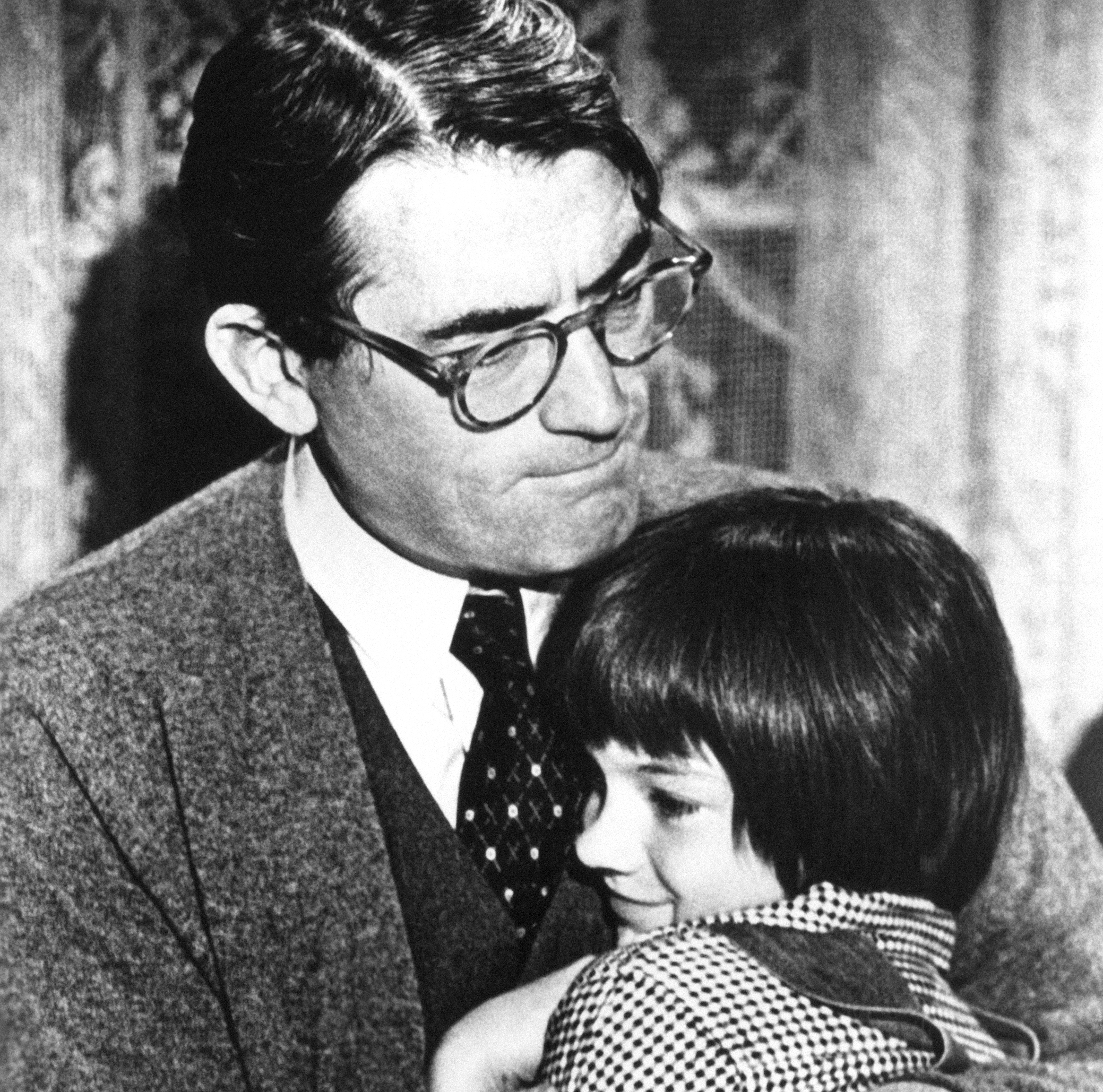
  • A major reason Mockingbird has remained evergreen is the exemplary portrayal by Gregory Peck. This is a textbook example of an actor born to play a role. The dignity, intelligence, grace, quiet strength, and restraint Peck imbues this part with help explain why he was a shoo-in to win the Academy award for best actor for his performance of Atticus Finch.
  • Harper Lee said: “That film was a work of art, and there isn’t anyone else who could play the part.” And Peck remarked in an interview: “I felt I could climb into Atticus’s shoes without any playacting, that I could be him.”
  • What has helped make this character so popular and indelible is that Atticus doesn’t pontificate, speechify, or come across in the least as self-righteous or superior, even though he is assumedly better educated, more articulate, and intrinsically smarter than just about any other character in the story. He’s also extremely likable because he isn’t an authoritarian patriarch, an overconfident or egotistical lawyer, or an easily flustered/overly emotional man. He demonstrates extreme patience and flexibility with his kids, the ability to turn the other cheek when insulted or challenged, and admirable humility among those who look up to him.
  • Peck’s look, voice, and mannerisms are also impressive. The thespian was blessed with a strong chin that projects confidence, penetrating eyes that ferret out the truth, a deep, resonant voice that commands respect, and imposing stature (Peck was 6’3”) that gave him symbolic hierarchy over adjacent performers. And he was long considered one of the most handsome actors in Hollywood history.

What significant messages or themes from Mockingbird are worth examining?

  • The value of empathy. Atticus tells Scout: “You never really understand a person until you consider things from his point of view . . . until you climb into his skin and walk around in it.” The central message at the core of Mockingbird is that it’s important not to prematurely judge or condemn others – whether that means Tom Robinson, Boo Radley, or Scout’s schoolmate. By looking at matters from the other person’s perspective, especially those considered inferior by or outcast from society, we can avoid succumbing to mob mentality, groupthink, or rash actions.
  • Giving voice to the voiceless. Atticus is Tom Robinson’s defense attorney, but he also stands as an unofficial spokesperson of sorts for the African-American townspeople who are relegated to the upper gallery of the courthouse and discouraged from speaking out or objecting to their treatment by whites in this community. Likewise, Boo Radley utters no words, but Atticus, the sheriff, and Scout speak for him and come to his defense.
  • Coming of age and loss of innocence. This tale is primarily told from the point of view of Scout and Jem, two younger children who are taught strong values by their father and learn hard truths about life and flawed humanity over the course of about a year and a half. We see Scout begin her life as a school student, and she is quickly taught that empathy is the antidote to violence. Scout and Jem also discover how ugly and toxic racism is and how dangerous and evil some grownups can be. And all of the myths and legends they perpetuated about Boo Radley disappear once they learn how selfless, kind, protective, and misunderstood Radley truly is.
    • The kids come to realize that human beings are capable of both good and evil, that bias, hate, and lies can easily destroy the innocent, and that society has an often unfair pecking order that elevates some above others.
    • This loss of innocence theme is also tied to Atticus’ memorable words about how it’s a sin to kill a mockingbird, with the bird in this context signifying innocent characters in the narrative like Tom Robinson and Boo Radley who don’t deserve to be silenced or die.
    • Recall, too, how Atticus tells Jem: "There’s a lot of ugly things in this world, son. I wish I could keep ‘em all away from you. That’s never possible." His children are beginning to understand the cruel and callous nature of some human beings, further proof of this transition away from the purity and simplicity of young childhood.
  • True leadership, as well as survivability, requires grace under pressure and a steady aim. Atticus’ hidden sharpshooting prowess, revealed when he kills the mad dog that endangers his family, is representative of his aptitude for zeroing in on and hitting a target, whether that be a literal or figurative target.
    • This act also symbolizes how Atticus wants to nullify an encroaching threat to his children and his town: literally, it’s a rabid canine, but figuratively the animals serves as foreshadowing for an even deadlier and more infectious evil—mob mentality driven by racism.

Despite the film’s widespread popularity and positive reviews, why have some have pointedly criticized the work as dated and racially problematic?

  • In his 2001 review, Roger Ebert wrote: ‘To Kill a Mockingbird,’ set in Maycomb, Alabama, in 1932, uses the realities of its time only as a backdrop for the portrait of a brave white liberal… It expresses the liberal pieties of a more innocent time, the early 1960s, and it goes very easy on the realities of small-town Alabama in the 1930s.” He adds that, during the sequence where Atticus drives out to inform Tom’s wife of her husband’s death, “The black people in this scene are not treated as characters, but as props, and kept entirely in long shot. The close-ups are reserved for the white hero and villain.”
  • Village Voice critic Andrew Sarris wrote in his 1963 review: “As usual, the Negro is less a rounded character than a Liberal construct, a projection of the moral superiority Negroes supposedly attain through their suffering and degradation…Brock Peters tries hard to break through the layers of moral whitewash, but he is finally smothered by Peck’s unctuous nobility.”
  • On the other hand, DVD Savant critic Glenn Erickson posited the following: “To Kill a Mockingbird actually plays better now than it did in 1962; although it sticks to the formula of appreciating the problems of minorities from a white perspective, it has a sensitivity uncommon even today. Gregory Peck's Atticus Finch may be a paragon of virtue but he's no superman, and the movie never stoops to easy emotional effects… Many 60s movies that 'took on' the civil rights issue now seem too preachy, or suffer from Stanley Kramer-itis, the illness that makes self-anointed do-gooders unduly proud of the rightness of their goals. Atticus Finch is personally committed to his beliefs, but he's not asking the world to see things his way anywhere except the courtroom. The movie doesn't pretend that his appeal to the decency of his peers will make a big difference on their deep-set prejudices. The black townfolk banished to segregated seats in the courtroom rise to show their respect for Finch, but no groundswell of emotion overturns the verdict. The script doesn't go for cheap effects or easily-bought epiphanies.”
  • One defense of Mockingbird from its detractors is that you have to ponder how the characters and events are conveyed through the eyes and recollections of Scout and Jem, a six-year-old and a 10-year-old, respectively. Scout in particular idolizes her father as a somewhat larger-than-life figure. It’s easier to accept, then, that while the children can be trusted as reliable narrators, the world and figures around them may be depicted as slightly exaggerated, which is perhaps why Atticus has such a robust white savior aura about him, why Ewell seems like the embodiment of the devil (not excusing his abhorrent nature), and why, possibly, the black characters are marginalized.
    • Paul Sherman of TCM wrote: “The movie is most of all about how Scout and big brother Jem have their eyes opened to the world around them, with the realization of racial injustice being just one part of that bigger scope.” Remember that it is Atticus who opens their eyes, so it makes sense that he would be given greater significance at the expense of the African-American characters.
  • Furthermore, the conclusion and aftermath of the trial are downbeat and stark. Tom is found guilty, Ewell gets away with the crimes of false accusation and beating his daughter, and we are told that Tom died trying to escape (when it’s easier to believe, in the 21st century, that Tom was secretly killed by the mob or the police while in custody). In other words, this story doesn’t attempt to soften the harsh racist realities of what living in a small town in the deep South must have been like for African-Americans during the Great Depression.
  • Additionally, how realistic would it have been for Harper Lee or Robert Mulligan to change the story and give more voice, presence, or screen time to any of the African-American characters? Again, if this is a somewhat subjective telling through Scout and Jem’s POV, it stands to reason that they would have pared down their memories of this age to their most essential truth: that their father was a hero and an important role model because he stood up for the innocent and disadvantaged. So it makes sense that Atticus commands the most attention in this story as a noble and valiant figure. The other reality is that the town is segregated, so Jem and Scout likely would not have had much interaction with African-American characters, other than the cook Calpurnia.
  • Lastly, albeit this story and film aren’t perfect, and it’s easier to poke holes in its good intentions 60 years later thanks to our increased intolerance of racism and a better understanding of race relations throughout American history, let’s not forget that this movie was a rare example in the early 1960s of a social message picture about discrimination. Even if Atticus Finch commands the spotlight at the expense of relatively voiceless black characters, the net sum gain remains substantial. At the very least, this film spoke to white audiences in the early 1960s about social inequality and how most black Americans couldn’t get a fair trial. Hopefully, it made many whites more aware of these injustices 60 years ago and continues to do so today. Put another way, the central message remains unimpeachable.

What is To Kill a Mockingbird’s greatest gift to viewers?

  • One of Mockingbird’s greatest gifts is that it serves as a familial wish-fulfillment vehicle for audiences, presenting many viewers with an ideal father they never had.
    • While he’s certainly not superhuman or flawless (remember, Atticus does wear glasses, he doesn’t keep the closest tabs on his kids, and he loses the trial), Finch possesses many of the traits, values, and behaviors that virtually anyone would want if they were designing the nearly perfect patriarch: patience, tolerance, inclusivity, warmth, courage, self-discipline, eloquence, decency, and integrity.
    • It’s little wonder, then, why Atticus Finch placed number one on the American Film Institute’s list of the greatest film heroes a few years back, or why he was named the most inspiring character in literature according to a poll of UK adults taken in 2016. (For that matter, Harper Lee’s work was voted America’s best-loved novel in a 2018 PBS survey.)
    • Finch’s unflappable dignity coupled with Peck’s stoic good looks make it easy to understand why Atticus is the ultimate father figure to children everywhere, why men continually seek to model from his example, and why women get weak-kneed just thinking about him. The world would be a much better place if we all had just a little more Atticus in us.

Read more...

Cineversary podcast traces Mockingbird's grand flight across 60 years

Monday, December 19, 2022

In Cineversary podcast episode #54, host Erik Martin learns afresh why it’s a sin To Kill a Mockingbird, as he honors the 60th anniversary of this remarkable work. Joining him this month is Chris Hite, a film professor at Allan Hancock College and an award-winning filmmaker, animator, and screenwriter of movies like FireStorm ’77: The True Story of the Honda Canyon Fire (2021). Erik and Chris pay homage to Mockingbird and explore why it’s worth celebrating six decades later.

To listen to this episode, click here or click the "play" button on the embedded streaming player below. Or, you can stream, download, or subscribe to Cineversary wherever you get your podcasts, including Apple Podcasts, Spotify,
Chris Hite
Stitcher
, Castbox, Google Podcasts, Pocket Casts, PodBean, RadioPublic, and Overcast

Learn more about the Cineversary podcast at anchor.fm/cineversary and email show comments or suggestions to cineversegroup@gmail.com.

Read more...

The edge of fourteen

Monday, December 12, 2022

What’s the greatest film yet made about and featuring generation Z? The answer could easily be Eighth Grade, Bo Burnham’s stellar 2018 effort that stars Elsie Fisher as a 13-year-old struggling to fit in and navigate the turbulence that is early adolescence. Last week, the CineVerse crew graded this examination of teen angst and named it to the honor roll among coming-of-age films (a recording of our group discussion is available here). Our assessment? Read on.

What struck you as interesting, unexpected, memorable, refreshing, or curious about Eighth Grade?

  • It’s one of the most honest and authentic movies about the adolescent experience ever created. It helps that the filmmakers cast real eighth graders and that director Bo Burnham carefully researched this age group, watching YouTube vlogs made by teens, including those created by Fisher, who plays Kayla.
    • It’s further to the movie’s credit that it casts believable-looking adolescents, including a pimply-faced and slightly pudgy lead actress.
  • Plenty of previous rite-of-passage pictures and movies about teenagers offer happy endings and resolutions to conflicts characters face earlier in the story. But Eighth Grade dares to present a story about a teen with an uncertain future – a girl who doesn’t necessarily experience an epiphany or life-changing event in the course of the story. Eighth Grade presents a series of vignettes across two weeks of a teenager’s life and isn’t trying to make a grand statement that can be universally applied.
    • Niles Schwartz, Slant Magazine reviewer, wrote: “Coming-of-age films typically mandate that its heroes charge confidently into the future. While Kayla finds that confidence here, Burnham’s screenplay is thankfully not so sentimental that it guarantees that life will get any easier for her.”
  • Some of these slice-of-life moments are cringy and uncomfortable – often in humorous but also sometimes disturbing ways. The good news is that the film isn’t mean-spirited or snarky toward its characters.
    • Deep Focus Review writer Brian Eggert wrote: “Although the humor sometimes places Kayla or her father at the center of a joke, they’re never the butt of the joke or mocked. That distinction is significant to maintain the film’s astounding balancing act between a coming-of-age comedy and a heartrendingly precise depiction of teenage insecurity. It allows Kayla’s inner life, however transitory and small in the grand scheme, to carry gravity.”

Major themes

  • Coming-of-age and the difficulties transitioning into full-blooded adolescence. Much has changed for Kayla in the three years since she entered middle school, and even more is about to change as she progresses to high school, a period that could be better or worse than what she experienced in eighth grade.
  • The young current generation depicted in Eighth Grade certainly has its unique challenges that Gen X and Boomers didn’t face, including living two lives—one online and one in the real world—and keeping up with modern technology. But most of the key difficulties explored are universal and relatable, such as the need to feel accepted, the resentment and exasperation kids feel toward their parents, and the desire to explore/experiment with sexuality.
  • Fake it till you make it. Kayla projects an image of confidence, happiness, and wisdom in her YouTube videos, but in reality, she suffers from anxiety, low self-esteem, poor self-image, and self-doubt. We see her pretend to be comfortable and in control among her peers, but deep down she is unsure and vulnerable. This film stresses the crucial importance among teenagers to fit in and feel liked and accepted by other adolescents.
  • The importance of having a self-dialogue. Kayla has very few followers on her YouTube channel, and equally few social media likes and friends in general. But she serves as her own best friend, in a way, by talking to herself in videos, including time capsule footage she creates for her future self. While the pre-middle school video she creates painfully reminds her that she hasn’t forged friendships nor made the progress she had hoped by this point, these self-pep talks may help to buoy her confidence and put her physical and personal growth in proper perspective.
  • The priceless value of parental support. Kayla may not appreciate her dad’s efforts, but the hug she gives him during the campfire scene indicates how imperative a part her dad plays in her life. Mark may appear to some as too lenient, permissive, and tolerant of her disrespect, but the patience he demonstrates with his daughter and the unconditional love he expresses verbally and nonverbally underscore how supportive and nurturing he truly is. This movie demonstrates how treacherous a tightrope many parents have to walk with their teenagers and how easy it is for mom and dad to misunderstand matters and often make things worse.
  • We are often stronger than we give ourselves credit for, even at vulnerable times. Recall how Kayla has the courage to attend Kennedy’s pool party (even though she knows she will be alienated), later confronts Kennedy about being snubbed, and isn’t afraid to approach and talk to Aiden, her secret crush. Kayla demonstrates agency, confidence, and honesty, despite her insecurities and relatively quiet nature.

Similar works

  • The Edge of Seventeen
  • Lady Bird
  • Welcome to the Dollhouse
  • John Hughes films about teenagers, including Pretty in Pink, Sixteen Candles, and The Breakfast Club
  • Pump Up the Volume
  • Thirteen
  • Booksmart
  • The Perks of Being a Wallflower
  • Mustang
  • Moonlight
  • Pin Cushion
  • Mean Girls
  • The 400 Blows

Read more...

One downright different kind of diner

Tuesday, December 6, 2022

If “quirky,” “offbeat,” and “eclectic” are more your taste when it comes to movies, you’ll probably get a kick out of Bagdad Café, a 1987 independent feature and international production directed by Percy Adlon that boasts a diverse cast and a script that’s difficult to predict. Our CineVerse directive last week was to fine tooth comb this flick; a summary of our discussion follows (to listen to a recording of our group discussion, click here).

What did you find Memorable, Interesting, Surprising, Significant, Impressive, Laudable, or Eye-opening about Bagdad Cafe?

  • This is a refreshing story and production, blending cultural and racial diversity with Americana and American iconography.
    • Bagdad Café is a film that isn’t afraid to mix disparate elements like an overweight German woman (played by an actress not afraid to show nudity), a headstrong African-American small business owner, a Native American sheriff and cook, an oddball tattoo artist, blue-collar truck drivers, a boomerang-throwing drifter, a classical piano-playing black teenage father, and a roadside rundown motel and diner. Consider how the word Bagdad makes us think of the Middle East, yet it was a real ghost town in California. Throw in a haggard-visaged and crookedly smiling actor associated with tough guy roles (Jack Palance), now playing a bohemian free spirit, and you’ve got a curious but delightful concoction of unexpected components that somehow gel.
    • Roger Ebert wrote: “(Director Percy Adlon) is saying something in this movie about Europe and America, about the old and the new, about the edge of the desert as the edge of the American Dream. I am not sure exactly what it is, but that is comforting; if a director could assemble these strange characters and then know for sure what they were doing in the same movie together, he would be too confident to find the humor in their situation. The charm of Bagdad Cafe is that every character and every moment is unanticipated, obscurely motivated, of uncertain meaning and vibrating with life.”
  • The narrative has a slapdash feel to it, as if the filmmakers are making it up as they go along and seeing where things go. Yet this approach serves the picture by making it unpredictable, idiosyncratic, and non-formulaic.
  • While the filmmakers aren’t necessarily showy or ostentatious in their style and visuals, the movie employs curious choices like canted camera angles (as if to suggest the disorienting and off-kilter environment or mindsets of the characters) and oversaturated/exaggerated colors, especially shots of the painted Mohave Desert.
  • The film was positively reviewed and well received enough to warrant a spinoff television series in 1990 that lasted two seasons, starring Whoopi Goldberg, Cleavon Little, and Jean Stapleton.
  • Interestingly, the story ends quite abruptly – on a beat that a viewer would expect would provide more closure or a follow-up conclusion scene.

Major themes

  • A fish out of water, or a stranger in a strange land. Jasmin, a Bavarian wife on vacation in California, decides abruptly to leave her husband and immerse herself in the tiny but colorful subculture of Bagdad.
  • The merits of making a fresh start. Jasmin teaches Brenda the value of starting anew without a husband and selflessly serving others.
  • Soul sisters: Jasmin and Brenda are about as different as possible when it comes to race, background, culture, and physical appearance. But eventually, the women bond and synergize their talents for hosting and entertaining.
  • There’s magic to be found in even the unlikeliest of places. With her sleight-of-hand tricks, showmanship, and amiable charm, Jasmin demonstrates that even a location as desolate and seemingly forgettable as Bagdad and its namesake café can conjure up enchantment and mysterious delights.
  • Like the boomerang thrown by the drifter, life can come full circle on you in good and unexpected ways. Jasmin is forced to leave but eventually returns. Brenda parts with her husband but is reunited later. Jasmin leaves her husband but gets a new one.

Similar works

  • Stranger Than Paradise
  • Two novels: The Ballad of the Sad Café by Carson McCullers, and Another Roadside Attraction by Tom Robbins
  • Paris, Texas
  • Coen brothers films like Blood Simple and Raising Arizona
  • Postmark Paradise
  • Chocolat
  • Local Hero
  • Mary Poppins
  • Whatever Happened to Shirley Valentine

Other films by Percy Adlon

  • Sugarbaby
  • Salmonberries
  • Younger & Younger
  • Hawaiian Gardens
  • Mahler on the Couch

Read more...

  © Blogger template Cumulus by Ourblogtemplates.com 2008

Back to TOP