Blog Directory CineVerse

Fighting Hitler with humor

Wednesday, February 23, 2022

Last week, our CineVerse group examined Ernst Lubitsch’s now 80-year-old comedy/drama To Be or Not To Be, starring Jack Benny and Carole Lombard. It’s a film that conjures up a range of thoughts and opinions and not a small amount of controversy considering its comical approach to depicting Nazis. Here’s a summary of our talking points (to listen to a recording of our group discussion, click here; to listen to the current episode of the Cineversary podcast which spotlights this movie, click here).
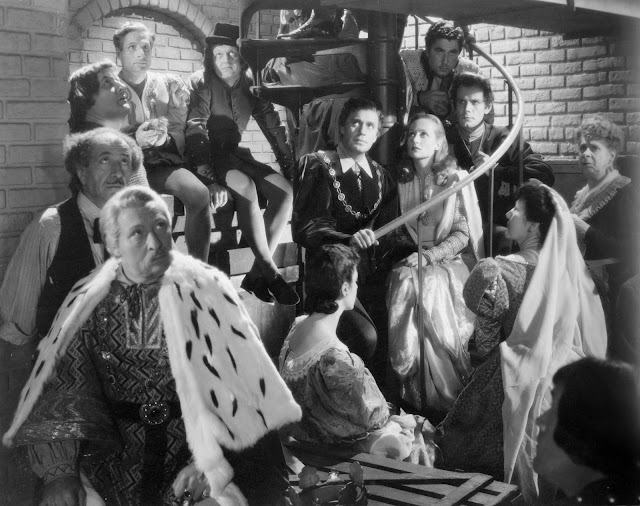
Why is this film worth celebrating 80 years later? Why does it still matter, and how has it stood the test of time?

  • To be or Not to Be matters because it was bold, groundbreaking, and divisive for its day. This was a movie that wasn’t afraid to tackle a very sensitive subject for 1942: Nazi aggression and the subjugation of Poland.
    • It didn’t shy away from infusing humor into a very dark and timely topic, and it paid the price of that risk-taking by being accused at the time by film critics, Hollywood elites, and others of being offensive, tone-deaf, and in bad taste.
    • Here was a film that dared to depict the Nazis as humanly flawed and comically fallible instead of being inhuman representations of evil incarnate; the bad guys are still vile and reprehensible, but they were also mere mortals capable of fatal ineptitude who could be made to look like clowns.
    • Lubitsch said: “It seemed to me that the only way for people to hear about the miseries of Poland was to make a comedy. Audiences would feel sympathy and admiration for people who could still laugh in the face of their tragedy.”
  • It’s worth celebrating because the comedy is graced that ever-indefinable Lubitsch touch, which meant that the jokes are layered, the laughs are not evoked from low-hanging fruit like slapstick or sight gags, and the humor was often decidedly adult, with thinly-veiled metaphors and double entendres used. As on Jack Benny’s immensely popular radio program, the film also gets a lot of mileage out of running gags, like the repetition of “Heil Hitler,” “So they call me Concentration Camp Ehrhardt, eh,” and Joseph Tura’s delivery of “To Be or Not to Be.”
    • Criterion Collection essayist Geoffrey O'Brien wrote: “Almost no line of dialogue is without a barbed secondary implication; jokes comment knowingly on the jokes that preceded them, adding elements of ironic awareness too discreetly and rapidly for a single viewing to suffice.”
    • As David Kalat said best in his commentary on the DVD/Blu-ray: “The good guys win not because they’re stronger or have better weapons. The good guys win because they have the jokes.”
  • It has stood the test of time thanks to its hybrid design: It works as both a thriller and a comedy, fulfilling ably in both genres. When it aims to tickle the funnybone, it hits a bullseye with most of its jokes and gags. When it shifts into wartime espionage mode, the danger feels real and the knot is pulled tight.
    • Lubitsch also works magic hereby simplifying what could be an otherwise convoluted plot and paring away logic and plausibility for narrative efficiency. For instance, many questions are left unanswered, such as:
      • How and why does Maria become a central figure in the Resistance and how does Sobinski find her and end up in her home?
      • What’s the point of Maria leaving a fake suicide letter signed by Siletsky?
      • What happened to the duplicate copy of professor Siletsky’s papers? Did Maria burn them?
      • What happens to Greenburg? Does he also escape, or is he doomed to die?
    • Likewise, it’s improbable that Joseph would be able to speak perfect German to Ernhardt or be that calm and intrepid under pressure.

In what ways was To Be or Not to Be was influential on cinema, comedy, or popular culture?

  • To Be or Not to Be made a strong impression on Mel Brooks, who remade it in 1982 and also created the 1968 eyebrow-raising comedy The Producers, in which Hitler and his minions are mercilessly parodied. There was a 2008 Broadway play that adapted this story, too.
  • Quentin Tarantino’s Inglorious Basterds pays homage to this movie, particularly in its third act depicting a plot against Hitler while he attends movie theater, and Paul Verhoeven’s 2006 war drama Black Book features a Jewish female character who becomes a spy for the resistance during World War II, likely taking a cue from Maria in To Be Or Not To Be.
  • Perhaps modern films like Life Is Beautiful, The Dictator, and Jo Rabbit wouldn’t exist without a feature like To Be Or Not To Be helping to pave the way for politically incorrect comedy.
  • On a bittersweet note, the posthumous death by plane crash of Carol Lombard just prior to the theatrical release of this film probably helped elevate her legacy and make fans appreciate her many talents, particularly in the comedy genre.
  • Ponder that Lubitsch’s film would have likely have been inspired to some extent by Hitchcock’s Foreign Correspondent released two years earlier, which features a similar professor character who turns out to be a villain, as well as by Fritz Lang’s Night Train to Munich (1940), and Chaplin’s The Great Dictator, which was the first feature-length Hollywood film to daringly lampoon Hitler and the fascists.
    • Other motivating predecessors include the Three Stooges’ shorts You Nazty Spy! and I'll Never Heil Again, from 1940 and 1941, which make Nazis and fascists the butt of many jokes. And Lubitsch even riffs on one of his own earlier works, The Shop Around the Corner from 1940, in how he recreates many of those Budapest storefronts and the look of the pedestrians and shopkeepers there, who resemble the people who frequent the streets of downtown Warsaw.

How would this film have been daring, controversial, or envelope-pushing, especially considering its political subtext and the fact that World War II was well underway by the time of this picture’s release?

  • Even though the full facts about Hitler’s final solution and the government-enforced practice of genocide wasn’t widely known to the public at the time this movie was being made, the filmmakers were certainly aware of mass atrocities being committed by the Nazis, the horrible conditions of the Warsaw ghetto in Poland, and the unconscionable suffering that Germany was inflicting on the Polish people and throughout Europe. So the decision to pursue a comedy about Nazis and the invasion of Poland would have been upsetting to many.
    • Remember, too, that the United States had not yet entered into war with Germany or the Axis powers at the time of the film’s production and release. And there was no guarantee that yuks about concentration camps, mass murder, and Hitler walking among a dumbfounded throng of Jewish Poles would resonate among viewers.
    • Deep Focus Review blogger Brian Eggert wrote: “Imagine if a comedy about al-Qaeda terrorists attacking the World Trade Center had gone into production in the summer of 2001 and been released shortly after 9/11. That would be the modern-day equivalent of Lubitsch shooting To Be or Not to Be in Hollywood in late 1941 for a premiere of March 6, 1942.”
  • To Be or Not to Be had the guts to make Nazis fallible and flawed, to strip them of their “unstoppable machine”-like qualities and expose them for the imperfect humans they truly were—a humanizing approach that may have angered some people.
    • Kalat, in his DVD commentary, made the following observation: “Lubitsch finds a way to defeat the Nazis by humanizing them. Understanding them is the only way to defeat them…our heroes understand our foes well enough to infiltrate and impersonate them.”
    • Brian Eggert further posited that: “Lubitsch emphasizes a profound truth indeed—that Nazis were not the superhuman monsters that so many cinematic representations made them out to be. Rather, they were preposterously cruel and deluded human beings, and whoever chose to follow ridiculous figures such as Hitler were equally incompetent. Lubitsch also demonstrated how vulnerable the Nazis could be, an important message to incite U.S. involvement in World War II… Lubitsch’s Nazis are weak-minded and buffoonish people, ever frightened of their overseer, and prone to interrupting conversational lulls with an enthusiastic-if-discomfited ‘Heil Hitler!’…By portraying them as incompetent, Lubitsch strikes a much more severe blow to the Nazi philosophy.”
    • Remember the words of Professor Siletsky: “We're not monsters...Tell me, do I look like a monster?...We're just like other people. We love to sing, we love to dance, we admire beautiful women. We're human.”
    • Recall, as well, the ample blood that soils Siletsky’s clothes when he is shot; it was rare to see blood or gore in a 1940s movie. This image makes us think of Greenburg’s recitation of Shylock from the Merchant of Venice: “If you prick us do we not bleed?” That saying is as true for the enemies as it is for the heroes.
  • This picture is a mashup blend that offers both laughs and thrills, comedy and tragedy, silliness and seriousness, satire and spy story, thespian farce and war movie. The narrative can shift suddenly in tone, disorienting viewers not used to this kind of alternation. It’s far from the funniest movie you’ve ever seen, and it is certainly not the most gripping study in suspense. But it does balance between light and dark tonalities quite deftly and entertainingly. Still, these abrupt tonal transitions won’t delight everyone.
    • In his commentary, Kalat suggests: “The movie isn’t reliable in signposting when it’s changing modes…The audience is consistently manipulated into laughing about things that are not funny and then made to feel self-conscious for having done so.”
  • There are many hints of sex, infidelity, and cuckolding, and the filmmakers consistently use comedic innuendo, double entendres, and farcical bedroom situations, as one would likely expect of a Lubitsch sophisticated adult comedy. There is also a risqué line by professor Siletsky about Maria being “a cheap little…” and we are left to fill in that blank, which of course means "whore." That’s quite the shocking line for 1942, even if it pulls its punch. Ponder, too, how Lubitsch equates Germany’s invasion of Poland with the infiltration of Joseph’s bed by Sobinski.
  • The film is replete with famous quotes that would upset many an applecart, lines like: “What he did to Shakespeare we are now doing to Poland,” “We do the concentrating and the Poles do the camping,” “So they call me Concentration Camp Ehrhardt, eh?”, “You might not believe it, but I can drop 3 tons of dynamite into minutes,” and “If we should ever have a baby, I’m not sure I’d be the mother” followed by “I’m satisfied to be the father.”
  • Maria doesn’t pay a price at the conclusion for her flirting or potential infidelities, and she and the pilot remain sympathetic figures despite their philandering. Recall that the last scene suggests that Sobinski isn’t the only man she has a dalliance with; a new unidentified man in uniform gets up to presumably rendezvous with her during Joseph’s latest delivery of Hamlet’s soliloquy.
  • It’s also interesting that the character we loathe the most is professor Siletsky, not necessarily Col. Ehrhardt or Capt. Schultz. Perhaps that’s because Siletsky never makes us laugh, whereas Ehrhardt and Schultz are the butts of many jokes.

What themes, messages, or morals are explored in To Be or Not To Be?

  • Playacting, deception, and the power of theatrical performance. This is a farcical story about mediocre actors who somehow manage to fool their most hostile crowd: Nazis bent on their destruction. Here, artifice requires artistry.
    • Ed Gonzales, a reviewer for Slant Magazine, wrote: “To Be or Not to Be is largely about the interplay between art and reality and it uses modes of performance to challenge the stiffness and authority of a preposterous political regime…Just as Shakespeare gave Hamlet’s contemplation of suicide a political context, Lubitsch similarly offers the actors in his film an existential challenge: Frustrated by their inability to act (shortly before the Nazis invade Warsaw, their anti-Hitler play Gestapo is shut down), the actors take arms against a sea of troubles in order to live the life of the theater vicariously through their mockery of the Nazi movement that seeks to destroy them. Many of the film’s pleasures, then, derive from watching these characters successfully use the tools of the stage (improvisation, sense memory, prosthetics) to successfully subvert the Nazis.”
  • “To be or not to be,” or the juxtaposition of truth versus lies, of authenticity versus fabrication. Fascinatingly, in example after example, the movie gives us facsimiles of the truth, such as the thespians costumed as Nazis, before showing the real things.
    • Brian Eggert further wrote: “By pairing stage actors against Nazis who play the part of monsters, and then suggesting these actors must behave in farcical ways to pass as Nazis and survive, Lubitsch plays with notions of reality and theater, and by the end of his film resolves that the Nazis too are simply actors on a stage. This interplay of reality and theatricality aligns his film’s absurdist Nazi behavior with real life, whereas the Polski troupe’s stage performances are knowingly artificial; still, they’re both gross exaggerations and silly for the viewer, which thereupon delivers a staggeringly refined insult to Nazis. By implying Nazis are just actors on the world stage, Lubitsch discredits their most effective and intimidating weapon, their theatricality, and strikes a staggering blow through the art of cinema.”
  • Don’t underestimate the creativity and cunning of the underdog or the loser, who can overcome the odds with pluck and providence.
  • Exposing frauds for who they really are. The worst phonies—Siletsky and Ernhardt—are revealed as being true charlatans due to their incompetence. But the clever frauds, Joseph and his fellow actors, deceive relatively effectively, although they come close to ruin on several occasions.
  • "If you prick us, do we not bleed?” Greenburg recites this famous Shylock speech from The Merchant of Venice several times in the film, reminding viewers of the fact that real flesh-and-blood human beings – particularly Jews like Greenberg – were suffering at the hands of the Germans. Greenburg is a surrogate here for Lubitsch the director, trying to impress upon audiences in 1942 that the Nazis were treating Jews inhumanely. Greenburg is the film’s voice of conscience, forcing us to reckon with the unfair plight of the Jewish people, the extent of their suffering, and the abominable racist and discriminatory ideology that the Nazis used to justify treating Jews as subhuman.

What is To Be or Not To Be’s greatest gift to viewers?

  • One of its greatest gifts is its ability to so thoroughly satisfy as both a comedy and a suspenseful war film. It takes considerable talent to be able to alternate mood, manner, and method throughout a picture like To Be or Not to Be without completely alienating viewers who most value laughs or without abandoning those who like their espionage and intrigue served savory and warm.
  • Another is the screenplay, by Lubitsch and Edwin Justus Mayer—a story that functions like a finely crafted timepiece. As with an antique watch, which is comprised of a complex system of springs, rotors, gaskets, escapements, balance wheels, and other interrelated intricate parts, To Be or Not to Be relies on precision craftsmanship and a delicate rhythm between what would seem like incompatible components.
    • Consider how meticulously structured this story is, in which the dramatic narrative is commented on so cleverly by the jokes, which have layers upon layers of meaning and resonance, creating a sophisticated style of comedy that doesn’t aim for cheap and simple laughs but instead is designed to make you think deeper as you chuckle along while never forgetting the underlying conflict: that Naziism is at war not only with nations but with humanity itself, and it will take cunning and ingenuity by even the least skilled and talented to help defeat this formidable foe.
  • And we can certainly credit the “Lubitsch touch” with helping to make To Be Or Not To Be so downright smart and entertaining as both a laugher and a knot-twister. – Film critic Richard Christiansen described the famous Lubitsch touch as embracing “a long list of virtues: sophistication, style, subtlety, wit, charm, elegance, suavity, polished nonchalance and audacious sexual nuance,” while Billy Wilder summed it up as “the elegant use of the Superjoke. You had a joke, and you felt satisfied, and then there was one more big joke on top of it. The joke you didn't expect.”
    • As evidenced in so many of his best works, like Ninotchka, The Shop Around the Corner, Design for Living, and Trouble in Paradise, Lubitsch could marry many different sensibilities and hybridize varied genres and subgenres of cinema with relative ease thanks to his considerable gifts as a master teller of adult stories, his knack for showcasing the dynamism and distances between men and women, and his propensity for exploring the many facets of sexual politics. To Be or Not to Be is the ultimate testament to the man’s many talents.

Read more...

The ties that bind

Thursday, February 17, 2022


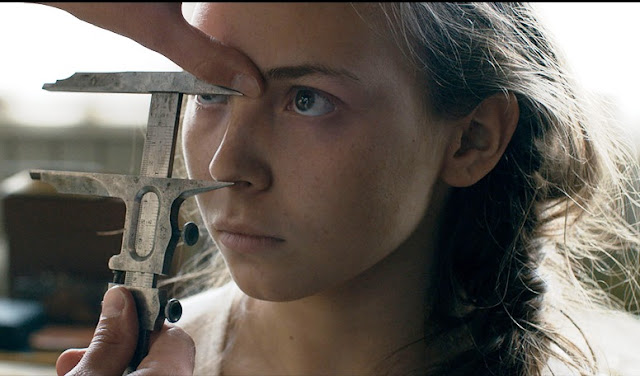
Amanda Kernell’s Sami Blood (2016), an absorbing portrait of a Swedish adolescent who yearns to hide her indigenous bloodline and assimilate into mainstream Swedish society, is a poignant cinematic treatise on racial and gender prejudice that sticks with you long after the credits have rolled. Our CineVerse crew was impressed by the direction, thematic richness, and performances in this film. Here’s a synthesis of our conversation points (to listen to a recording of our group discussion, click here).

What struck you as memorable, unanticipated, eye-opening, or rewarding about this movie?

  • The impact of this film relies heavily upon the performances of adolescent and child actors, which can be risky if you cast the wrong youngsters for the parts. But lead Lene Cecilia Sparrok and her younger sister Mia Erika Sparrok enthrall us with a credibility and authentic look that make us fully believe in their characters and their stories.
    • Variety critic Guy Lodge wrote: “It’s Sparrok’s quiet, searching debut performance that deserves substantial credit for “Sami Blood’s” delicately modulated tone. Blessed with a still gaze that can look hopefully defiant and utterly adrift all at once, she knots and loosens her body language according to who’s watching Elle-Marja, and how.”
  • The naturalistic cinematography, with many scenes shot in the picturesque outdoors of Sweden, is soul-stirring.
  • While the narrative presents disturbing sequences and uncomfortable, alienating situations involving Elle-Marja, there are also some welcome lighter moments and teenage rite-of-passage scenes that help our heroine feel normal and accepted.
  • The earlier scene where Elle-Marja cuts the reindeer’s ear serves as foreshadowing to a later scene where she is the victim of an ear-marking, suggesting that she and her people are considered as little more than wild animals by the higher-class Swedes.
  • The story is unquestionably told from Elle-Marja’s point of view and is subjectively sensitive to her experiences, as evidenced by the sudden percussive shrillness of the flashbulbs, the sound of the switch being used to whip her back, or the curious appearance and tactile sensation of the seminal fluid on her fingers.
  • The filmmakers aren’t being preachy or biased about Elle-Marja and her decision to leave her native people.
    • According to author Monica Mecsei: “Elle-Marja and her sister Njenna are in the same situation, but they make completely different choices. Elle-Marja desires to pass herself off as a “normal Swede” while Njenna is proud of her Sámi blood, refusing to make any changes. They are two typical attitudes toward the new culture. To be isolated, or to be assimilated? Sami Blood doesn't make value judgments on the options, but just presents the phenomenon to the audience. Neither of them is wrong or right. Young indigenous people face a self-identity crisis which was, is, and can be a universal problem all over the world.”

Major themes

  • The drawbacks of forgetting your roots, abandoning familial and cultural traditions, and denying your racial identity.
  • The subjugation and cultural denigration of a country’s indigenous peoples: a colonialist theme replete in world history.
  • The psychological scarring and damage caused by socially acceptable racism and discrimination.
  • Coming-of-age and the transition from childhood to adulthood, or at least from adolescence to young adulthood.
  • Rebellion and refusing to acquiesce to unjust societal norms.
  • A stranger in a strange land: Elle-Marja has gone AWOL and is determined to integrate within larger Swedish society, but she’s a fish out of water who can’t possibly blend in because of external bigotry and her lack of experience and resources.
  • The sting and shame of feeling like a lower-class social outcast and community pariah, and the extreme difficulties of attempting to climb the social ladder above your assumed class. This unresolved pain is symbolized by her mutilated ear, which bleeds afresh and festers throughout the film.

Similar works

  • The Cuckoo
  • Black Shack Alley
  • Carol’s Journey
  • Mustang
  • King Jack
  • Persepolis
  • I Am Not a Witch
  • The Magdalene Sisters
  • Rabbit-Proof Fence

Read more...

Cineversary celebrates a killer comedy that turns 80

Tuesday, February 15, 2022

In Cineversary podcast episode #44, host 
Erik Martin honors the 80th anniversary of To Be or Not to Bedirected by Ernst Lubitsch, by interviewing Steve Darnall, host of the Those Were the Days radio show and publisher of Nostalgia Digest magazine. Erik and Steve explore what makes this film both a comedy gem and a gripping wartime thriller as they examine why To Be or Not to Be is deserving of kudos eight decades later, its cultural impact and legacy, what we can learn from the movie in 2022, and more.
Steve Darnall

To listen to this episode, click here or click the "play" button on the embedded streaming player below. Or, you can stream, download or subscribe to the Cineversary podcast wherever you get your podcasts, including Apple PodcastsStitcherSpotifyGoogle PodcastsBreakerCastboxPocket CastsPodBeanRadioPublic, and Overcast.

Learn more about the Cineversary podcast at anchor.fm/cineversary and email show comments or suggestions to cineversegroup@gmail.com.

Read more...

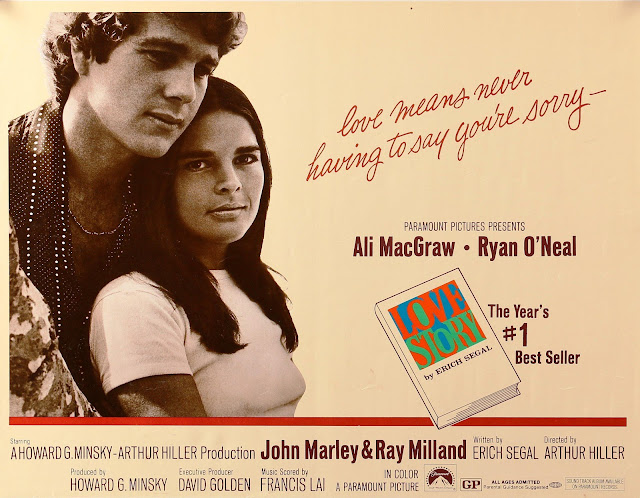
Loving "Love Story" means never having to say you're sorry for it

Tuesday, February 8, 2022

If you’re hankering for a movie about amore that offers a bit more than the usual affectionate sentiment, look to Love Story, the 1970 weeper that enthralled America for months and created the earworm main theme to end all main themes. Just be forewarned that all the hype heaped upon this film five decades ago may feel like overkill today, when it’s much easier to poke holes in heart-shaped balloons inflated by Hollywood honchos eager to cash in on syrupy romance pictures. Still, Love Story is not without its charms and heartstring tugs, and our CineVerse group found plenty to parse through last week in its exploration in this movie. Here’s a roundup of our prominent conversation points (to listen to a recording of our group discussion, click here).

What was surprising, unexpected, memorable, or curious about Love Story?

  • At the time, this was one of the biggest box office juggernauts ever, earning, in today’s dollars adjusted for inflation, $641 million; in fact, Love Story ranks number 41 on the all-time (adjusted dollars) box office list.
  • Perhaps the film’s instant and continued success between 1970 and 1971 can partially be attributed to fortuitous sociocultural timing.
    • In an era when many Americans were disillusioned and fatigued by the Vietnam War and the turbulence that ended the 1960s, maybe a straightforward and unapologetic tale of passionate, true love was exactly what audiences were looking for – a romantic escape from a depressing time in American history, even though Love Story is a tragedy and ends on a downbeat note.
    • This film can be seen as a verification that genuine, unconditional love is the most powerful bond human beings can share, which would have been a life-affirming message during a time of violence, hate, distrust, and sociopolitical angst.
    • Remarkably, the filmmakers and characters don’t touch on the political unrest prevalent at that time, including the Vietnam War – despite the fact that they are on the campus of Harvard, where you’d likely expect to see more outspoken views and protests.
  • However, many critics and moviegoers looked unkindly on this film for several reasons:
    • The cloying and repetitive theme song played throughout the picture (note that the score won an Academy Award);
    • Jennifer’s snarky attitude and the sometimes prickly rapport between her and Oliver;
    • the cliché and pretentious line “love means never having to say you’re sorry”, which to some sounded more like an emotionally manipulative marketing tagline (which it was, being used on the film’s poster);
    • overacting and/or underacting from Ryan O’Neal and Ali McGraw;
    • the ham-fisted and annoyingly obvious class warfare theme hammered home again and again;
    • lack of foreshadowing or build-up to Jennifer’s sickness (other than the fact that the movie opens at the end of the story, with Oliver revealing that his love has died);
    • implausibilities like the lovers not crying or breaking down, as would be expected of any human being, between the time Jennifer’s ailment is revealed and when she succumbs to it.
  • Love Story would have been slightly controversial, or at least attention-getting, because the lovers consider themselves to be atheists.
  • Interestingly, Jennifer’s illness is not disclosed in the film, although it is named in the book (leukemia). This begs the question: Should the filmmakers have been more specific about the terminal illness? Does it diminish the authenticity of the experience to at least not provide more details to the audience about what she is suffering from?
  • The creator of the story, Erich Segal, was asked to pen a novel of his screenplay; the book was released before the movie hit theaters, and it became a major bestseller, helping to drum up significant interest and enthusiasm for the forthcoming film. However, many believe the movie is better than the book.

Major themes

  • Love means never having to say you’re sorry.
    • Actress Ali McGraw said in an interview: “Saying sorry isn't what it's about. It's about really feeling badly for the hurt ... and then absolutely trying never to do it again. So there's a lot of work more than, 'Gee, I'm sorry,' and then scooting outside to get on your bike and ride into the fall leaves or whatever."
  • Life is short, but love is eternal. Oliver and Jennifer feel like star-crossed soulmates who were destined to be together and love one another forever. Oliver will presumably continue to love and miss Jennifer after her death.
  • Opposites attract. Oliver is wealthy and privileged, while Jennifer comes from a working-class family and is a Catholic. Despite their differences and backgrounds, they fall in love and complete one another, although there are arguments, conflicts, and compromises along the way.

Similar works

  • Oliver’s Story, a 1978 sequel starring Ryan O’Neal
  • Terms of Endearment
  • The Way We Were
  • Summer of ‘42
  • Sunshine (1973)
  • The English Patient
  • The Notebook
  • A Walk to Remember
  • The Fault In Our Stars

Other films by Arthur Hiller

  • The In-Laws
  • Silver Streak
  • The Out-of-Towners
  • See No Evil, Hear No Evil

Read more...

Pastoral family politics

Tuesday, February 1, 2022

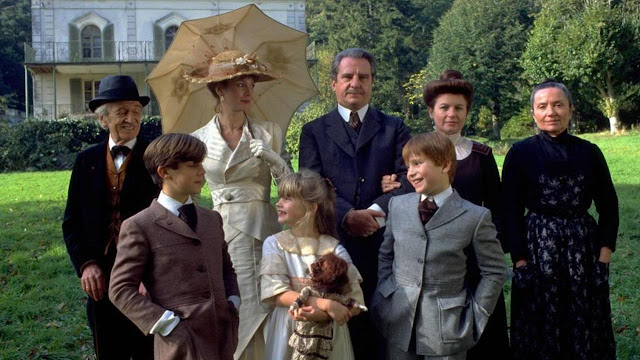
Ever imagine if Monet, Renoir, or another famous impressionistic painter were able to create a motion picture in their day? The end product might be something like A Sunday in the Country, a 1984 movie directed by Bertrand Tavernier that, while thin on story, is richly textured with sumptuous natural visuals and fascinating dialogue that reveals volumes about its characters while also leaving plenty to the imagination. Our merry band of CineVerse members took a leisurely stroll through this cinematic outing last week and came away impressed, as evidenced by the following recap of our conversation (to listen to a recording of our group discussion, click here).

What did you find fascinating, unexpected, notable, or fulfilling about A Sunday in the Country?

  • The filmmaking style feels “painterly,” as if we are watching a cinematic version of an impressionistic painting by a master artist. Interestingly, Ladmiral is a painter who deviated from the impressionists of his era, choosing instead to follow a traditionalist style.
    • The scene toward the end where Irene and her father visit the outdoor café and dance, with its movement of characters, array of colors, and cheerful spirit, is perhaps the closest this movie comes to an impressionistic painting.
  • There is no major plot. We simply observe an old man and his children and grandchildren on one day in the summer of 1912. Instead of a traditional narrative with rising and falling action, conflicts and resolution, and a conventional three-act structure, we are shown slice-of-life vignettes within a condensed time frame that “paint a picture,” impressionistically, of three generations of a family.
    • Roger Ebert wrote: “Tavernier never urges his story upon us, and has no great plot to unwind. He simply wants to observe his characters during the course of a long day during which we find that none of them are very happy with their lives…To find comparable attention to the subtle forces within a family, you would have to turn to Yasujiro Ozu, who made almost all of his films about Japanese families. The Japanese term "mono no aware," which suggests a bittersweet awareness of the beauty of life and the inevitability of death, applies to Ozu, and here to Tavernier.”
  • The film features sporadic voiceover narration by an unseen and mysterious third party, offering emotional navigation to the characters and providing commentary on what certain personalities are feeling or thinking.
  • We are shown several dream-like interludes that apparently are memories, fantasies, or thoughts a character is having but which depict something not actually happening in reality: for example, Ladmiral’s son and daughter-in-law and his housekeeper observe his dead body in his bed; Irene envisions her deceased mother who says “Will you stop asking so much of life, Irene?”; and Irene has an unspoken thought that her niece will die prematurely at age 15.

Major themes

  • Family politics, and the complexities of and undercurrents driving familial relationships.
    • Ladrimal is disappointed in his son and makes this dissatisfaction clear in his words and attitude, even though Gonzague tries to please his father and visits him fairly regularly; but Ladrimal’s daughter Irene can do no wrong, even though her life is not settled, she is an impulsive free spirit, she rarely visits, and she questions her father’s artistic choices.
  • Small, assumedly unimportant moments in a person’s life can make a major impact.
  • Self-reflection, personal assessment, and taking stock of one’s life, talents, ambitions, and legacy.
  • It’s never too late to reinvent yourself and make a change, and we can be suddenly inspired by unexpected forces that come into our lives and influence us to invoke new creativity.
    • An anonymous writer on the blog Ripple Effects wrote: “For an old man, every goodbye could be the last. But the final scene appears to turn the tide. Ladmiral goes into his studio, takes down the painting he’s been working on, a still-life subject he’s painted numerous times before and in a style he’s been following all his life. He replaces it with a blank canvas on the easel, sits down, and looks at it ponderously. Like his son’s, his life, too, has been a disappointment to himself…What I see is a slight, nuanced smile on his face. Every blank canvas is a fresh start no matter how old you are.”

Similar works

  • Films by Yasujiro Ozu, including Late Spring, Autumn Afternoon, Early Summer, and Late Autumn
  • On Golden Pond
  • The Farewell
  • About Schmidt
  • At Eternity’s Gate
  • Bienvenue parmi nous
  • The Ballad of Narayama

Other films by Bertrand Tavernier

  • The Clockmaker
  • Round Midnight
  • Daddy Nostalgia
  • The Princess of Montpensier
  • It All Starts Today

Read more...

How "Fellowship" set the new template for fantasy films

Friday, January 28, 2022

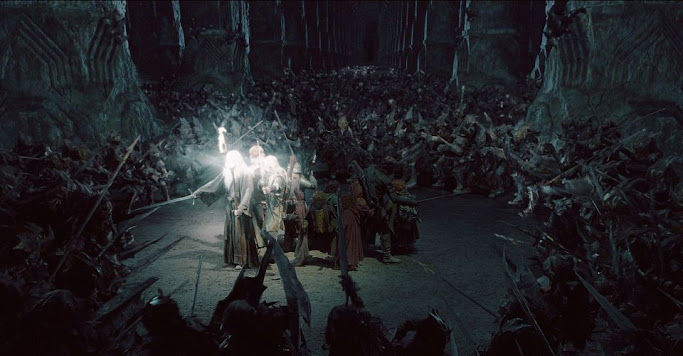
What makes The Fellowship of the Ring—the first part in Peter Jackson’s epic trilogy, which celebrated a 20th anniversary last month—the fantasy film to rule them all? Read on for compelling evidence substantiating why Fellowship was a complete game-changer for the fantasy-adventure subgenre as well as the movie business (and click here to listen to the latest Cineversary podcast episode celebrating this film's 20th birthday).

Why is The Fellowship of the Ring film worth celebrating 20 years later? Why does it still matter, and how has it stood the test of time?

  • Even though special effects have significantly improved over the last 20 years, and despite the fact that we’ve been bombarded as viewers with a glut of films of the fantastical kind over that span, the Fellowship of the Ring and the movie trilogy as a whole stands as the piece de resistance, the magnum opus in this fantasy adventure subgenre.
  • Many believe it’s better than any other such film released in the 21st century, including any of the new Star Wars episodes, Harry Potter pictures, DC or Marvel movies, Narnia features, or, for that matter, Hobbit adaptations.
    • Some contend that the Rings trilogy is the greatest film trilogy of any genre. Of the first three Star Wars movies and three Godfather films, the third installment has some weaker moments, the man with no name Dollars trilogy has one chapter three masterpiece although two very good predecessors, and Richard Linklater’s Before trilogy is a marvelous achievement in intimate filmmaking filled with wonderful surprises but the scope and the stakes involved were much smaller.
  • It has stood the test of time, as well, because Fellowship doesn’t feel like a soulless tentpole production designed to pad the pocketbooks and portfolios of its creators and bankrollers. The extreme attention to detail and respect for the epic nature of this story is clearly evident in every frame.
    • Cases in point: It’s amazing to think that the production team consisted of over 2,400 people and 26,000 extras participated in this trilogy, more than 40 seamstresses fashioned 19,000 costumes for the three movies, the principal actors engaged in weeks-long training for sword fighting, horseback riding, boating, and Tolkien-speak, and Minas Tirith was the biggest set ever built in the Southern Hemisphere.
    • You can tell that Peter Jackson and his collaborators went to extreme lengths to build this world and rely heavily on old-school effects and techniques wherever possible, using CGI as but one of the many tools in their arsenal alongside tricks like forced perspective, miniatures and bigatures, and matte paintings.
    • So many fantasy films today are preoccupied with perfect visuals that heavily accentuate snazzy but overblown computer graphics, which discerning viewers can quickly grow tired of and numb to.
    • The Fellowship of the Ring never forgets that its most valuable components are the characters in the conflicts motivating them. The filmmakers are to be commended for prioritizing personalities and story over eye candy, although they don’t shirk their duties in that department, either.
    • This movie is replete with showstopping creatures, awe-inspiring battle sequences, and jaw-dropping visuals that required plenty of digital tools to come to life. While a few examples of the CG may appear a bit dated in 2022, the vast majority hold up very well and fail to break the spell of suspended disbelief cast on the audience.
  • Fellowship also still matters because the acting is a cut above what you’d probably expect from a fantastical film featuring wizards, elves, dwarves, trolls, goblin-like creatures, and other figures that some contingent of the audience may not take seriously due to the trappings involved with this Dungeons and Dragons-like domain of geekdom.
    • The characters are well cast, all the more impressive considering that most of these actors were unknown or at least underappreciated at the time.
    • Remember that this is the film that announced the arrival of thespians we cherish more dearly today, especially Ian McKellen, Viggo Mortensen, Elijah Wood, Cate Blanchett, and Orlando Bloom.

In what ways was this film influential on cinema and popular culture?

  • The Lord of the Rings trilogy, including Fellowship of the Ring, made audiences more accepting of live-action fantasy films featuring magic, wizards, and mythological creatures like elves, trolls, and dragons, which were previously not taken as seriously by critics and moviegoers alike.
    • Prior to Fellowship, except for a handful of fantasy-adjacent pictures like The Wizard of Oz and the Star Wars movies, fantasy was a genre that didn’t get as much attention or respect as, say, sci-fi or superhero films.
    • But in the wake of the Rings trilogy, we saw plenty of imitators and close cousins like Game of Thrones, Wheel of Time, Shadow and Bone, Clash of the Titans and Wrath of the Titans, The Golden Compass, the Percy Jackson films, Beowulf, King Arthur, etcetera.
    • Today, The Fellowship of the Ring ranks as the fourth most popular film ever on IMDb based on IMDb rating.
  • Remember, too, that this trilogy proved that fantasy films could capture the attention of cinema elites.
    • Fellowship all by itself earned 13 Academy Award nominations, which at that time was a record for a genre film, winning for Best cinematography, original score, makeup, and visual effects.
    • Among all the awards across the world for which it was nominated, the trilogy received 475 awards out of 800 nominations, earning The Lord of the Rings the title of the most awarded film series in movie history.
    • Fellowship scores a 92% fresh rating on Rotten Tomatoes.
    • Also, most recently, The Fellowship of the Ring was officially included in the National Film Registry, only two decades after its theatrical debut.
  • Certainly Fellowship raised the bar in the visual effects department.
    • Weta Digital, responsible for the CGI, created MASSIVE (Multiple Agent Simulation System in Virtual Environment), a cutting-edge computer animation and artificial intelligence software employed in Fellowship and the subsequent two movies to create crowd-related visual imagery, making sequences like the second age war against Sauron and the Battle of Helms Deep possible and realistic.
    • Weta also famously used special motion capture technology to bring characters like Gollum to life. These digital tools have since been used in plenty of big-name flicks, from the 2005 King Kong and 300 to Wall-E and Avengers: Endgame.
  • The way this trilogy was authorized by New Line Cinema demonstrated that committing to several movies in a series at the same time was the right decision.
    • In other words, they didn’t wait to green-light The Two Towers until after The Fellowship of the Ring proved to be a box-office hit. They gave Jackson the go-ahead to film all three movies at the same time, which hadn’t been done in Hollywood up to that point.
    • This was one of the greatest gambles and highest risks ever taken by a studio, and it paid off.
    • Nowadays, studios are more eager to follow suit on approving multi-film projects and bestowing them with budgets and the hundreds of millions, whether it be Disney or Amazon Studios.
  • The Fellowship filmmakers also weren’t afraid to end with an unresolved conclusion as opposed to a self-contained story with an upbeat dénouement.
    • The success of this picture showed that, if you make a quality fantasy adventure movie and get the audience fully vested in the story and characters, they will come back in droves for successive chapters.
  • This trilogy, particularly Fellowship, also made extended editions cool, even though they expanded an already elongated runtime.
    • The Fellowship of the Ring Extended Edition clocks in at 208 minutes versus 178 minutes for the theatrical version, and most fans prefer the longer cut.
    • Likewise, the home-video releases of Fellowship and the trilogy set the standard for box sets, offering up to 26 hours of extra footage and bonus features in the three-movie package.
    • Think about all of the extended cuts and loaded box sets we’ve seen over the past 20 years, thanks in large part to the Rings films.

Why and how was Peter Jackson the ideal director for this movie and the trilogy? What special qualities does he bring to the film?

  • Jackson and his team weren’t afraid to condense the story so that its primary focus was Frodo and the quest to destroy the ring.
    • That meant they had to eliminate unnecessary characters, subplots, and events and streamline some of the timelines and sequences to produce a more cinematic narrative that could fit within three films.
    • So even though Fellowship dispenses with or pares back interesting characters from the book like Tom Bombadil, Farmer Maggot, Glorfindel, Barliman Butterbur, and Gwaihir the Windlord, the key narrative drive and essential figures are not sacrificed or diluted in any way.
    • This task alone, of deciding what to keep and what to discard from the text as well as the reworking of some of the characters, dialogue, and actions without disrespecting Tolkien’s vision, demonstrates why Peter Jackson, Fran Walsh, and Philippa Boyens were the right artists for this project.
  • Jackson’s ability to shoot all three films consecutively and manage all the countless details involved, overlapping storylines, and technical and logistical challenges, is no small movie miracle. The man sacrificed sleep, family time, and probably long-term health over many years to bring this trilogy to fruition, and the stunning on-screen results speak for themselves.
  • Jackson often relies on many extreme close-ups of the actors to give the viewer a more intimate look and feel for these characters and to emphasize the personal conflicts and emotional challenges faced by each.
    • With so many picturesque vistas, majestic landscapes, impressive architecture, and unique planes of battle to showcase, it’s easy to focus on the dazzling longshots and high-angle camerawork that immersed the spectator in this marvelous middle earth universe.
    • But it’s these medium and extreme close-ups that make us care about the people involved and reinforce the human element at work, even if some of these figures aren’t humans.
  • Rafael Motamayor with Rotten Tomatoes wrote: “What makes Lord of the Rings so special is the fact that, despite the big production effort, it still feels like a Peter Jackson film through and through. For one, Jackson infuses the trilogy with moments of sheer horror that reflect the filmmaker’s roots, whether it’s a fight against a giant spider or the grotesque designs of the orcs and Uruk-hai. In The Fellowship of the Ring alone, Jackson puts the audience in a constant state of terror in the first half, making viewers identify with the hobbits who venture out into a dangerous world for the first time and encounter unspeakable horrors like the Nazgûl, who are shot mostly in extreme closeups like the most iconic horror monsters, and the giant Watcher in the Water creature outside of the Mines of Moria.”

What themes, messages, or morals are explored in The Fellowship of the Ring?

  • The corrupting nature of power, and the fallibility and vulnerability of mortals.
    • The potency of the ring infects, taints, and undermines everyone who comes in contact with it, even a humble and altruistic soul like Frodo. Time and again we are shown how men, women, wizards, elves, dwarves, and hobbits alike are tempted by the allure of this seemingly insignificant trinket.
  • Even the smallest person can change the course of history, as Galadriel says.
    • The fact that a diminutive, relatively powerless figure like Frodo can bear the ring for so long without completely succumbing to its persuasion underscores a meaningful moral: Selflessness, courage, willingness to sacrifice, and empathy are among the most incorruptible virtues and mighty traits an individual can possess.
    • It is these qualities that made the rest of the Fellowship appoint and trust in Frodo as the leader of their quest and their ultimate hope for salvation from Sauron. They know that Frodo doesn’t seek glory, rulership, or revenge. It is his humility, decency, and compassion, and the fact that the enemy would underestimate Frodo, that make this hobbit the best candidate for this impossible job.
  • All we have to decide is what to do with the time that is given us, in the words of Gandalf.
    • These words remind us that life and our time in it are precious, and each of us can make a difference in this world depending on the actions we choose to take, which can be for good or evil.
    • Frodo wishes the ring had never come to him and none of this had happened, but Gandalf suggests that Frodo was meant to have the ring, due to factors beyond his control. But what is in Frodo’s control is what he chooses to do with this responsibility.

What is this movie’s greatest gift to viewers?

  • Perhaps The Fellowship of the Ring’s greatest gift is that it helped make the fantasy adventure subgenre respectable and legitimate.
    • Consider those who grew up in the 1970s and 1980s, a time when these types of movies were relatively popular among the young demographic but they weren’t widely accepted by the masses or made with lasting quality.
    • Back then, you had films like the Conan movies, Dragonslayer, The Sword and the Sorcerer, Heavy Metal, Clash of the Titans, Krull, Legend, and other similar fare. But many adults downgraded and dismissed this material, and the majority of these were empty-calorie entertainments without cinematic sustenance. Most of these films lacked the necessary budget, believable special effects, impressive cast, effective filmmaking talents, and marketing push to appeal beyond the teenage and comic book crowd.
    • But Fellowship and its follow-up chapters completely reset the template for fantasy adventure and forever changed the paradigm by raising the bar quite high.
    • Unlike 1977, when Star Wars: A New Hope was released, there was a lot more clutter and competition to break through in 2001, an era when CGI was already widely accepted and film franchises like Star Wars, Jurassic Park, X-Men, and Harry Potter dominated or were coming into their own. There was no guarantee that Fellowship would become a game-changer just because of all the publicized hype and anticipation, the kind of picture that would sell a lot of tickets, please the critics, and be fondly remembered.
    • But of all those series, and many that came later, including the Pirates of the Caribbean films, the Rings trilogy today stands as a collective work of consistent excellence in which each of its chapters is consistently first-rate throughout. The filmmakers don’t slack off in The Two Towers and deliver a subpar outing, nor for that matter is any sequence, storyline, or subplot in Fellowship a letdown.
    • For fans, it’s a joy to revisit this movie every few years, and the adventure is always enthralling, the tension is ever palpable, the epic scale envisioned is unfailingly breathtaking.
  • Another greatest gift is that it introduced Tolkien and his mythology to a much wider audience and new generations of fans.
    • To date, more than 150 million copies of The Lord of the Rings books have been sold. Whether packaged as a single novel or three individual books, the text had already been one of the world’s all-time bestsellers between 1954 and 2001. But the films made the story a worldwide pop culture phenomenon all over again.

Read more...

Say hello to this 90-year-old "Farewell"

Wednesday, January 26, 2022

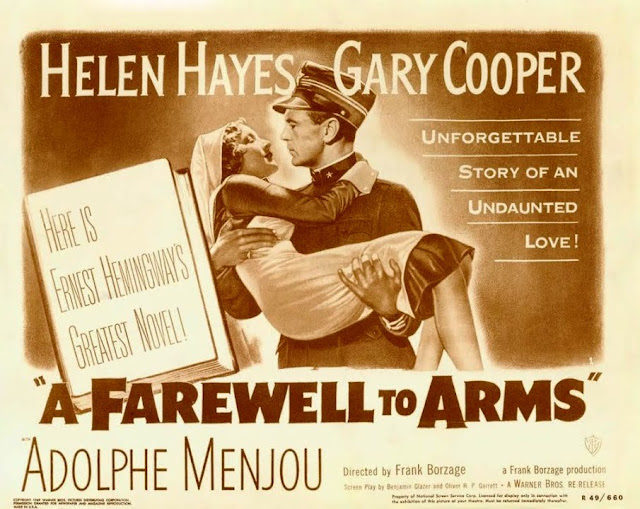
Ernest Hemingway’s A Farewell to Arms, a popular, highly acclaimed, and semi-autobiographical story set during World War I, was adapted to the big screen in 1932. Often, a film of this vintage can’t hide its creakiness, but Frank Borzage’s take on the tale holds up fairly well for a 90-year-old movie. Such was the conclusion of our CineVerse group, which examined this picture last week and discussed the following points (to listen to a recording of our group discussion, click here).

What were the most interesting, memorable, unexpected, or surprising aspects of A Farewell To Arms?

  • Helen Hayes was actually a bigger box-office star at this time in Hollywood than Gary Cooper, and she gets first billing. Dubbed the "First Lady of the American Theatre", she is one of only 13 individuals to win all four main American entertainment awards – Oscar, Emmy, Tony, and Grammy.
  • The film features an unforgettable subjective camera sequence in which the POV is Frederic’s, shown as a patient in the hospital. The scene ends with Catherine converging on the camera lens, embracing Frederick and us.
  • This is a pre-code Hollywood film, meaning the production code/censorship rules were not enforced at this time. Hence, there are elements at play in this 1932 film that would’ve been considered controversial for its day, including the notion of premarital sex, pregnancy out of wedlock, a nurse engaging in an intimate affair with her patient, a soldier going AWOL and abandoning his responsibilities, soldiers visiting a brothel, and relatively candid discussions about sex and sin. Recall Catherine’s line: “I wish we could do something really sinful; everything we do feels so innocent and right.”
    • Some things, however, were off-limits, including nudity and the showing of a late-stage pregnant woman; Catherine’s presumably large belly is cleverly hidden throughout the later part of the movie.
  • The filmmakers impressively employ expressionistic and symbolic visuals to represent the shock of combat and horrors of war, using, for example, shadow and darkness juxtaposed with eruptions of light to depict the explosions of bombs and mortar rounds. Creative montages are also used two depict various battles and the passage of time.
  • Likewise, Borzage and company invoke a highly romanticized and symbolic visual style in the concluding shot, in which we see Frederick lift the dead body of Catherine to the window as the frame grows increasingly brighter, fading to white as we hear the peal of church bells and observe the fluttering of doves taking wing.
  • This was the first of many cinematic takes on Hemingway tales, although the famous author did not like the finished cinematic product by Borzage.

Major themes

  • The power of true love can trump country, honor, or creed.
  • Star-crossed lovers and tragic romance.
  • The dichotomies of life: Union and separation, life and death, love and hate, war and peace. These pairing opposites are suggested throughout the film.
    • Pre-Code.com wrote: “In a war that’s focused on cleaving, on separating the strength and unity of nations (think the line, think the fronts, think the social mores), this couple fights to stay whole. And just like the nation they are aiding in an ugly war, they are too forced into chaos and pain, witnessing a great unraveling as hope becomes scarce.”
  • The cruel, savage, and unfair nature of war and the suffering it causes everyone involved.

Similar works

  • The remake in 1957 starring Rock Hudson and Jennifer Jones
  • All Quiet on the Western Front
  • The English Patient
  • Paths of Glory
  • For Whom the Bell Tolls
  • Waterloo Bridge
  • Birdsong
  • The Shopworn Angel
  • Romeo and Juliet
  • Gone With the Wind

Other film adaptations of Hemingway stories

  • The Old Man and the Sea
  • For Whom the Bell Tolls
  • The Snows of Kilimanjaro
  • The Sun Also Rises
  • The Killers
  • To Have and Have Not
  • The Gun Runners

Other works by Frank Borzage

  • 7th Heaven (1927)
  • Street Angel (1928)
  • Bad Girl (1931)
  • History Is Made at Night (1937)
  • The Mortal Storm (1940)
  • Moonrise (1948)

Read more...

Do you love talking about movies? Here's a rare chance to join our CineVerse group

Monday, January 24, 2022

Do you enjoy watching and talking about classic films, foreign movies, modern masterworks, silents, independent features and other conversation-worthy motion pictures? We're looking to add a new member to our private CineVerse film discussion group that meets weekly on Zoom, and this could be your chance to join our exclusive member community, which is normally closed to the general public.

Interested in being considered for inclusion in our Zoom group? Here's what you need to do:

  1. Have the necessary technology. You need access to Zoom (on your phone, computer or tablet), and you need high-speed internet. More importantly, most of the movies we view and discuss are available on Kanopy, so you will need a free Kanopy account, which many public libraries provide. (Unfortunately, many libraries do not partner with Kanopy, which is out of our control.) Note that if you don't have access to Kanopy, you would be responsible for finding each week's movie on your own (e.g., via YouTube, Netflix, local library, etc.)
  2. Be available Wednesday nights. We meet every Wednesday from 8 pm to 9:15 pm Central on Zoom. We don't require you to participate every week, but this is our designated time slot and we encourage you to attend as regularly as you possibly can. If you join us any given Wednesday, you'll be expected to engage in the discussion and share your opinions about that week's scheduled film.
  3. Tell us why we should pick you. Email us (at cineversegroup@gmail.com) a carefully crafted message that demonstrates your passion for the cinema, explains why you love talking about movies, and convinces us that you would be a worthy addition to our group. Extra points if your message is articulate, moving, and/or funny. Conclude your message with a list of your 5 favorite films of all time, followed by a written confirmation that you meet our tech and time conditions (as detailed in #1 and #2 above).
We'll evaluate all messages sent to us and choose one lucky respondent to join our CineVerse Zoom group. Your deadline to email us your message is noon Central Tuesday, February 8, 2022. Good luck!

Read more...

Cineversary host appears as guest on Retro Movie Roundtable podcast

Wednesday, January 19, 2022

Erik Martin, host of the Cineversary podcast, recently made a guest appearance on the Retro Movie Roundtable podcast to discuss the film Easy Rider with hosts Chad Robinson and Bryan Frye. 

To listen to the episode, click here or visit https://retromovieroundtable.podbean.com

Read more...

  © Blogger template Cumulus by Ourblogtemplates.com 2008

Back to TOP