Blog Directory CineVerse

Forget the sequels and reboots: The original Halloween still slashes its way to the top

Friday, October 28, 2022
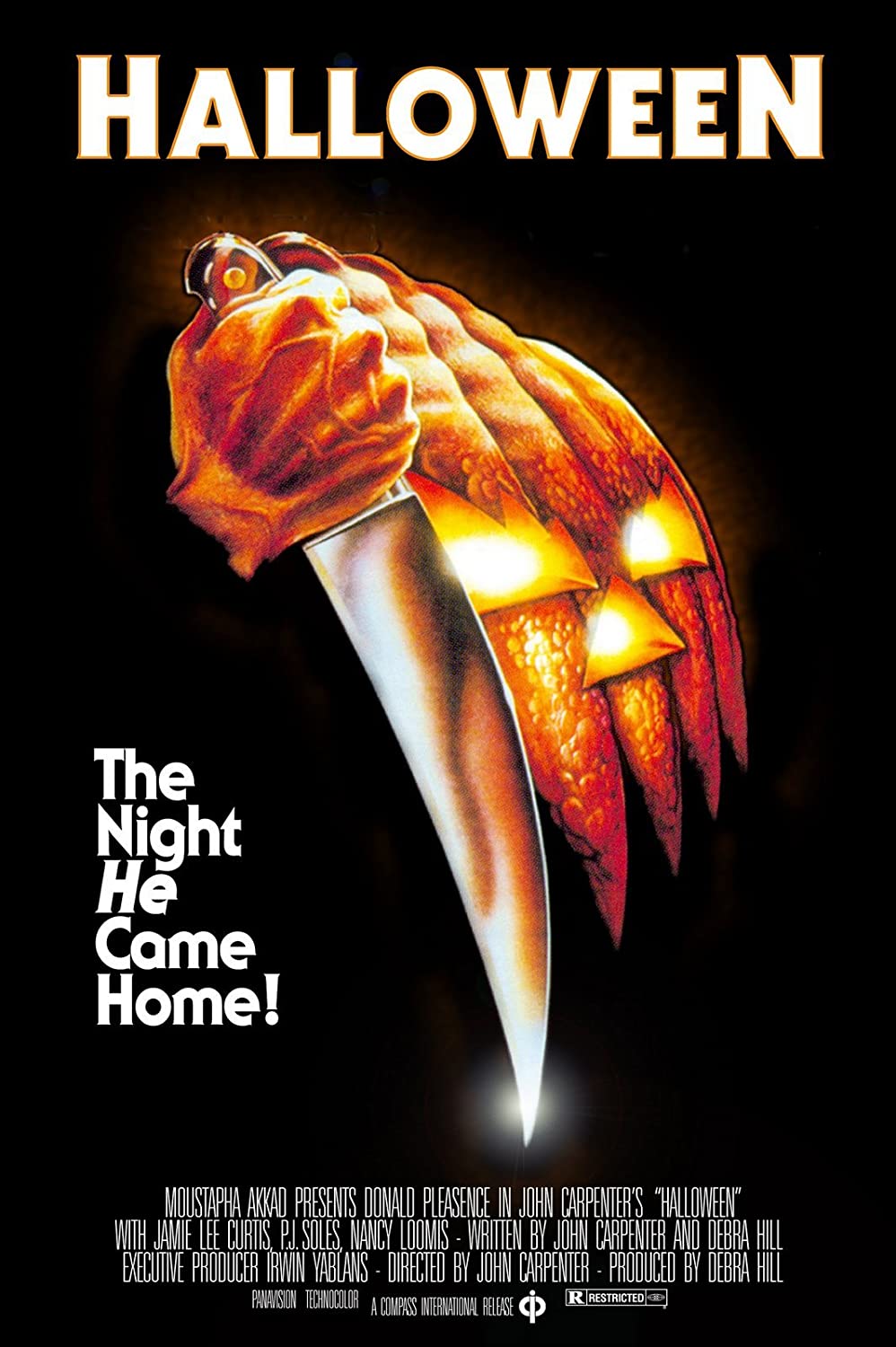
None of the movies that comprise David Gordon Green's recent trilogy and reimagining of the Halloween franchise, which concludes with Halloween Ends released this month, can hold a jack-o'-lantern candle to the 1978 original helmed by John Carpenter. The 44-year-old thriller remains the benchmark against which modern horror and slasher pictures are measured, warts and all. Why does Carpenter's Halloween continue to resonate and inspire? Ponder the following points below, and click here to listen to the Cineversary podcast episode that extrapolates on what makes the film exceptional.

Why is Halloween worth celebrating all these years later? Why does it still matter, and how has it stood the test of time?

  • It’s managed to stay relevant and interesting because of the quality filmmaking involved. Think about the film’s style and esthetics, the slow but regularly moving camera employed; this creates an insecure, unsettled, paranoid, distorted reality. It also makes you feel that something is lurking behind every corner, and it forces you to look for clues everywhere in the frame.
  • Carpenter and cinematographer Dean Cundey craft masterful compositions: Consider the rich foregrounds, middle grounds and backgrounds, deep blacks off in the background or periphery that reveal nothing, and the wide angle lens aspect ratio. All these factors make you feel like something is hiding in the shadows, off to the side, or just out of frame.
  • The focus is more on suspense than gore. Surprisingly, there is very little blood or mutilation; there is onscreen violence, but not much in terms of splatter and body parts.
  • The design of this film and its elements are minimalistic but incredibly effective. 
    • The plot is hardly convoluted. 
    • The look of Michael Myers, also referred to as the shape, is hauntingly stark and plain yet terrifying, with his bleached white expressionless mask and uniformly bland mechanic’s jumpsuit. 
    • The music by John Carpenter, featuring only keyboards and synth sounds, uses uncomplicated but repetitive themes to ratchet up the tension.
  • It has also stood the test of time because Carpenter and his team learned valuable lessons from earlier horror film standouts, such as Psycho, which used a subjective camera and voyeuristic techniques that tried to make the audience intellectually/psychologically complicit in the crime. Ruminate on how the shower scene in Psycho is imitated by the young Michael Myers’ stabbing of his sister in the opening sequence.

In what ways was the film influential on cinema and popular culture or set trends?

  • The subjective point of view camera shots were inspirational. We see the stalking and killings through the eyes of the killer or his victims and hear his heavy breathing. You notice this approach instantly aped in subsequent movies like the first Friday the 13th.
    • This forces you into a deeper more involved participation; thus, the picture becomes a more visceral experience.
    • Think about how the filmmakers often begin with wide shots and slowly move in closer, framing tighter, creating a kind of claustrophobic feeling so that the viewer can identify with a character experiencing the encroaching fear.
    • The long opening take, featuring an extended tracking shot, was made possible via a Steadicam, which was a new technology at that time.
  • Halloween also reinforced the convention of the final girl, earlier propagated by horror landmarks like The Texas Chainsaw Massacre and Black Christmas and later echoed in movies like Alien and A Nightmare on Elm Street.
  • This movie suggests an eerie ambiguity about the villain, too—that Michael Myers may simply be a cunning insane person or supernaturally gifted.
  • The sparse and simplistic but unnerving score by Carpenter created arguably the most instantly identifiable theme song for a horror movie and a minimalistic but effective assault on our nerves.
    • Nat Brehmer of Diabolique Magazine wrote: “Halloween, with maybe the exception of Suspiria before it, was the first score to be melodic and sinister at the same time. The score is always there, drifting between two or three repeating themes, then going to a single note during acts of murder. The music is used less when Michael Myers is actually killing someone. The music aids this by focusing mostly on the tension and the buildup to the moment. Once the moment comes, the tension is over and the music drifts out.”
  • When you picture Michael Myers, it’s almost impossible not to also have the theme song concurrently play in your head. That’s how powerful that score is.
  • Perhaps most important of all, Halloween created an iconic, archetypal monster who has possibly become the most famous, popular, and instantly recognizable horror icon of the past 50 years. Leatherface came first, but Michael Myers set the mold for how to build a horror franchise around a killer character, a template that would be copied by the Friday the 13th, Nightmare on Elm Street, Child’s Play, and Scream films.
  • Halloween launched a slew of copycat movies like When a Stranger Calls, Prom Night, Graduation Day, New Year’s Evil, Mother’s Day, My Bloody Valentine, Silent Night Deadly Night, and April Fool’s Day.
  • Critics often blame Halloween for setting the slasher subgenre in motion and introducing a steady output of increasingly sadistic, gory, and misogynistic horror movies.

What themes or messages are explored in Halloween?

  • Immorality will be punished: the trope of the final girl is more firmly established in this film, which suggests that Laurie Strode survives the shape’s onslaught because she is not preoccupied with sex, doesn’t indulge in promiscuity and lose her virginity, didn’t abandon the children she’s responsible for babysitting, and is smarter and demonstrates more agency than her peers.
  • Arguably, this film espouses a conservative morality. Consider the evidence:
    • Those who are killed are sexually promiscuous and drug users (although Laurie does take a brief puff of pot).
    • According to AMC Filmsite writer Tim Dirks, Halloween “asserted the allegorical idea that sexual awakening often meant the literal 'death' of innocence (or oneself).”
    • Dr. Loomis calls the boy “pure evil”; a psychiatrist is supposed to analyze human behavior, not form black-and-white moral judgements
  • The film also suggests that a small, quiet town can harbor evil secrets—that there’s a dark side to suburbia.
  • Halloween propagates the concept of unavoidable destiny. Laurie’s teacher says “fate is immovable, like a mountain.”

Who did the movie appeal to initially in 1978 versus today?

  • Certainly Halloween attracted plenty of older teens and young adults during its initial run. Today, there’s a lot of nostalgia for the Carpenter film, which means 50-somethings and older probably place it high on their all-time horror film lists and revisit it somewhat regularly. But the fact that they’ve attempted to reboot and reinvent this franchise multiple times tells you that the original movie’s appeal spans multiple generations.
  • Arguably, critics and cineastes take the 1978 movie much more seriously nowadays than back in the late 1970s, which means that it’s more deserving of critical respect and scholarly study.

What elements from this movie have aged well, and what elements are showing some wrinkles?

  • The Haddonfield neighborhood doesn’t exactly “look the part.” Virtually no kids are out trick-or-treating. And there’s a dearth of autumn leaves colorfully splashed across the trees or streets.
  • It’s easy to get “totally” irritated by actress P.J. Soles repeating the word “totally” throughout the picture.
  • Debatably, the shot of the young Michael Myers being de-masked by his parents lingers far too long. Is it realistic to assume that mom and dad would stand nonplussed and immobile while their catatonic-looking offspring sports a bloody knife for 29 seconds?
  • But these are small quibbles. Almost everything else, besides the 1970s hairstyles and wardrobe fashions, holds up very well, especially the cinematography, wide-angle compositions, editing, POV shots, creepy humor—such as when Michael Myers dons the bedsheet to fool Lynda (Soles)—and the decision to keep Michael’s face, backstory, and motivations relatively mysterious.

What is this film’s greatest gift to viewers?

  • This is a high-quality horror film fans can be proud of. Considering that horror is regarded by many film critics, scholars, historians, and viewers to be a bastard stepchild genre that so often produces things putrid over pristine, it’s nice to have an unimpeachable classic that can rank high with giants of the genre like Psycho, Jaws, The Exorcist, and others.
  • Plus, Michael Myers and John Carpenter’s score have become emblematic touchstones of the genre. Today, no child dresses up as Frankenstein, Dracula, or the Wolf Man on October 31 anymore; but you see plenty of kids proud to don the Michael Myers cosplay.
  • Just as many people revisit old-time Christmas classics in December, like Miracle on 34th Street, It’s a Wonderful Life, and A Christmas Story, future generations will continue to watch Halloween in October. As movies and audiences continue to tolerate more violence in film as the years pass, the first Halloween film will actually be considered fairly tame as an R-rated feature, which could actually increase its reach to younger ages (hopefully with parental oversight/permission).

Read more...

How Cat People still keeps us purring with excitement

Tuesday, October 25, 2022

Cat People proved to be a game-changer in the horror genre when it was released in late 1942. Eighty years later, it's easy to extol the virtues of this clever psychological thriller (or is it a monster movie)? For proof, listen to our CineVerse group discussion of this film recorded last week (click here to access the recording), check out the current episode of Cineversary that explores Cat People in depth (available here), and digest a summary of our discourse available below.

Why is this movie worth celebrating 80 years onward? Why does it still matter, and how has it stood the test of time?

  • It’s deserving of celebration because it reinvented the horror genre in the early 1940s, making the horror more psychological; the danger is primarily suggested rather than shown, and that was groundbreaking for the time. The fear is primarily of the unknown and what may be lurking but is not clearly defined in the shadows or the periphery of the frame.
  • What has helped it transcend time is the fact that this is a female-driven story at a time when women were often the helpless damsels in distress and innocent protagonists in horror movies. In contrast, the female personalities in Cat People are fascinating, particularly Irena who is a tragic but well-illustrated figure but also an antagonist to Alice.
  • It still matters because it remains effective as an unsettling psychological horror film, thanks in large part to its simplistic design. It benefits from a streamlined plot, a small cast of characters, and only a handful of settings and locations, and it lets your imagination do much of the heavy lifting instead of emphasizing what would now be outmoded special effects.

What impact did Cat People have on the genre that inspired subsequent films?

  • It adopted a novel approach to horror movies for the time: Instead of showing a physical manifestation of a monster, as was the trademark of Universal horror films, it suggested that there can either be a supernatural explanation for what we see or a psychological explanation, with the latter insinuating that it’s all simply happening in the character’s mind. In short, Val Lewton introduced the psychological horror film, which is still with us today.
  • Cat People also proved that, with a lot of imagination and talent, you can overcome small budget limitations and create a memorable motion picture.
  • This movie kicked off the Val Lewton cycle of horror films at RKO comprised of B movies that played like A films; Lewton is also a rare early example of a producer who is considered the true author of his works instead of the director.
  • Cat People and the rest of the Lewton cycle also led to the emergence of a handful of other important filmmakers who collaborated with Lewton, including Robert Wise, who went on to helm The Day the Earth Stood Still, West Side Story, The Haunting, The Sound of Music, and others; Jacques Tourneur, director of one of the greatest film noirs in Out of the Past as well as horror classics like Curse of the Demon and I Walk With a Zombie; and Mark Robson, who became a talented director in his own right.
  • Lewton and company were instrumental in putting female characters first as the main protagonists in horror films. Today, many fans, film scholars, and critics would likely name among the very finest big screen horror works those that have one or more female actors at the top of the cast list. Before Cat People, few big-screen horror pictures gave top billing to females. The only two examples that spring to mind are Fay Wray in King Kong and Gloria Holden as Dracula’s Daughter.
    • According to Deep Focus Review author Brian Eggert, “The film remains exceptional because Lewton demanded its artistry and themes move away from what audiences were accustomed to seeing. In doing so, Lewton made the first supernatural horror story set in modern times, typifying a standard formula for today’s paranormal horror genre: It’s a real-world story whose characters have complex relationships, maintain unglamorous careers, and remain skeptical toward the prospect of anything fantastical.”
  • The Lewton unit also invented “the bus” – an audio technique, first introduced in Cat People, where a long silence or quiet scene is abruptly interrupted by a shrill, loud noise, nowadays called a “sting,” that is meant to startle the audience.
  • The success of Cat People also triggered a sequel, 1944’s Curse of the Cat People; 40 years later, a modern remake was helmed by Paul Schrader.

Can you identify any themes or messages within Cat People?

  • The film offers several sexual subtexts, including repressed desire, intimacy phobia, lesbianism, arousal by an exotic female, and sexual harassment (in this case perpetrated by Dr. Judd).
  • There are deep psychological themes at work, too, like corrosive jealousy, inherent evil within good people, isolation, and estrangement.
  • Another theme is the pressure on women to conform to patriarchal and marital expectations.
    • Slant Magazine critic Chuck Bowen wrote: “Irena might be the literal monster in “Cat People,” but she's also an immigrant woman who's manipulated and batted around by men of authority who're mostly concerned that she gentrify in accordance with American urban culture. Because Irena is afraid to have sex, given what she thinks she may be, the film is a coded tale of a frigid woman in need of conditioning. Irena faces a hypocrisy familiar to all women: She's relentlessly pressured by puritanical society to be chaste, yet resented when she doesn't sexually gratify men. Tom marries Irena, but strays toward his co-worker and friend, Alice (Jane Rudolph), who represents an ideal of the franker, more accommodatingly sexual and easygoing modern woman.”
  • Xenophobia and fear of foreigners.
  • Inescapable fate and doomed destiny.
  • Superstition and spirituality versus science and reason.
  • A love triangle that ends in tragic circumstances.

What is Cat People’s greatest gift to viewers?

  • One could make a compelling case that its best gift is the audio-visual one-two-punch of an inspired sound design and brilliantly atmospheric lighting scheme.
  • Unsung genius cinematographer Nicholas Musuraca paints fear in deep pools of ebony and gray, employing a textbook palette of chiaroscuro contrast that encourages our eyes to conjure up feline demons from every inky corner. And whoever was responsible for the extraordinary sound design and effects is well deserving of kudos as well.
  • One standout portion that illustrates this suspenseful symmetry of sound and vision is the shuddersome nighttime scene where Irena stalks Alice.
  • But the very best example that demonstrates the efficacy of Cat People’s exemplary lighting and audio, which many would also nominate as the film’s best scene period, is the swimming pool sequence. Recall how they meticulously craft that scene for maximum effect. Let’s dissect it for a moment: We see Alice prepare to enter the indoor pool and hear echoey drips, splashes, and noises endemic to that watery environment. But she stops to notice a black cat, back arched and alarmed by something in the direction of the adjacent shadowy staircase. Alice first scoffs at the feline’s cries, but then takes a closer look and begins to hear the menacing snark of what sounds like a panther followed by a shadow descending the staircase toward her. Frightened, she runs to the water and punctuates the otherwise eerily quiet ambiance by jumping in with a loud splash. We view alternating shots of Alice doggy-paddling nervously and circularly in the deep end with darkly composed images of her dim surroundings, as shimmers of water-reflected light dance across the dusky walls and ceiling. The low drone of feral growling persists as Alice spins in terror, the camera juxtaposing medium shots of her treading water with eerie images of the pool room’s empty dark corners that increasingly suggest a panther’s shadow nearby. The growl intensifies to a threatening roar as we hear Alice’s shrieks and screams for help. Irena suddenly appears, flicking on a light switch, and the terror has subsided, although Alice discovers her robe ripped apart after Irena departs. It’s a masterclass in how to escalate tension and insinuate a monster with simple suggestive elements.

Read more...

It's still the best film version of Frankenstein

Friday, October 21, 2022

Frankly, James Whale's 1931 adaptation of Frankenstein, featuring an immortal and star-making performance by Boris Karloff, the greatest horror film actor ever, remains the finest big screen rendition of Mary Shelly's timeless tale. For proof, listen to our CineVerse group discussion of this film from last week, available here

Last year, Frankenstein was also the focus of our Cineversary podcast. To hear that episode, click here.

And we published our extensive notes on what makes the 1931 Frankenstein great here (worth a re-reread).

Read more...

100 reasons to watch Nosferatu

Tuesday, October 18, 2022

F.W. Murnau’s Nosferatu: A Symphony of Horror turned 100 years old earlier this year. Our CineVerse group got around to celebrating earlier this month, in time for the Halloween season. Curious why this vampire film stands pointy ears above other movies featuring undead fiends? The reasons are as plentiful as this monster’s blood-drained victims, as detailed below (to listen to a recording of our group discussion, click here; to listen to the current episode of Cineversary commemorating Nosferatu’s 100th anniversary, click here).

How has Nosferatu stood the test of time? Why does this movie still matter a century later, and why is it worth celebrating?

  • It’s likely the greatest and most important work in the vampire film subgenre. Every horror filmmaker and fan is indebted to Nosferatu for helping to establish many horror movie rules, tropes, and visual styles that persist to this day. This is a picture that may no longer frighten but continues to unnerve as an exemplary form of eerie entertainment. The masterful craftsmanship on display here has helped Nosferatu remain accessible and effective to new generations.
  • Nosferatu is further worth celebrating because it can be considered one of the finest in several categories: horror, silent films, and German/foreign movies.
  • It’s deserving of serious respect because it helped advance film grammar and combine early special effects in a distinctive and experimental approach.
    • Nosferatu is one of the first and most effective silent features to use intercutting of parallel action, crosscutting montages, and POV shots to better tell its story.
    • Its chiaroscuro lighting design emphasizing a high contrast between lights and darks would influence countless horror and noir films that came thereafter.
    • There’s a greater fluidity of visual storytelling thanks in large part to the adventurous placing of the camera. Murnau said, “The camera is the director’s pencil. It should have the greatest possible mobility in order to record the most fleeting harmony of atmosphere.” Writer Joanne Laurier wrote: “The resulting flowing and non-static camera work establish the differing relationships to the space occupied by each character and his or her own particular interaction with the vampire’s use of ‘the oppression of the night.’ French filmmaker Eric Rohmer once commented that perhaps ‘no other filmmaker has used space more rigorously or inventively than Murnau.’”
    • This film is also distinctive in the way it combines cutting-edge special effects for its time: double exposures and dissolves that make the vampire appear and reappear, sometimes as a transparent figure; doors and portals that mysteriously open; color-tinted shots in yellow to signify daytime versus blue for nighttime scenes; stop motion photography, used memorably in the sequence where Orlok’s coffin lid mysteriously levitates to rest atop the coffin; mirror shots employed to show Hutter’s bite marks; camera undercranking to speed up the shot of Orlok loading the coach with coffins; and using color negative photography to suggest the paranormal nature of Orlok’s coach riding through the forest.
    • According to French film critic Jean-AndrĂ© Fieschi, “Nosferatu marks the advent of a total cinema in which the plastic, rhythmic and narrative elements are no longer graduated in importance, but in strict interdependence upon each other. With this film, the modern cinema was born, and all developments to come, notably those of the Soviet filmmakers, became possible.”
  • It still matters because it’s a benchmark example of German expressionism—a movement that originated in German cinema after WWI in which films externalize emotions and rely on an exaggerated acting style and exaggerated designs, sets, and lighting to create mood and tell a story.
  • Yet, despite being an expressionistic work imbued with symbolism and metaphor, the misc en scene of Nosferatu looks relatively realistic 100 years later, thanks to it being filmed on location in key and authentic settings throughout Europe instead of on studio-fabricated sets.
  • Additionally, it’s not as creaky and archaic as its age would suggest. Murnau keeps our interest alert and satisfies in the storytelling department by implementing proven cinematic techniques, like frequent parallel editing and varying camera placement to produce interesting shots and angles, and keeping the plot relatively simple.
  • It has transcended time, as well, because it feels surprisingly modern in its terrifying depiction of the spread of disease and infection, which has reoccupied the world, especially over the last three years.
  • Lastly, it still matters because it feels like a photographic document of a vintage era, as if it’s a dead sea scroll of a cinematic artifact that belongs in a museum, worthy of reverence and rediscovery for new clues and insights. It’s perhaps more haunting and odd because it’s so far removed from our modern sensibilities. It being a black-and-white, foreign, and silent feature only adds to its weird veneer, in my opinion.
    • Per Roger Ebert: “Nosferatu” is more effective for being silent. It is commonplace to say that silent films are more “dreamlike,” but what does that mean? In “Nosferatu,” it means that the characters are confronted with alarming images and denied the freedom to talk them away. There is no repartee in nightmares. Human speech dissipates the shadows and makes a room seem normal. Those things that live only at night do not need to talk, for their victims are asleep, waiting.”

How are this version of Dracula and its head vampire different from subsequent cinematic interpretations of Bram Stoker’s famous novel?

  • The filmmakers significantly condense Bram Stoker’s story and many of its characters. For example, Ellen essentially serves as three characters in one: Mina, Lucy, and Van Helsing. Murnau and company also dispense with the third act of the novel and alter the ending. In Stoker’s novel, the heroes pursue the on-the-run vampire to his doom at the end of a wooden stake. Here, Ellen must sacrifice herself to kill the vampire.
  • The film Nosferatu shows no religious icons like a crucifix or holy water, nor does it have any religious subtexts or spiritual stakes—no pun intended.
  • Orlok doesn’t turn his victims into vampires; his bite leads to rapidly spreading disease and death.
  • This vampire is physically repulsive, not a handsome aristocrat like Count Dracula who can disguise his monstrousness. He appears as a thin, pale, rodent creature with pointed rat-like incisors, and he represents disease and pestilence. Instead of changing into a bat or wolf, Orlok can disappear and rematerialize at will and use his shadow as he would his body.
  • Some argue that Orlok’s look and design are anti-semitic, exhibiting caricaturistic physical traits of a Jewish person; therefore, the film would seem to portend the rise of Naziism and widespread antisemitism in Germany that would occur in later years. Others contend that this was not the filmmakers’ intent and that there is no evidence that Murnau and co-producer Albin Grau were discriminatory against the Jews.
  • It’s also interesting that this film has an unknown and unshown first-person narrator. By contrast, Dracula is an epistolary novel told by several different narrators.

How was Nosferatu groundbreaking in any way as a horror film, and what impact did it have on the genre that inspired subsequent films?

  • It introduced new concepts to horror cinema: Sunlight is deadly to vampires; sexually promiscuous, devirginized characters must pay with their lives; and a smart and brave female character with agency who must vanquish the monster herself, serving as an early precursor to the final girl figure of the 1970s through 1990s. Ellen is admirable as an intuitive, clever, and courageous woman willing to sacrifice herself for the good of the village, certainly a rarity for an early 20th-century horror film.
    • DVD Savant critic Glenn Erickson wrote: “Ellen makes herself into a suicidal trap for the lustful Orlok, the seductive kind that only a "woman with forbidden knowledge" would understand. As in a fairy tale gender roles are harshly delineated, but Ellen is something of a liberated force. Hers is the allure that brings Orlok out of his lair, and hers is the sensuality that destroys him.”
  • The German Expressionism and gothic elements on display here helped set the mold for classic horror cinema. Nosferatu’s creepy cliffside castle, its supernatural shadows, peculiar character movements, and high contrast lighting scheme were imitated in many fright films to follow.

Can you cite any movies or filmmakers you believe were influenced by this work?

  • You could trace an easy throughline from Nosferatu to any subsequent vampire film, especially the 1931 Dracula.
  • Werner Herzog remade this film in 1979, and there has been talk of another remake by Robert Eggers.
  • The guise of Orlok was echoed in the Salem’s Lot 1979 TV miniseries, the comedy What We Do in the Shadows, and the films Vamp (1986) and Black Water Vampire (2014).
  • The fantastic Shadow of the Vampire reenacts the making of Nosferatu and imagines thespian Max Shreck as the ultimate method actor.
  • Orlok’s unsettling walk and body language, particularly his slow stalking, can be seen in the Frankenstein monster and Michael Myers from the Halloween series.
  • Alien (1979) seems to be influenced by the vampire’s systematic dispatching of the crew aboard the schooner Empusa.
  • Recall how one of the opening title cards reads: “Beware you never say it” (meaning the word “Nosferatu”). Maybe it’s a stretch, but this forbidden word trope is possibly picked up in Candyman and Beetlejuice.

What special qualities do director F.W. Murnau and actor Max Schreck bring to this picture?

  • Many shots are tilted or composed from upper or lower angles, which visually creates distortion and unease. Consider the low-angle shots of Orlok, which make him appear more imposing and dominating.
  • Interestingly, Orlok is centered within the frame in many shots, and the vampire is never shown physically entering or exiting any room uncut; Murnau often uses transitional cuts to him get him from point A to B.
  • The film is replete with fantastic shots, each of which could serve as still-frame masterpieces of visual horror unto themselves, including the reveal of Orlok behind Hutter’s bedroom door; Orlok rising stiffly from his coffin in the hold of the Empusa; the vampire creeping across the hull of the ship; Ellen looking forlornly at the waves amidst a seaside cemetery; and the elongated, twisting shadow of Orlok approaching Ellen’s door.

What’s the moral of the story here? What themes or messages are woven into Nosferatu?

  • Dichotomy and duality.
    • According to reviewer James Berardinelli: “By using Hutter and Orlock to symbolically represent two halves of a complete individual, Murnau allows the film to explore the Jekyll & Hyde split between man's civilized and bestial natures. Hutter is the childlike innocent who cares for his wife in a platonic manner and reacts to circumstances with wide-eyed amazement. Orlock, on the other hand, is animalistic. His advances towards Ellen are fueled entirely by his base needs, and are grounded in sexuality in a way that the metaphorically emasculated Hutter could not comprehend. In that way, Hutter and Orlock complement each other. Ellen gains from each of them what she cannot have from the other.”
    • Likewise, Ellen seems to be a bifurcated figure. She’s a chaste, dependable wife to Hutter but also a lusty, willing mate to Orlok—although she chooses to act pruriently in a sacrificial manner.
  • Fear of the unknown, the outsider, and disease. Orlok is a metaphor for a destructive pathogen that can quickly spread and wreak terrible suffering and death, much as the Spanish flu of 1918 did four years before this film was released.
  • The predatory side of nature. The film continually references, names, or shows organisms that feast on blood, ensnare pray, or are uncanny and abhorrent by design like a Venus flytrap plant, mosquitos, rats, microscopic hydra polyps, spiders, and “the death bird” mentioned by the narrator. Like these creatures, Orlok is animalistic and bloodthirsty by nature, representing a threat to the human beings that have risen precariously to the top of the animal kingdom.
  • As with any vampire story, Nosferatu may also be a cautionary tale about the dangers of carnality, sexually transmitted diseases, and aberrant sexuality outside the confines of procreation and marital relations.
  • The value of intuition. There’s a telepathic communication at work between Orlok and Ellen that triggers her fears for Hutter, incites her sleepwalking, and ultimately prompts her to entrap the vampire. The lesson here is to trust your gut instincts, take action, and not ignore the red warning flags when you suspect a threat.

What is Nosferatu’s greatest gift to viewers?

  • Perhaps the greatest gift Nosferatu gives us is Count Orlok himself: quite possibly the most disturbing and unabashedly horrific vampire in movie history. The design and personification of this undead monarch of the macabre remain unparalleled. 
    • This creature, as embodied so adroitly by actor Max Schreck, amalgamates many characteristics that make our flesh crawl. The dagger-like incisors, impossibly long and sharp claws, hunched posture, and beady eyes instantly connote him with a rat; there’s an insectoid quality to his stillness and lanky physique, further evidenced by the fact that we never see him change his wide-eyed expression or close his eyes; and he’s got the rigid frame and protracted movements of zombie, but the disquieting way he sometimes glides along evenly suggests an automaton.
    • There’s nothing seductive, resplendent, or cunningly camouflaging about this bloodsucker. He’s disease and death incarnate without any pretense of humanization, and we can’t take our eyes off him for a second—so captivating is his presence. That’s a testament to Shreck’s complete commitment to this role, of course, but the full realization of this character on screen is also a triumvirate triumph of makeup, costume design, and lighting.
    • Roger Ebert wrote: “Max Schreck, who plays the vampire, avoids most of the theatrical touches that would distract from all the later performances, from Bela Lugosi to Christopher Lee to Frank Langella to Gary Oldman. The vampire should come across not like a flamboyant actor but like a man suffering from a dread curse. Schreck plays the count more like an animal than a human being.”

Read more...

Cineversary podcast celebrates Nosferatu and Cat People anniversaries

Saturday, October 15, 2022

David Kalat and Gregory Mank
For Cineversary podcast episode #52, host Erik Martin takes a double dip into the Halloween candy bowl by spotlighting two seminal early horror films: First, Nosferatu, which marks a 100th anniversary this year, for which he’s joined by film scholar and Nosferatu expert David Kalat; and Cat People, commemorating an 80th birthday in 2022, for which he’s joined by classic horror historian Gregory Mank, author of The Very Witching Time of Night: Dark Alleys of Classic Horror Cinema. Erik and his guests peel back the cobwebs on these macabre masterworks to explore how they remain relevant today, why they’re worth celebrating, and the long shadows of influence they’ve cast upon the horror genre.

To listen to this episode, click here or click the "play" button on the embedded streaming player below. Or, you can stream, download, or subscribe to Cineversary wherever you get your podcasts, including Apple Podcasts, Spotify, Stitcher, Castbox, Google Podcasts, Pocket Casts, PodBean, RadioPublic, and Overcast.

Learn more about the Cineversary podcast at anchor.fm/cineversary and email show comments or suggestions to cineversegroup@gmail.com.

Read more...

The verdict is in: Judgment at Nuremberg still packs a dramatic punch

Monday, October 3, 2022

The Nuremberg trials following the conclusion of World War II gripped the world, as millions waited to learn the fates of many Nazis accused of crimes against humanity. Dramatizing these kinds of trials for the big screen would be no easy feat, but producer/director Stanley Kramer attempted it in 1961 with his courtroom drama epic Judgment at Nuremberg, which presents a fictionalized account of the trial of four Nazis. Our CineVerse mission last week was to parse through this picture carefully and decide on the movie’s merits and misses. Here’s a recap of our talk (click here to listen to a recording of our group discussion).

What struck you as interesting, unanticipated, impressive, or noteworthy about Judgment at Nuremberg?

  • This is actually a fictional story, based loosely on the famous Judges’ Trial of 1947, in which a military tribunal passed judgment on Germans accused of war crimes. While it feels like a historically accurate depiction of a factual case, this is meant to be more of a composite case study of the types of tribunals conducted in Germany after World War II.
  • The film boasts a star-studded cast, which yielded four Academy award nominations for acting; Maximilian Schell was the sole Oscar winner here, for his portrayal of defense attorney Hans Rolfe. Many people more strongly recall the performances of Judy Garland and Montgomery Clift, also nominated. The enlisting of Marlene Dietrich is shrewd, as she was a German expatriate who fled her country when the Nazis came to power.
  • The filmmakers employ interesting if not theatrically showy techniques to amplify the tension, including crash zooms, dramatic zoom-ins and zoom-outs, 360-degree tracking shots around characters within the courtroom, and long unbroken takes. They also cleverly transition from using two languages to employing English-only dialogue, which would have helped to reduce the runtime and make it easier for viewers to follow the courtroom exchanges.
  • This is one of the first Hollywood films to show actual stock footage of the concentration camps and the disturbing images of Holocaust victims. Interestingly, the filmmakers don’t save this reveal as a climactic courtroom scene; the footage is played roughly halfway through the story.
  • This is one of the finest examples of a riveting courtroom drama, even though a good portion of its runtime occurs outside of the courtroom, in which we see Judge Haywood interact with the German people.
  • Director/producer Stanley Kramer was known for bravely making message movies and social problem pictures in which didactic lessons, high-minded themes, and topical issues were addressed, often irritating many critics and audiences alike for being on-the-nose preachy and moralizing. Examples include Guess Who’s Coming to Dinner, one of the first films to delve into the then sticky matter of interracial marriage; The Defiant Ones, which explores racism and bigotry; Inherit the Wind, which examines science versus religion; and On the Beach, spotlighting fears of nuclear war.

Major themes

  • Collective guilt and responsibility: How culpable are individuals, as well as society and a country’s population in general, for the suffering and death of innocent victims? Judgment at Nuremberg asks tough questions about the extent to which those who should have known better and resisted evil acts and immoral laws are liable for the repercussions of these laws and actions.
  • The importance of acknowledging the truth and accepting individual/personal responsibility so that lessons can be learned and history will hopefully not be repeated.
  • Individual human beings suffer at the hands of evil, not faceless and nameless victims. During and after genocide and cruelty suffered by millions, it’s crucial to humanize the victims and remember that each has or had a story to tell, that every life is precious and matters. Among the most emotionally impactful moments in Judgment at Nuremberg are the scenes depicting the testimonies and cross-examinations of Irene Hoffman (played by Garland) and Rudolph Petersen (Clift). We hear their personal accounts and the shame, indignity, and horrors each of them endured, and we’re reminded that every victim of the Holocaust had a name, a distinctive personality, and a life that was robbed of fullness.
  • The politicization of justice. The four German judges on trial were politically coerced to twist justice to align with the edicts and philosophies of evil leaders. It’s ironic, then, that the three tribunals in this story are also coerced to render verdicts that fit the politics of the time, including Cold War pressures to be lenient on the Germans, viewed as important allies against communist countries.

Similar works

  • Inherit the Wind
  • Witness for the Prosecution
  • To Kill a Mockingbird
  • Paths of Glory
  • The Caine Mutiny
  • 12 Angry Men
  • Nuremberg (2000)

Other films by Stanley Kramer

  • Inherit the Wind
  • Guess Who’s Coming to Dinner
  • On the Beach
  • It’s a Mad, Mad, Mad, Mad World
  • The Defiant Ones
  • (As producer) Champion, Home of the Brave, High Noon, Death of a Salesman

Read more...

A case of "he said, she said"

Wednesday, September 28, 2022

Steve Martin was one of the first of the early Saturday Night Live squad to parlay his comedic skills into a long-standing big-screen career. By 1984, he was established as a popular film funnyman, already appearing in three laughers directed by friend Carl Reiner. Their fourth collaboration was All of Me, a sometimes silly but often hilarious and heartfelt body swap comedy that many fans hold dear to their funnybone. Last week, the CineVerse group scrutinized this picture and determined if it still holds up or has lost its luster nearly 4 decades later, as detailed in our shared notes below (Click here to listen to a recording of our group discussion).

What is distinctive, surprising, or memorable about All of Me?

  • The success or failure of the picture rests primarily on Steve Martin’s shoulders. He has to convince us with his physical comedy and humorous talents that he is truly possessed by a woman. Consider the challenges of pulling this off: He has to consistently and believably portray a male character on his left side and a female character on his right side, with respectively different mannerisms, idiosyncrasies, and gender-driven personality traits that contrast. That makes this a remarkable performance, even if you don’t care for the movie or fail to find it funny.
  • If you perceive a sexual dynamism and chemistry between Martin and Victoria Tennant (who plays Terry), your instincts would be correct. The actors met on the set of this film and quickly began a romantic relationship that led to an eight-year marriage.
  • Arguably, despite its faults, All of Me can leave you feeling satisfied. Perhaps that’s because it hews closely to the tenets of a nearly foolproof subgenre: the screwball comedy, in which a moral lesson is often conveyed, flawed characters are redeemed, and quirky personalities add color and depth to the story. This film may not be the funniest motion picture you’ve ever seen, and at times it’s exceedingly preposterous, but you can’t argue that it’s sweet and sincere – the opposite of a gross-out comedy or meanspirited laugher that may make your belly sore from all the big yuks but which leaves you feeling hollow and uncaring about any of the characters.

This film falls firmly within the screwball comedy subgenre. What are some traits and characteristics of classic screwball comedies?

  • Farcical stories and situations—where the film pokes fun at stereotypical characters, such as fatcat filthy rich personalities and spoiled rotten daughters.
  • Fast pacing in the humor and repartee, direction, editing, and dialogue delivery.
  • Physical humor, including slapstick, pratfalls, and sight gags, often used to elicit major laughs and make dignified characters look ridiculous.
  • A plot centered on courtship and marriage or remarriage.
  • Themes highlighting the differences between upper and lower socioeconomic classes, with many of the settings taking place among the high society but involving a likable male love interest from the other side of the tracks.
  • A female lead who is often strong-willed, determined, and sometimes tomboyish, commonly depicted as stronger and even smarter than her male counterpart.
  • A story involving mistaken identity, misunderstanding, or the keeping of an important secret, occasionally involving cross-dressing or masquerading.
  • A classic battle of the sexes between a man and a woman, with the male lead’s masculinity often challenged by a strong female love interest.
  • Colorful supporting characters with quirky personalities.

Major themes

  • Learning to coexist with and respect the opposite sex. Roger and Edwina are forced to share the same body, which creates physical, philosophical, and existential dilemmas that comment on distinct disparities between genders. Despite their differences, they find a way to collaborate and harmonize, ultimately falling in love. This film suggests that putting yourself in the shoes of an opposite-sex partner by demonstrating empathy and patience can make you a more well-rounded human being.
  • Choosing happiness over success. Roger ultimately learns that the cutthroat world of law isn’t as fulfilling as pursuing his greater love of music.
  • Opposites attract. The personalities and backgrounds of Roger and Edwina are as different as you can imagine. But through the course of the story, their characters undergo an arc of change for the better; each is humbled and learns to accept the other’s needs, wants, and preferences.

Similar works

  • Identity exchange comedies, including Turnabout (1940), Vice Versa (1947), Tootsie, and Victor/Victoria
  • Body swap comedies, including Freaky Friday, Big, Chances Are, Heaven Can Wait, Heart and Souls, and Being John Malkovich
  • Comedies featuring gifted physical comedians, including Charles Chaplin, Jerry Lewis, and Jim Carrey

Other films directed by Carl Reiner

  • Oh, God!
  • The Jerk, Dead Men Don’t Wear Plaid, and The Man With Two Brains – also starring Steve Martin
  • Fatal Instinct

Read more...

Looking at the "Past" through the lens of the present

Tuesday, September 20, 2022

If you are a self-respecting film noir fan, Out of the Past (1947) probably ranks high on your list of standouts in this genre. Last week, our CineVerse group probed carefully into this movie’s anatomy to better understand what makes it a superlative noir. Highlights of our discussion points follow (click here to listen to a recording of our group discussion; to hear the September Cineversary podcast episode on his film, click here).


How has Out of the Past stood the test of time? Why does this movie still matter 75 years later, and why is it worth celebrating?

  • Out of the Past perhaps hews closest thematically and tonally to the central tenet of noir: that its characters are destined for doom based on fatal flaws like greed, betrayal, jealousy, and desire. Put another way, this film could be the truest expression of great noir and what makes noir great, thanks in large part to its fatalistic philosophy and pessimism.
  • It also still matters courtesy of its clever screenwriting construction and hard-boiled wordsmithing, particularly the memorable dialogue and one-liners.
  • It has stood the test of time partially because the title itself, Out of the Past, is one of the best in the genre. This title is arguably most representational of the murky, ambiguous, and obscure nature of noir, suggesting a mysterious story in which bygone secrets or forgotten shadows emerge to engulf the present day.
  • It’s further worth celebrating for its clever, rhythmic, hard-boiled dialogue and snappy patter, which is often a major part of the delicious fun of noir. In Out of the Past, Jeff gets most of the great lines, typically delivered almost as a punchline to a setup line, as if he were the polished comedian opposite a straight man. For proof, consider some of the following exchanges:
    • “Is there a way to win?” “Well, there’s a way to lose more slowly.”
    • “Don’t you like to gamble?” “Not against a wheel.”
    • “Don’t you believe me?” “Baby, I don’t care.”
    • “Don’t you miss me? “No more than I would my eyes.”
    • “I don’t want to die.” “Neither do I, maybe, but if I have to I’m going to die last.”
    • “I lost her.” “She’s worth losing.”
    • “He was trailin’ you?” “Well, you don’t go fishing with a .45 in your hand.”
    • “Don’t you see? You’ve only got me to make deals with now.” “Build my gallows high, baby.”
  • Even the way the characters are named matters here, as monikers reveal interesting things about them:
    • Jeff’s surname Markham sounds like “mark him” and suggests a “marked” man who is fated to die.
    • The word “Moffat” perhaps makes us think of “Little Miss Muffet,” who was visited by a spider; Moffat herself becomes a spider woman femme fatale.
    • The name “Whit” conjures up its homonym “wit,” W-I-T, implying a man of sharp intellect and facetiousness.
    • Meta has multiple meanings; in ancient Rome, "meta" meant a column or post, or a group of columns or posts, placed at each end of a racetrack to mark the turning places. The character of Meta also appears at and signifies a turning point in this story. Additionally, in the world of chemistry, "meta" is actually a prefix designating the meta position in the benzene ring; benzene itself is a toxic compound.
    • Jeff’s former partner Fisher has a name that makes us think he’s fishing for something or is himself fishy.
    • Eels speaks for itself: a personality who operates in a slippery underworld and finds himself “underwater” and dead at the heels of Whit and his henchman.
    • Stefanos sounds a bit like Mephistopheles, Mephisto, a demon or evil spirit.
    • “The kid,” as he’s listed in the credits, remains nameless, and is deaf and mute, as if the dealings of these other shady characters have left him speechless and deafened him with their evil intonations; he stands as a silent cipher, merely observing what’s happening, and serves in a way as a surrogate for the audience.

What special qualities do director Jacques Tourneur, writer Daniel Mainwaring, and cinematographer Nicholas Musuraca bring to this picture?

  • Out of the Past benefits, as do we, from the confluence of key artists working at top form, especially Tourneur behind the wheel and the three M’s that propel this vehicle: Mainwaring, Musaraca, and Mitchum. This is the byproduct of great timing coupled with great talent.
  • Jacques Tourneur is primarily known for helming horror classics like Cat People, I Walked With a Zombie, Curse of the Demon, and The Comedy of Terrors, but this work proves how savvy he could be working in other genres.
    • Tourneur begins the film in an offbeat fashion, in broad daylight with a POV shot from the backseat of a car.
    • He and his collaborators are responsible for a fantastic montage in Pablo’s bar, when the camera sweeps left and dissolves into a camera sweep left of a subsequent night.
    • The scene where Kathy and Jeff rush back to her place to escape the rain is a Tourneur masterclass in sexual suggestiveness at a time of censorship; from offscreen, Kathy throws a towel that knocks over a lamp, turning the room dark, as the wind blows open the front door – shorthand in the 1940s for urgent and passionate sex that couldn’t be shown.
    • It’s also shrewd to have the characters mention Kathy Moffat well before she appears on screen, which makes her entrance more impactful, especially after we hear Whit say earlier, “When you see her, you’ll understand better.”
    • Furthermore, it’s impressive how the filmmakers weave symbolic visual props into this story, including the spiderweb-like netting we see on the beach and the imposing gate at Whit’s compound that makes it look more like a penitentiary portal: not-so-incidental objects that silently comment on the dangerous milieu Jeff is caught up in.
    • Admire, as well, how effectively the camera lingers unbroken on Kathy’s radiant face during close-up or more tightly framed kissing scenes with Jeff, which makes us see her from his gaze and better appreciate how entrancing she appears to him.
  • Many people believe this was a B-movie because it was made by RKO – a studio known in the mid-1940s for producing pictures on a tighter budget. But the evidence shows that the opposite is true, that Greer and Mitchum were being positioned as rising stars, that Douglas’ talents were lent from another studio, and that noir scribe heavyweight James M. Cain was enlisted for script doctoring.

How and why was this film crucial in launching the careers of Robert Mitchum, Kirk Douglas, and Jane Greer, and is this possibly Mitchum’s best role and performance?

  • Mitchum shines in other key portrayals, particularly as the stalking preacher in Night of the Hunter, as the sadistically violent Max Kady in Cape Fear, and as Philip Marlowe in Farewell My Lovely.
  • But his turn as Jeff Bailey is equally exemplary, especially considering how differently Mitchum embodies the antihero lead character in a noir compared to someone like Bogart, Burt Lancaster, John Garfield, or Robert Ryan might approach this type of personality.
  • Mitchum exudes an unforced sexual magnetism and employs a nonchalant aplomb in his speech, mannerisms, and body language that differentiates him from many contemporary actors in this genre. Noir expert James Ursini describes Mitchum in this role as having a fatalistic and stoic quality, which stands in contrast to the slick and aggressive style of Douglas as Whit.
  • It certainly helps that he possesses the chiseled features and physique of a man who can handle himself when the going gets tough. But it’s the sensitivity around the eyes that particularly pulls fans into Mitchum’s performance.

Is Out of the Past innovative or different in any way, especially compared to previous noir films?

  • Many noirs predominantly showcase nighttime scenes in gritty urban jungles using high contrast lighting that create oodles of dark shadows; interestingly, this film features plenty of daytime scenes in bright, sunny settings, including bucolic outdoor locations.
    • According to Bright Lights Film Journal critic Gary Morris: “Director Jacques Tourneur follows Hitchcock’s approach in finding terror in the everyday, in this case the majestic backdrops of Lake Tahoe and Puerto Vallarta. This is not to say there aren’t recognizably dark “noir” scenes, but, again as in Hitchcock, the darkness emanates mainly from within the characters. This gives even a scene shot on a bright afternoon at a woodland river an atmosphere of bleakness and horror, when a fishing trip ends in a gruesome murder. It also shows the limits of Jeff’s world. Finished with Kathie, he falls in love with a sweet girl from the town where he’s been hiding, but while most of their scenes together are shot during the day, in natural locations, it’s clear from their nervous, almost desperate exchanges that there are stronger, darker forces that will prevent them ever coming together.”
  • As mentioned earlier, the male lead here is laid-back, laconic, low-key in speech, sleepy-eyed, and coolly detached; many other noir male leads, often private eyes, are harder-edged, tougher, more violent, and more alert and attentive. Credit Mitchum with infusing a new casual style and attitude to this noir anti-hero archetype.
  • The movie uses real locations and natural settings for a more realistic, authentic look.
  • Like several other noirs, this one employs a flashback, which occupies nearly half the runtime; what’s interesting about the flashback is that (1) it primarily occurs in broad daylight, and (2) Kathie is depicted as more of what DVD Savant Glenn Erickson described as “an idealized love object. When the narrative leaves flashback mode, her aura vanishes…Kathie then elicits nothing but contempt from Jeff.”
  • Erickson further posits that the film “brought out the romantic side of noir in ways that previous tough-guy pictures had not. The characters are cynical, but the movie is not. It aches with a failed romanticism forever defeated by greed, jealousy, and pride… Out of the Past confronts us with the argument that romantic suicide may be the only way to live.”
  • Almost all classic noirs feature characters smoking, but this one seems to be trying to set records for how many coffin nails can be lit up and sucked in a 90-minute flick. Smoking, in fact, becomes a form of sparring.
    • Roger Ebert wrote: “Few movies use smoking as well as this one; in their scenes together, it would be fair to say that Mitchum and Douglas smoke at each other, in a sublimated form of fencing.”
    • Jeff immediately lights up a lucky even after the tensest of situations, such as following Kathie’s murder of Fisher and upon his theft of the tax files – simple physical gestures that imply nerves of steel.

Considering all the double-crosses and doppelgängers, affidavits and tax documents, and blackmailing and bluffing in the second half of the story, there’s a lot to keep track of. Should viewers try to keep up with the chess games being played here, or should they adopt the same approach one might take with The Big Sleep, where the machinations of the plot should be regarded as less important than the film’s look, characters, and vibe?

  • It may be best to regard the tax papers, affidavit, and even Eels’ missing body as Hitchcockian MacGuffins: objects that propel the characters and the plot but are relatively insignificant to the audience. In other words, we shouldn’t care too much about them or how they are intricately enmeshed in the story.
  • According to TCM Noir Alley host Eddie Muller, the details of the complicated plot in the second half aren’t as important as the fact that these schemes and betrayals serve as catalysts to reunite Jeff, Whit, and Kathie for a final reckoning.

What’s the moral of the story here? What themes or messages are woven into Out of the Past?

  • The inability to escape one’s past or fate. The whole story is set in motion by Whit’s henchman finding Jeff and dragging him back to dangerous people and locations from his past. Even though all three main characters are on the lam, they can’t outrun their previous transgressions and crimes. They lead duplicitous double lives, but their true natures and identities ultimately emerge, leading to their downfall.
  • Repeating past mistakes. We see both Jeff and Kathie repeat certain actions that they will later come to regret or that prove futile.
    • Jeff conspires, or pretends to conspire, with Kathie against Whit multiple times.
    • Kathie shoots Whit and then shoots him again later.
    • After Jeff and Kathie deceive Whit, Jeff returns to Whit twice before the end of the story.
    • And Jeff rendezvous with Ann twice, but they still don’t end up together.
  • A doomed love triangle: Jeff, Kathie, and Whit are all bound together and fated to fall. Debatably, however, the more fascinating relationship here upon closer inspection is between Jeff and Whit, who have in common the same femme fatale woman, a scathing hatred for each other, a private code they each abide by, and a sardonic, pessimistic worldview.
  • Fate and doomed destiny: Interestingly, Jeff proceeds in getting involved with Kathie and Whit and reinvolving himself with them despite being aware that he’s being double-crossed and framed. It suggests that he can’t help himself because of Kathie’s magnetism and an inherent fatal flaw.
  • Disloyalty and duplicity are irredeemable mortal sins far worse than murder, theft, blackmail, or other crimes committed by these characters. Betrayal ultimately leads to the death of Jeff, Kathie, and Whit.
  • Moral ambiguity: As Roger Ebert wrote: “The movie's final scene, between the hometown girl Ann and Jimmy, Jeff's hired kid at the gas station, reflects the moral murkiness of the film with its quiet ambiguity…As Jimmy answers Ann's question, is he telling her what he believes, what he thinks she wants to believe, or what he thinks it will be best for her to believe?”
  • Unanswered questions: Critic Glenn Erickson also wrote that the secret of Out of the Past's superior dialogue is that “no question is ever given a straight answer. It's always another question, or a smart remark insinuating something.”
  • The dangerous noir female and what this character personifies. Morris wrote: “(Kathie) embodies postwar fears that women, having contributed mightily to the war effort and moved into ‘men’s work,’ might abandon the domestic sphere entirely, causing all manner of social mayhem. She’s the culmination of the self-consumed, anti-domestic, anti-social female as evoked by Stanwyck in Double Indemnity and Gene Tierney in Leave Her to Heaven, and even the most powerful men around her can’t comprehend or control the violent forces she represents.”

What is Out of the Past’s greatest gift to viewers?

  • One of this movie’s greatest gifts is that it’s a terrific story terrifically told, both visually and verbally. It’s true that the plot, particularly in the second half, becomes overly convoluted, especially as double-crosses and schemes both intersect and diverge. But what helps make it stand tall among other works in this genre is the way Out of the Past is supremely structured as a then-and-now story – featuring the extended and voiceover-narrated flashback comprising part one contrasting with present-day 1947 in part two, wherein the characters are continually haunted by the specter of the past.
  • Greatest gift number two is Kathy Moffat, quite possibly the sultriest and most sinister femme fatale of them all. Phyllis Dietrichson from Double Indemnity remains the cold-hearted queen against whom all other noir spider women are measured, certainly, but Kathy notches a higher body count of victims and wields her duplicitous charms with more skill and dexterity. Beauty is in the eye of the beholder, but like Rita Haworth in Gilda and Ava Gardner in The Killers, Jane Greer is drop-dead gorgeous, retaining a timeless allure and sensuousness 75 years later that makes viewers believe why Jeff would fall prey to her.
  • Greatest gift number three is the trenchcoat tough talk mouthed by these streetwise personalities: wisecracking witticisms and rapid-fire repartee delivered with a rhythm, cadence, and timing that can be relished by new generations as priceless pulp poetry. Out of the Past boasts some of the most stylized and sarcastically savory banter heard in a 1940s film. I submit to the jury the following exhibits:
    • “What was left of the day went away like a pack of cigarettes you smoked.”
    • “You’re like the leaf that blows from one gutter to another.”
    • “Do you always go around leaving your fingerprints on a girl’s shoulders?”
    • “Joe couldn’t find a prayer in the Bible.”
    • And perhaps my favorite: “You know, a dame with a rod is like a guy with a knitting needle.”

Read more...

TCM's Eddie Muller returns to Cineversary podcast to celebrate Out of the Past

Wednesday, September 14, 2022

For Cineversary podcast episode #51, host Erik Martin takes a trip down film noir boulevard to revisit Out of the Past, directed by Jacques Tourneur, which turns 75 this autumn. Joining Erik this episode is Eddie Muller, the host of TCM’s Noir Alley and author of Dark City: The Lost World of Film Noir. They navigate through this classic film’s cigarette haze and dark labyrinth of double-crosses to examine why Out of the Past stands the test of time, how it’s unique among noir fare, and why it’s worth celebrating.
Eddie Muller


To listen to this episode, click here or click the "play" button on the embedded streaming player below. Or, you can stream, download, or subscribe to Cineversary wherever you get your podcasts, including Apple Podcasts, Spotify, Stitcher, Castbox, Google Podcasts, Pocket Casts, PodBean, RadioPublic, and Overcast.

Learn more about the Cineversary podcast at anchor.fm/cineversary and email show comments or suggestions to cineversegroup@gmail.com.

Read more...

  © Blogger template Cumulus by Ourblogtemplates.com 2008

Back to TOP