Blog Directory CineVerse

In appreciation of 8½: A meta movie masterpiece

Wednesday, May 17, 2023


Released in 1963, Federico Fellini’s 8½ delves into the struggles of Guido Anselmi, a film director facing a creative impasse and grappling with personal and professional pressures. This semi-autobiographical work, known for its avant-garde visual style, non-linear storytelling, and use of surreal elements and dream sequences, has had a profound impact on the cinematic landscape, earning widespread acclaim for its portrayal of the artistic process and its exploration of human psychology.

To listen to a recording of our CineVerse group discussion on this film, recorded two years ago, click here. To hear the latest Cineversary podcast episode, focused on 8½, click here.

8½ deserves to be celebrated 60 years later for a multitude of reasons. First, it’s quite possibly the finest cinematic export from Italy. The film hasn’t lost any of its astounding visual power or ability to arouse thought and introspection in the 60 years since its theatrical debut. In addition, it’s incredibly personal, revealing, intimate, and autobiographical. This work is what resulted after director Federico Fellini experienced an extended period of creative blockage and lack of inspiration for his next project. He enjoyed worldwide acclaim and popularity after directing La Dolce Vita in 1960 and reached the pinnacle of his career. However, he found himself in creative stagnation afterward. So he decided to make a movie about the hardship of a now-famous director making a movie who is being pressured from all sides by loved ones, creative collaborators, and members of the church. The result is an incredibly honest movie about the egotism, impulses, affairs, memories, and feelings experienced by Fellini, as personified in the character Guido played by Marcello Mastroianni.

What’s more, the stream-of-consciousness narrative and fragmented images make for a unique cinematic experience. The story shifts from realistic to surrealistic, blending fantasy images, buried memories, and dream logic into a simple and straightforward narrative about an artist suffering a midlife crisis and creative sclerosis. The tone is varied, shifting from comical to serious to nostalgic to ironic. The film features vignettes, characters, and episodes that flow freely from scene to scene. We get flashbacks interspersed with sequences based in reality as well as sudden transitions to dreams and imagined visions.

Ponder, for a moment, the incredible array of sequences strung together in a completely unpredictable fashion. The film begins audaciously, with Guido escaping a stifling traffic jam by floating out of his car skyward and then being brought down to earth like a kite on a string. Cut to a visit to a bucolic spring where the waters are thought to provide miraculous health benefits. We get our first glimpse of the snowflake pure female muse Claudia Cardinale. Son, we are in a train station, where Guido’s mistress Carla arrives and they have a hotel room tryst. Guido dreams of his late mother and father restlessly stirring near their mausoleum. 

Before we know it, we’re taking an elevator ride with the clergy and witnessing Guido barraged by show business people, who each want something from him. Suddenly, a magician/mentalist appears to entertain the crowd and Guido recalls being a youngster taking a wine bath followed by a loving bedtime tuck-in from female relatives. Before long, he returns to Carla, now fever-stricken, and prepares to meet with the Cardinal, which conjures up memories of paying a voluptuous woman named Saraghina to dance seductively for him and his childhood friends. He’s forced to atone for this sin by his teachers and the clergy. 

Next, we see Guido in a sauna with older men, and he is permitted a brief moment to convene with the Cardinal, who tells him there is “no salvation outside the church.” Jump to a marketplace, where Guido meets up with his wife Luisa. Arguments about his cheating and their crumbling marriage ensue over that day and the next. Guido fantasizes about his wife and his mistress being friends. Then, we get possibly the film’s stand-out scene, the harem sequence, where Guido is surrounded by various impactful women in his life and he must crack a whip to keep them from rebelling against their expected roles. Soon, we are in a theater watching screen tests with Guido and his film collaborators—tests that hit too close to home for Luisa, who breaks up with him. 

Guido meets the real actress Claudia Cardinale and takes a drive with her to a deserted area, where she says of him, “He doesn’t know how to love.” Suddenly it’s the next morning, at the spaceship launch pad set, where Guido, hounded by the media, escapes a press conference by sneaking under the table, where he fantasizes a suicide. The movie closes with the entire cast of this Fellini film, 8½, being directed by Guido to hold hands in a dance-like procession as the magician, some clowns, and Guido’s child persona perform a carnival-like song.

The artistry on display is staggering. We are shown fantastic camera movement, with the lens darting around in different directions to follow different characters and narrative diversions; incredible depth of field in which the foreground, middle ground, and background are densely occupied by different figures, objects, and actions; unforgettably lit compositions, including high-contrast lighting; and spatial framing that is quite impressive, considering the sheer number of actors, segues between scenes, and camera movement.

Gianni Di Venanzo's cinematography in 8½ is equally stunning, as he blends realism and fantasy to create a visually striking style. The costumes and set design by Piero Gherardi are equally impressive, adding bold colors and surreal touches that enrich the film's dreamlike quality and create a highly stylized world. Together, the cinematography, costumes, and set design create a mesmerizing visual experience for the audience.

The cast of Fellini’s masterwork delivers exceptional performances, with Marcello Mastroianni leading the way in the central role of Guido Anselmi, a director who is grappling with his life and artistic vision. Mastroianni's performance is both nuanced and multifaceted, bringing a unique depth to Guido's character that showcases both his charisma and his vulnerabilities.

The score by Nino Rota adds a crowning touch; it’s light, whimsical, and carnivalesque as well as suggestive of mystery and uncertainty. It’s a knockout soundtrack that foreshadows some of the music Rota was to write later for The Godfather. Rota also incorporates famous classical music pieces like Wagner’s Ride of the Valkyries, Rossini’s The Barber of Seville, and one of Tchaikovsky’s Nutcracker dances.

As further proof of 8½’s brilliance, this is arguably the best movie ever made about making a movie, and the most meta film of all time. Talk about an astounding premise for a motion picture: The real-life Fellini experiences creative block in preparing to make his eighth feature film, so he decides to make this experience the actual focus of that production: a film director unsure of what kind of next movie to make, with Marcello Mastroianni serving as a surrogate for Fellini.

8½ is a self-aware, self-referential, and introspective film that offers a meta-commentary on the process of filmmaking itself. Through the character of Guido, Fellini explores the complexities of creativity, memory, and fantasy, creating a deeply personal and innovative work that breaks from traditional storytelling. This daring approach to filmmaking was highly influential and helped to pave the way for a new wave of experimental and unconventional filmmaking in the years that followed.

Guido’s verbalized thoughts reveal much about Fellini and his mindset in making 8½. He says: “I thought my ideas were so clear. I wanted to make an honest film. No lies whatsoever. I thought I had something so simple to say, something useful to everybody. A film to help Barry forever all the dead things we carry around inside instead, it’s me who lacks the courage to bury anything at all… Where did I lose my way? I really have nothing to say…but I want to say it anyway.”

But the plaudits don’t stop there. With its nonlinear narrative structure, self-referential meta-commentary, and dreamlike sequences, 8½ is a groundbreaking example of postmodernism in cinema. Fellini uses the medium of film to explore complex themes of reality, memory, and fantasy, creating a richly layered work that rewards repeated viewings. The film's multivalent nature challenges traditional storytelling and represents a major milestone in the evolution of cinema.

Its innovative use of dreamlike sequences blurs the line between reality and fantasy, demonstrating Fellini's willingness to experiment with the visual language of cinema. These sequences push the boundaries of what was considered conventional filmmaking at the time and continue to influence filmmakers to this day.

Fellini weaves together complex themes of reality, memory, and creativity in 8½ in a highly sophisticated and multilayered way. The film explores these themes with nuance and depth, challenging audiences to consider their own relationship with these concepts.

8½’s groundbreaking approach to filmmaking pushed the boundaries of cinema and paved the way for a more experimental and sophisticated style of filmmaking. The film's influence can be seen in the work of many filmmakers who followed in Fellini's footsteps, and its impact on the medium of film is still felt today.

Several prominent directors have cited 8½ as a major influence and among their favorite films, including Woody Allen, Terry Gilliam, Jean-Luc Godard, David Lynch, Martin Scorsese, Pedro Almodovar, and Wong Kar-wai.

Notable works that drew inspiration from 8½ include:
  • Stardust Memories (1980), Woody Allen’s homage to Fellini's work, particularly 8½.
  • Adaptation (2002), featuring a self-referential meta-commentary on the creative process and a complex, nonlinear narrative structure that is reminiscent of 8½.
  • The Science of Sleep (2006), which is also filled with dreamlike sequences and explores the relationship between reality and fantasy in a similar way to 8½.
  • Synecdoche, New York (2008), which similarly follows a complex, multilayered narrative structure.
  • Holy Motors (2012), which crafts a surreal, dreamlike atmosphere and examines sophisticated themes like 8½.
  • Pain and Glory (2019), Almodóvar’s treatise on memory and creativity that also boasts bold, stylized visuals.
  • All That Jazz (1979), another semi-autobiographical picture that uses dreamlike sequences and a nonlinear narrative structure.
  • Mulholland Drive (2001), yet another nonlinear story replete with dreamlike sequences and identity and memory subtexts.
  • Other subsequent works that borrow from 8½ are Synecdoche, New York (2008), the stage musical and film Nine (2009), and Black Swan (2010).
For the aforementioned reasons, the picture reveals much about Fellini and his artistry and talents. This is a semi-autobiographical film that draws deeply from Fellini's personal experiences as a filmmaker and his battles with creative block. The characters and situations depicted in the film are largely based on real people and events from Fellini's life, imbuing the work with a sense of authenticity and emotional honesty. Through the film, viewers are given a unique window into Fellini's creative process and his intimate relationship with his art. This personal touch adds a raw power to the film that still resonates with audiences today, many years after its initial release.

8½ is also a fascinating psychological document. Consider that Fellini had explored Jungian psychoanalytic theory and therapy. Theories abound that the movie explores the interplay between the id, ego, and superego, especially in the harem scene in which there are three levels on which the important women in Guido’s life reside. Additionally, three female archetypes dominate his life: madonnas (exemplified by his wife, mother, and older female relatives), whores (embodied by Carla and other tempting tarts), and a muse of untouchable purity (in the form of his idealized fantasy version of actress Claudia Cardinale).

The thematic underpinnings abundant in 8½ reward those who appreciate quality subtextual content. Above all, this is a story about a crisis of creativity, demonstrating the impact of and fear surrounding writer’s block or a similar form of artistic impedance. The film centers around Guido, a filmmaker suffering from a creative impasse who struggles to come up with ideas for his next project. Fellini delves into the anxieties and pressures that creative individuals face, as well as the challenges they encounter when experiencing creative blocks. The film also examines how our artistic endeavors can both inspire and complicate our personal lives. Through the struggles of its central character, 8½ presents a thoughtful exploration of the intersection between art and life, and the complex dynamics that exist between the two.

Another major message is the value of turning lemons into lemonade. Fellini uses this challenge – the idea of not having an idea – as inspiration, crafting likely his best movie in the process. Theme #3? Suffering for your art. We see the extent to which Guido is distracted, harassed, morally challenged, fatigued from, and ultimately overwhelmed by all the pressures he faces. We observe his character presumably commit suicide to escape all this, although this is a fantasy sequence. The film raises questions about the price of artistic success and the sacrifices that artists must make to pursue their passions.

8½ also posits that we are products of our environment and upbringing. Guido cannot escape from his Catholic guilt or crisis of conscience related to his marriage and work. Likewise, we see how he turns time and again to his childhood memories and experiences, both good and bad. This film explores remembrance and nostalgia, highlighting how our past experiences shape our current identities. The movie's characters are haunted by their memories, struggling to reconcile their pasts with their present realities. Throughout 8½, Fellini explores the tension between past and present and the challenges that arise when we attempt to make sense of the trajectory of our lives.

Another takeaway: You are the star of your own life’s movie. Like Guido, you get to cast the players, create the scenes, and give yourself top billing.

This film also explores the complex relationship between the real world and the fantasy world. The movie blurs these boundaries, challenging us to question the nature of the world around us. Through its dreamlike sequences and surreal imagery, the film examines how our dreams and fancies can shape our perceptions of reality. Fellini invites us to ponder the power of the imagination and how our inner worlds can influence the way we interact with the world outside ourselves.

8½ deserves to be treasured, above all, for its inimitability. Thanks to its plentiful characters, unforgettable faces, complex relationships, emotional conflicts, striking set pieces, bravura sequences, and an audacious narrative that’s as unpredictable as it is enthralling, 8½ is unlike any other film ever made. The viewer experiences something fresh and different every time the work is revisited. This is a work in kinetic overdrive thanks in part to a restless camera, a movie in constant motion that demonstrates the cinematic ingenuity of an exceptionally skilled filmmaker at the peak of his powers who, like the best Seinfeld episodes, can turn a show about nothing into something astounding both visually and thematically. The dexterity Fellini wields in seamlessly juxtaposing reality with fantasy, fact with fiction, and the mundane with the grandiose is nothing short of astonishing. Like Maurice the magician, Fellini demonstrates an uncanny ability to turn private matters, deeply personal secrets, vaulted memories, and stream-of-consciousness ideas into thought-provoking entertainment. 

8½’s greatest gift is exclusive access to the gifted: We are given rare, privileged access into the mind of a brilliant moviemaker, who demonstrates that, like the Big Bang, immense subject matter can come from the tiniest source or, in this case, a creative void.

Yes, this is a challenging work to parse and appreciate, especially for newcomers. But the effort is thoroughly rewarding for those willing to trust the artist and step outside their cinematic comfort zones.

Read more...

True Blue

Thursday, May 11, 2023

Released 30 years ago, the French drama Three Colors: Blue is the first in Krzysztof Kieślowski's Three Colors trilogy, which also includes Three Colors: White and Three Colors: Red. The movie follows the story of a woman named Julie, portrayed by Juliette Binoche, who tries to move on after losing her husband and daughter in a tragic car accident. Exploring themes of grief, loss, and emotional recovery, it has been widely praised for its exceptional direction, cinematography, and performances. Kieślowski's clever use of color symbolism is particularly admired, as is the outstanding performance by Binoche. Blue has long been regarded as a masterpiece of European cinema, and it is often hailed as one of the greatest films ever made.

To listen to a recording of our CineVerse group discussion of this film, conducted last week, click here.

In this picture, the color blue is associated with emotional, not political, liberty, freedom from memories, and autonomy for Julie to start her life over again after tragedy. Blue is also the hue of coldness and depression, as well as adult sexual themes. Additionally, it’s a visual element used to examine the theme of music and its significant emotional impact. As Julie eventually rediscovers her love for music, the color blue suggests this reawakening, along with the unfinished symphony left behind by her deceased spouse, a renowned composer. The use of blue aids in reinforcing the emotional intensity of the music in this movie and helps arouse deep emotions within the characters. The filmmakers brilliantly use this chromatic signifier—particularly azure—to express ideas, notions, and emotions via blue filters, blue lighting, and small blue objects in the world of the characters like the blue chandelier and candy wrapped in blue foil.

What motivates Julie? A desire to escape from the past and its emotional trappings of memory, which can trigger grief and pain. Julie wants to establish a new persona not colored by her past life or responsibilities. Possibly she yearns for a feminist ideal: to be free from patriarchal conventions and expectations.

Julie chooses to sleep with her husband’s composing partner and aid her husband’s mistress most likely because she wishes to escape the past, to evade the trap of feeling down about the loss of her husband. These acts perhaps enable Julie to form a new identity where, ironically, she embraces those things that would customarily “dishonor” the memory of her husband or his infidelity. Or maybe she feels like she is deserving of her loss by lying to herself that she is cold, unfaithful, and callous. Consider how a typical Hollywood film might have approached these two subplots of Julie bedding the composer and helping the mistress, and the lack of subtlety, mystery, or nuance that a lesser filmmaker would have expressed.

Blue often uses fades-to-black in the middle of scenes, as if Julie were losing consciousness briefly and then returning to the moment. Kieslowski explained these moments as such: "At a certain moment, time really does pass for Julie while at the same time, it stands still. Not only does her music come back to haunt her at a certain point, but time stands still for a moment."

At the end of the film, we see the faces of many characters as the finished symphony plays. The final shot shows Julie sitting in a concert hall, listening to the composition she helped complete with Olivier. We hear the lyrics: Though I have the gift of prophecy and understand all mysteries, If I have not love, I am nothing.

The takeaway here is fairly clear: Julie’s life, previously an incomplete symphony with missing pages, now feels more fulfilled because she has reconnected with others and can give and receive love. Julie has had a positive impact on the lives of others after the tragedy. And she’s realized that, despite trying to deny the painful memories and associated emotions, she cannot escape them—they are part of who she is.

Three Colors: Blue teaches us that in the face of terrible tragedy can come great joy and transcendence. That we define ourselves by our relationships with others. That in the quest for true personal freedom, which can come at the expense of your identity, you are forced to create a new identity. However, the only way to be truly free is to learn from the lessons of the past and not cut yourself off from the world or your emotions, especially love. The movie also touches on the idea of individualism and how it relates to community, as Julie grapples to find her position in society and the world at large. Ultimately, the film argues that personal freedom and individuality are vital for a fulfilling life, but it must be combined with compassion and empathy toward others.

Similar works

  • Birth
  • Rabbit Hole
  • I Will Follow
  • In the Mood for Love
  • Truly Madly Deeply
  • Cries and Whispers
  • Melancholia
  • The Descendants
  • The Sweet Hereafter
  • Magnolia

Other films by Krzysztof Kieślowski

  • Dekalog (1989)
  • The Double Life of Veronique (1991)
  • White, and Red, also from the Three Colours trilogy

Read more...

Cineversary podcast celebrates 60th birthday of Fellini's 8½ with Antonio Monda

Monday, May 8, 2023

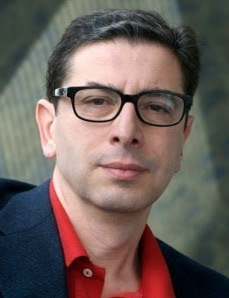
In Cineversary podcast episode #59, host Erik Martin celebrates the 60th birthday of one of the greatest foreign films ever made, , directed by Federico Fellini. His guest this month is Antonio Monda, known for directing and producing several films and being an associate professor at New York University's Tisch School of the Arts. Erik and Antonio will examine why 8½ is deserving of kudos six decades later, its important themes, what it reveals about Fellini, and more.
Antonio Monda


To listen to this episode, click here or click the "play" button on the embedded streaming player below. Or, you can stream, download, or subscribe to Cineversary wherever you get your podcasts, including Apple Podcasts, Spotify, Stitcher, Audible, Castbox, Google Podcasts, Pocket Casts, PodBean, RadioPublic, and Overcast.

Learn more about the Cineversary podcast at www.cineversary.com and email show comments or suggestions to cineversarypodcast@gmail.com.

Read more...

Love that Frances

Tuesday, May 2, 2023

Frances Ha, released in 2012 and directed by Noah Baumbach, who co-wrote the script with Greta Gerwig, the film's star, tells the story of Frances, a young woman who is striving to establish herself as a dancer in New York City while grappling with the challenges of post-college life. The movie has been acclaimed in particular for Gerwig’s distinctive performance and its clever writing, which accurately portrays the struggles that young adults face in their twenties, such as finding their place in the world, navigating career uncertainties, relationship issues, and searching for their identity and purpose. The movie’s unique visual style is also highly regarded, with its retro black-and-white cinematography and memorable soundtrack creating a nostalgic and dreamy atmosphere that highlights the beauty and vitality of New York City.

To listen to a recording of our CineVerse group discussion of Frances Ha, conducted last week, click here.

Many facets of Frances Ha continue to impress. Baumbach often uses montages comprised of quick shots that, when strung together, efficiently and effectively create a rich and colorful impression of what Frances is experiencing. Recall the montage of her spending Christmas week with her relatives back in Sacramento, which gives us succinct images and fragments of her time spent there. Or the Paris vignette, which presents slightly longer but mostly wordless cuts of Frances alone in the City of Lights.

Likewise, this is a film that greatly benefits from showing small, often random, details. In many films, bit characters, quick cultural references, and trivial verbal exchanges are disposable and relatively unimportant. But in Frances Ha, all the tiny aspects arguably matter as much as the narrative threads: things like Frances doing verbal double-takes (“Wait, what?”), the student unexplainedly crying outside her dorm room, and the generous benefactor older woman who suddenly makes out with a young adult – possibly a college student.

Additionally, this movie subverts our anticipations for what we expect will happen, making it fresh and unpredictable. There is no “meet cute” scene. Frances doesn’t put all her eggs in a “magical boyfriend” basket. Frances makes bad, often immature, decisions and makes others around her uncomfortable, which risks making this character less loveable and sympathetic. Her impulsive trip to Paris is not life-changing; conversely, her visit home to mom and dad in Sacramento isn’t a soul-crushing, socially alienating experience—we see Frances happy and engaged. Also, nothing is resolved by the ending: We’re not sure if Frances will pursue an affair with Benji, enjoy the same level of friendship with Sophie, or achieve success in her new career as a choreographer.

Baumbach and company explore many thought-provoking subjects here, making Frances Ha a deeper and more enriching experience than simply a quirky character study. Foremost, this is certainly a film about self-discovery, self-acceptance, and self-love. Many critics call Frances Ha a love story, but instead of being a romance about a woman and a man or a woman and a woman, this is a narrative about loving yourself.

Criterion Collection essayist Annie Baker wrote: “Frances Ha is a romance. You could even call it a romantic comedy. It’s not a boy-girl romance or a girl-girl romance but a romance between the title character and her capital-S Self: at the end of the film, after a series of obstacles, Frances finally gets to know, and fall in love with, Frances.”

The film also stresses that life is not like the movies. Continually, we are reminded of other cinematic works that the film Frances Ha riffs on – including French New Wave classics, romcoms, indie darlings, and Woody Allen movies. But time and again this film defies expectations and deviates from predictable paths. The title character often has terrible timing, as evidenced by the scene in which she listens to the voicemail of her friend who had tried to set her up in Paris, but too late. Frances does not end up with a solid love interest by the conclusion. We are not sure if she will foster a romantic relationship with Benji. She doesn’t pursue a lesbian relationship with Sophie, as some might have expected. And she doesn’t make it as a dancer; she must pivot and explore other talents, like choreography. In her essay, Baker asks: “Does growing up simply means letting go of the movie you thought your life would be?”

Quarter-life crises and contradictions are explored, too. Frances is a 27-year-old woman who experiences somewhat of an existential predicament and confronts a turning point in her life. She yearns for a romantic relationship but not at the expense of her deep friendship with Sophie. She needs steady employment to pay her bills but is willing to turn down opportunities if they aren’t aligned with her vision of being a dancer. She’s broke, yet she impulsively chooses to vacation in Paris for a weekend. She’s bubbly, charismatic, and charming yet can be insulting, selfishly opportunistic, naïve, and narcissistic.

Lastly, Frances Ha encourages us to live without undue assumptions or hopes. In the words of Deep Focus Review writer Brian Eggert: “(Frances) learns that the standard definitions of terms like success and failure come with expectations for life, and instead of living with expectations, Frances results to simply live.”

Similar works

  • Films of the French New Wave, including Truffaut’s The 400 Blows and Jules and Jim, and Cleo From 5 to 7
  • Eric Rohmer’s The Green Ray and A Tale of Winter
  • Lena Dunham’s Tiny Furniture and her HBO series Girls
  • Woody Allen’s Manhattan
  • Lady Bird
  • Reality Bites
  • Ghost World
  • Happy-Go-Lucky

Other films by Noah Baumbach

  • The Squid and the Whale
  • Margot at the Wedding
  • Greenberg
  • While We’re Young
  • Mistress America
  • A Marriage Story

Read more...

The last word on Safety Last!

Friday, April 28, 2023

There are at least 100 reasons—and now, 100 years—why Safety Last! remains an all-time classic silent comedy. Directed by Fred C. Newmeyer and Sam Taylor, produced by Hal Roach, and starring Harold Lloyd – one of the most popular and influential comedians of the silent film era – the film tells the story of a young man named Harold who moves to the city to make his fortune and impress his girlfriend. He takes a job in a department store and comes up with a scheme to climb the building to promote a publicity stunt for the store. However, his climb becomes increasingly perilous, leading to a series of hilarious and suspenseful set-pieces.

To hear a recording of our CineVerse group discussion of this film, conducted last year, click here; to listen to our current Cineversary podcast episode on Safety Last!, click here.

Safety Last! deserves to be celebrated a century not just because it’s a timeless laugher with a higher ratio of yuks per minute than any silent film or classic movie ever made. It also features the most instantly recognizable image in silent films: a bespectacled man hanging from a clock face 12 stories above the ground. The ubiquity and – no pun intended – the timelessness of this image underscores how important and beloved this film remains in pop culture. As proof of how pervasive this iconography is, recall the CoverGirl Outlast TV commercial from 10 years ago featuring actress Sophia Vergara hanging from a giant clock face that resembles the one in Safety Last!

The events and incredible stunts appear and feel real, largely because the movie was shot on location outdoors in Los Angeles using actual buildings and featuring non-acting crowds that arrived to watch. It also looks authentic because Harold Lloyd and a human fly stuntman actually scaled that building, with a circus performer used for the foot-hanging-from-a-rope scene. Lloyd and these performers took significant risks and jeopardized their lives to make the action appear as genuine as possible. Bear in mind that the filmmakers don’t use special effects like matte paintings or rear screen projection. Lloyd’s stunt work is all the more remarkable considering that he lost a thumb and index finger on one of his hands a few years earlier.

Additionally, the picture goes non-stop without any slowdown or weak scenes and is chock full of great jokes and gags—the finest and most extended of which is the scaling of the building—but there are gags within gags and climaxes within climaxes that layer the film with comedy and thrills. Amazingly, however, this 73-minute film only has about 10 scenes. The cinematography here is advanced for a 1923 comedy. Safety Last!, especially in its last half hour, benefits from the use of varying camera angles – including POV shots – and recurrent movement of the camera.

Despite its reputation as one of the greatest and funniest silent comedies, arguably, Safety Last is more entertaining and fulfilling as an action thriller than a comedy. Some film historians and scholars credit Safety Last as the progenitor of a particular genre. “The structure of Safety Last!...is instantly recognizable to the modern viewer,” wrote Criterion Collection essayist Ed Park. “It’s still the template for the contemporary action flick, in which the story sets up a spectacular chase or fight sequence at the end.”

Interestingly, although the film is remembered for its outdoor climbing sequences and close calls, the movie’s first half primarily takes place indoors while outside scenes dominate the second half.

Lloyd, unlike Charles Chaplin and Buster Keaton, benefited from an everyman look and quality as well as his rounded spectacles, which gave him a more intelligent yet fallible appearance. Lloyd is billed as “the boy,” but his employee card clearly lists him as “Harold Lloyd.” Chaplin had The Little Tramp, and Lloyd had this character, often referred to as “Glasses.” Lloyd said in interviews: “Someone with glasses is generally thought to be studious and an erudite person to a degree, a kind of person who doesn’t fight or engage in violence, but I did, so my glasses belied my appearance. The audience could put me in a situation with that in mind, but I could be just the opposite of what was supposed…In the pictures that I did, I could be an introvert, a little weakling, and another could be an extrovert, the sophisticate, the hypochondriac. They looked alike in appearance, with the glasses, which I guess you’d call a typical American boy.”

Like Keaton, Lloyd’s characters also used improvisational resourcefulness to ingeniously get out of jambs. For instance, in Safety Last, he and his roommate hang hilariously beneath coats on hooks from the landlady, he crawls beside a box to get away from the floorwalker, and when he falls he immediately does push-ups to save face.

Chaplin infused more sentimentality, emotionality, and pathos into his characters and situations and typically portrayed a more lonely and solitary figure in The Little Tramp. Keaton leaned more heavily on getting laughs and incorporating slapstick and stunts in his pictures and often maintained a stoic, deadpan expression. Like Keaton, Lloyd often employed impressive and inventive stunt work and physical comedy and embodied everyman characters at odds with an increasingly chaotic world; in fact, several of Keaton’s films echo shots, gags, and stories from Lloyd’s works and vice versa. However, Lloyd preferred to play more optimistic, enthusiastic, likable, all-American types who commonly struggle to keep pace with a hectic contemporary world.

Speculating on how Chaplin or Keaton might have approached this film, DVD Savant Glenn Erickson posited: “Charlie Chaplin would turn tail and run, or blunder into the problem wearing a blindfold and find out only later how much danger he was in. Keaton would envision the crisis as a series of fantastic mechanical challenges, relying on the 'harmonious chaos' of physical reality to save his skin. Harold's extended building climb is a crazy gauntlet of dangers and accidents within accidents…Harold may be crazy but he never gives up. He's got the right stuff to (literally) reach the top.”

Longtime collaborator Hal Roach remarked of his friend: “Harold Lloyd worked for me because he could play a comedian. He was not a comedian. He was the best actor I ever saw being a comedian . . . No one worked harder than he did.”

Fascinatingly, Lloyd made more films and money than Chaplin and Keaton combined in their prime years. Roger Ebert wrote: “I could understand why Lloyd outgrossed Chaplin and Keaton in the 1920s: Not because he was funnier or more poignant, but because he was merely mortal and their characters were from another plane of existence. Lloyd is a real man climbing a building; Keaton, as he stands just exactly where a building will not crush him, is an instrument of cosmic fate. And Chaplin is a visitor to our universe from the one that exists in his mind… Perhaps that is what makes him special: (Lloyd) is determined to be a great silent comedian, and succeeds by experimentation, courage, and will. His films are about his triumph over their making.”

Perhaps a case can be made that certain later films by Chaplin and Keaton, including The General, Steamboat Bill, Jr., The General, and Modern Times, were partially inspired by Safety Last! Possibly the ascent of the Empire State Building in King Kong 10 years later took a cue from this movie, as did the first Die Hard film, in which John McClane must traverse the various stories of a skyscraper in superhuman fashion. Mission Impossible: Ghost Protocol features Tom Cruise performing extraordinary stunts along the side of a Dubai skyscraper, and the documentary Man on Wire details a gripping tightrope walk between The Twin Towers – two movies that instantly bring Safety Last! to mind. And films that pay homage to Safety Last! include Stanley Kramer’s It’s a Mad Mad Mad Mad World, The Jackie Chan martial arts comedy Project A, the first Back to the Future film, The Hudsucker Proxy, and Martin Scorsese’s Hugo.

While it’s not a thematically rich film, subtexts are present in Safety Last! if you want to look for them. One is good and bad timing: The boy is pressured to arrive at work on time, and frequently it appears that time is not on his side, yet an actual clock face serves as a lifeline and he continually has the benefit of fortuitous timing. Ponder, as well, all the visual nods to time: the clock face, his body swinging like a pendulum, and the work time clock. From the start, we are told in an intertitle: “The boy was always early.”

The economic and practical challenges of surviving and coping in an increasingly industrialized metropolis are other takeaways. From public transportation that can’t accommodate him to throngs of angry customers seeking service in a busy department store, the boy is faced with one obstacle after another. In his review for Slant Magazine, Calum Marsh commented: “Lloyd’s clock-stopping stunt, like Chaplin’s gear-worming in Modern Times more than a decade later, is so bound up in the shared anxieties of modern living that it can only function as a necessary comic release. The skyscraper and the clock aren’t incidental: They are central symbols of a society just settling into an industrialized, urbanized modernity. Lloyd’s sight gag not only taps into the feelings of the period, but fully and succinctly articulates them…Miscommunication and physical blunders abound in a metropolis seemingly designed to not only accommodate, but actively encourage both, and if Lloyd happens to walk unknowingly into one disaster after another, it’s less the fault of his own clumsiness than the unsound landscape he’s resigned to traverse.”

Safety Last! further seems to preach the merits of adapting quickly to your environment, thinking fast on your feet, and following a “fake it ‘till you make it” philosophy. Despite the numerous impediments and setbacks he faces, the boy learns to rapidly and intrepidly use surrounding resources to his advantage – from passing cars that transport him to work to coat hooks that hide him from the landlord to scissors he employs Solomon-like to settle an argument between two customers to a flagpole that helps him escape an angry dog.

Perhaps the film’s greatest gift to viewers, besides generating copious quantities of laughs and gasps from viewers, is its significance as a cherished evergreen work from the silent filmmaking era. Containing the most iconic and remembered visual from any silent screen film – a man dangling from a gigantic timepiece – affords Safety Last! the stature of silent cinema exemplar and ambassador of a vintage form of filmmaking that deserves recognition and appreciation in the 21st century. What better way to introduce to younger generations the charms and craftsmanship imbued in pre-talking pictures than to perpetuate this imagery and recommend a viewing of Safety Last!? When your movie has the most instantly recognizable shot of a film made more than 100 years ago, it carries a special significance and has the power to keep the low-tech, practical effects magic of silent movies alive for new audiences.

In the same way that Gen Y and Z have embraced the retro charms and aural intimacy of vinyl, perhaps Safety Last! can increasingly be appreciated for its old-school thrills and prescient preoccupation with the hurried pace of the modern world made all the more chaotic and stressful by technology. And if its visuals can continue to be evoked and echoed in future years, we can hope that Safety Last!, whenever it is referenced in pop culture, serves as a crucial gateway drug to other pre-sound masterworks crafted by Chaplin, Keaton, Griffith, Lang, Murnau, Eisenstein, Dreyer, Lumière, von Sternberg, Vergov, and their ilk.

Read more...

Playing in the key of erotic

Wednesday, April 26, 2023

Released 30 years ago this May, The Piano, directed by Jane Campion, is set in the mid-19th century and follows the story of Ada McGrath (played by Holly Hunter), a mute woman who travels from Scotland to New Zealand with her young daughter (Anna Paquin) and her beloved piano. Ada is forced into an arranged marriage with a wealthy landowner named Alisdair Stewart (Sam Neill), and as she struggles to adapt to her new life, she forms a powerful connection with a local Maori man named George Baines (Harvey Keitel), who becomes obsessed with her piano.

The film was critically acclaimed upon its release, winning the Palme d'Or at the 1993 Cannes Film Festival, along with Academy Awards for Best Actress for Holly Hunter, Best Supporting Actress for Anna Paquin, and Best Original Screenplay for Jane Campion. The movie was also a commercial success, grossing over $40 million worldwide.

To listen to a recording of our CineVerse group discussion of this film, conducted last week, click here.

The Piano challenged conventional gender roles by offering a groundbreaking representation of female sexuality and desire. The movie's portrayal of women's experiences is complex and nuanced, paving the way for future filmmakers to explore these themes. Moreover, the stunning cinematography of New Zealand's landscapes and the haunting score by composer Michael Nyman are noteworthy elements that contributed to the film's success.

Campion fashions a fascinating female lead in Ada, who has remained mysteriously mute for much of her life. She is unable to fully express herself in a patriarchal society where females are suppressed and repressed. The message here could be that women often don’t have a voice of their own in a man’s world. This is a film about the power of sensory stimulation and the lack of it in some people: She cannot talk, but her other senses are highly acute. Her husband, meanwhile, is metaphorically deaf and blind to her needs and concerns.

Likewise, Baines is a remarkable character, especially in how he differs from all the other males in this story. He’s half settler/colonialist and half native, in a way. While he is not Maori (one of the indigenous Polynesian people of mainland New Zealand), he has “gone native” and assimilated into their culture, even adopting their facial markings. Because he’s more in tune with the land and sympathetic to the native peoples, he perhaps personifies the opposite of what Stewart represents—arrogance, hypocritical puritanism, and patriarchal righteousness—especially to Ada. He’s symbolically half and half, which insinuates that perhaps he isn’t fully any one thing. As Campion said in an interview: “The face decoration is a half-hearted thing; he doesn't have the full tattoo that they have. Perhaps the pursuit of this woman is the only thing that he's ever really given his hundred percent to.”

The piano itself stands as a powerful representational symbol in the film. It could signify Ada’s voice, her means of expression, her personal freedom, and her route to catharsis. Moreover, the piano is an externalized symbol of Ada’s corporeal self and how women don’t often have ownership over their own bodies. It’s adrift and abandoned on the shore when deemed as unnecessary by her husband; it’s sold and bartered for between two men almost like a prostitute-like exchange; and then it’s finally set free at the end. It also exemplifies Ada’s individuality and agency. Her husband prefers that she doesn’t have an identity of her own, and thus deprives her of the piano and, later, her full ability to play it.

Campion’s work often employs unspoken images to convey emotion and meaning. Consider how Ada runs the back of her hand across certain objects, textures, and surfaces, underscoring the power of touch and sensory stimuli. Recall the overhead shot that shows her progress on the boat, without moving the camera. There’s the scene on the beach where three characters each choose a different path: Ada walks straight on, Flora proceeds in a dancing rhythm, and George takes a curving route; eventually, all tracks merge. Additionally, ponder the juxtaposition of the piano alone in the jungle, suggesting civility vs. savagery, decorum and expected etiquette vs. animalistic urges, and the European settlers vs. the indigenous Maori people.

Roger Ebert was perceptive to the film’s nonverbal, emotional design, writing: “It is one of those rare movies that is not just about a story, or some characters, but about a whole universe of feeling - of how people can be shut off from each other, lonely and afraid, about how help can come from unexpected sources, and about how you'll never know if you never ask… There is a moment in the movie that is among the most erotic I have ever seen…as (Ada) plays and (George) peers under the piano, he sees a tiny patch of her skin revealed through a tear in her stocking. And he touches that little pink oversight with trembling reverence.”

The Piano is also extraordinary as a cinematic text that differs from other romantic and erotic films and works of literature. As in many romance narratives, this involves a love triangle of sorts, in which two men desire the love of a secretive woman who only learns to love the man who shows her true affection and respect. However, there are long, lingering, relatively still scenes and significant stretches with no talking. The Piano communicates information about the characters and situations via implied content and suggestion, often more than through dialogue or direct exposition. The filmmakers build up erotic tension to almost unbearable levels, especially in the scenes between Ada and George. Unlike other romantic works, it doesn’t try to objectify Ada’s physical attributes nor titillate the audience with her physical charms. The woman isn’t necessarily shown from a man’s point of view as an object of desire. In fact, it often shows eroticism from a woman’s point of view; consider how we see George (Harvey Keitel) fully nude before we see Ada naked. And female characters in The Piano often do “unladylike” things, like vomit, squat down to urinate, and simulate the sexual act with trees.

The finale of The Piano continues to intrigue. While it appears to be a happy ending in which Ada and Baines have made a new life together in another part of New Zealand, she can play her beloved instrument again thanks to a prosthetic appendage, and she is learning to speak again, she admits to occasionally dreaming of still being tied to her piano resting on the ocean floor. One reading is that, earlier in the boat with Baines, she places her foot within the circle of rope tied to the overboard piano, which suggests that she intentionally chooses to be thrust into the water in a suicide attempt. Or perhaps Ada wasn’t so much attempting to end her life as to demonstrate agency and a desire to remain within the more comfortable silence she took refuge in for so long. Recall the Thomas Hood poem she quotes: “There is a silence where hath been no sound. There is a silence where no sound may be in the cold grave under the deep deep sea.” The epilogue of The Piano can feel unsettling, making us wonder if she still has morbid thoughts, nihilistic tendencies, or regrets about choosing to survive and begin anew with Baines. On the other hand, this ending hints that, while she is happier and more expressive with Baines, there’s a mysterious part of her psyche that yearns for solitude and a life removed from the world of men and their expectations of women.

Criterion Collection essayist Carmen Gray wrote: “Letting Ada have it both ways is perhaps, on the part of Campion, the ultimate rebellious license. Ada has given the grand gothic narrative the slip in its velocity toward full operatic catastrophe, for a more unassuming (and antipodean) nonconformity. She is allowed to keep her man while also retaining an unconquered mind full of roaming possibility.”

Similar works

  • The French folktale Bluebeard, in which a brutish nobleman murders his wives
  • Gothic romance novels by Charlotte and Emily Bronte and Jane Austen like Wuthering Heights, Jane Eyre, and Mansfield Park
  • The eroticism of D.H. Lawrence’s Lady Chatterley’s Lover
  • Jane Mandeer’s novel The Story of a New Zealand River
  • Anna Karenina
  • The African Queen
  • The Painted Veil
  • In the Realm of the Senses
  • Firelight
  • The Portrait of a Lady
  • Sex and Lucia

Other films by Jane Campion

  • Sweetie
  • The Portrait of a Lady
  • In the Cut
  • Bright Star
  • 8
  • Power of the Dog

Read more...

Neighbors from hell

Tuesday, April 18, 2023

Rosemary's Baby, directed by Roman Polanski and based on the novel by Ira Levin, is an unforgettable psychological horror movie that follows the story of a young woman named Rosemary who moves into a new apartment with her husband and becomes pregnant. However, as her pregnancy progresses, she begins to suspect that something is not quite right with her unborn child and that her neighbors are involved in a dark conspiracy.

When the film was released in 1968, it was a commercial and critical triumph and is now regarded as a classic in the horror genre. The picture’s significance lies in the way it shifted the genre's focus from traditional supernatural monsters to more psychological fears, exploring themes such as paranoia, loss of control, and isolation, which resonated with the audience, especially women. Today, it's especially praised for its feminist themes and remains significant for marking a turning point in Polanski's career, as it was his first American film, which helped establish him as a prominent director in Hollywood. Rosemary's Baby also paved the way for a new wave of serious adult horror cinema, including The Exorcist, The Omen, and The Texas Chain Saw Massacre in the 1970s.

To listen to a recording of our CineVerse group discussion of this movie, conducted last week, click here.

What makes this film so frightening and disturbing? Rosemary’s Baby preys upon our fears of being alienated, conspired against, exploited, outnumbered, and ignorant about the dangers around us. The victim is an innocent, decreasingly naïve, and expectant mother whose unborn child is also at risk. This narrative depicts a horrifying world where a modern perverse subculture could be congregating right next door, and in broad daylight. What’s more, the film contains several unnervingly eerie dream sequences that have spurred innumerable nightmares for moviegoers, including a satanic rape scene that’s unsettling enough in its suggestive imagery without being tastelessly graphic.

Rosemary’s Baby benefits from proper character development, a story that builds patiently and reliably, realistic dialogue, and plausible personality behaviors. Moreover, this work is artfully directed and carefully crafted. Consider the scene where a distraught Rosemary walks aimlessly into oncoming car traffic, which was shot personally by Polanski using a handheld camera to capture the spontaneity and real-life danger of this event. Also, ponder the frequent use of a mobile camera as the lens increasingly tracks along queasily with Rosemary as she begins to uncover the truth; this choice lends the film a nervous “you-are-there” verisimilitude.

Rosemary’s Baby uses sound inventively, too, as proven by often disquietingly low-volume scenes in which we, like our heroine, must listen carefully for audio clues near her environment, such as a newborn’s cry or the voices behind the wall.

Much is also accomplished via ideal casting. John Cassavetes, underrated as an actor plays Rosemary’s husband, a conniving, down-on-his-luck thespian. Ruth Gordon and Sidney Blackmer shine as Rosemary’s creepy next-door neighbors, and Ralph Bellamy and Charles Grodin are equally convincing as her physicians.

The movie can perhaps be viewed as an outmoded artifact of its time—the late sixties, when the youth counterculture was robust and the motto was “Don’t trust anyone over 30.” But the concepts and themes explored in Rosemary’s Baby are ageless. This film is fueled by numerous ideas and messages, including isolation, mistrust, gaslighting, loss of agency, a woman’s right to her body, patriarchal subjugation, prevalent and persistent sexism in society, the presence of evil where it’s least expected—your own home—and the discomforts and anxieties that can accompany being pregnant.

Some argue that the conclusion is anti-climactic and disappointing. Others insist that the dénouement is chillingly effective. (SPOILERS AHEAD) On one hand, it’s a bit hard to swallow that Rosemary would ostensibly agree to nurture and mother her devilish offspring, considering how enraged she must be at the conspirators and the fact that she’s a Catholic. Yet it also makes sense that her maternal instincts would inevitably kick in and that she would want to protect her son from bad influences him. However, if it’s assumed that Rosemary acquiesces and enlists as the primary caregiver, it’s also doubtful that she will be able to thwart the designs of the coven or indefinitely resist the group’s persuasion to join them in their rituals and lifestyle. That reading layers an extra dark pessimism onto the ending that can be interpreted as, ultimately, evil conquers all.

For those unsatisfied by the finish, remember that it’s not as important that we got to this point: the unsettling journey along the way and the erosion of your comfort and confidence as a viewer is what truly matters.

Similar works

  • Hitchcock’s Suspicion, in which a wife begins to suspect the worst about her husband
  • The Omen, in which a couple’s adopted child may or may not be the spawn of Satan, and the parent cannot bring himself to kill the child.
  • Polanski’s earlier Repuslion, wherein a young woman gradually descends into a sexually-distorted paranoia and debilitating madness, and the director’s subsequent The Tenant, which tells the story of an increasingly paranoid and persecuted man renting an apartment in a building occupied by weird denizens.
  • House of the Devil
  • Hereditary
  • Gaslight
  • Lyle
  • The Witch
  • Suspiria

Read more...

Cineversary podcast honors 100th birthday of Safety Last with Richard Correll and Suzanne Lloyd

Tuesday, April 11, 2023

Richard Correll and Suzanne Lloyd
In Cineversary podcast episode #58, host Erik Martin honors the 100th birthday of the timeless silent comedy Safety Last, starring Harold Lloyd, by speaking with Richard Correll, chief archivist for the Lloyd Trust, and Suzanne Lloyd, Harold’s granddaughter and president of Harold Lloyd Entertainment. Erik and his guests assess this film from a top-floor view and examine why Safety Last is worthy of celebration a century later, the ways it has stood the test of time, its influence on pop culture, and more.

To listen to this episode, click here or click the "play" button on the embedded streaming player below. Or, you can stream, download, or subscribe to Cineversary wherever you get your podcasts, including Apple Podcasts, Spotify, Stitcher, Audible, Castbox, Google Podcasts, Pocket Casts, PodBean, RadioPublic, and Overcast.

Learn more about the Cineversary podcast at Cineversary.com and email show comments or suggestions to cineversarypodcast@gmail.com.

Read more...

ER meets Dante's Inferno

Monday, April 10, 2023

Released in 2005, long before Obamacare, The Death of Mr. Lazarescu is a Romanian drama, helmed by Cristi Puiu, that was representational of the Romanian New Wave, a film movement that emerged in the mid-2000s and gained international recognition for its socially and politically engaged cinema. The film dramatizes the story of a retired engineer named Mr. Lazarescu, played by Ion Fiscuteanu, who falls ill and spends a night being transported between different hospitals in Bucharest, Romania. We journey with Mr. Lazarescu's journey as he encounters a series of bureaucratic obstacles, apathetic medical staff, and overcrowded hospital wards, all of which make it increasingly difficult for him to receive the medical attention he needs.

Click here to listen to a recording of our CineVerse discussion of this film, conducted last week.

Shot in a documentary-like style, with long takes and a minimalistic approach to dialogue, which creates a sense of authenticity and immediacy, the film stands as a critique of Romania's healthcare system and the post-communist social reality of the country. It garnered significant critical acclaim and won several awards, including the Un Certain Regard prize at the 2005 Cannes Film Festival.

How does this picture stand out and make an impression? It looks and feels like a documentary, as if the filmmakers were simply following this patient along his futile journey and spontaneously recording what they observed with no interference. But the truth is that The Death of Mr. Lazarescu is a carefully scripted narrative fictional movie with professional actors playing these roles, including the health care providers.

That knowledge is remarkable when you ponder how realistic the shots and performances are and the extended length of many unbroken shots. It’s also admirable considering how detached the filmmaking style is and how the filmmakers allow the narrative to unfold naturally, without sensationalism.

In his review, Roger Ebert wrote: “It lives entirely in the moment, seeing what happens as it happens, drawing no conclusions, making no speeches, creating no artificial dramatic conflicts, just showing people living one moment after another, as they must.”

Even though this is not a documentary, it’s loosely based on the true story of a man rejected by five different Bucharest hospitals in 1997 who was abandoned by the paramedics to die on the street; additionally, director Cristi Puiu had suffered from hypochondria years before and attempted to receive medical care, his experiences around which helped fuel this production.

While our attention is focused on Dante’s plight and deteriorating condition, the central figure in this story is arguably the EMT Mioara, whom we closely follow in her quest to get Dante the attention and treatment he needs.

The movie is a difficult watch for many, as it tries to play both sides of a delicate coin: tragedy and comedy. The Death of Mr. Lazarescu isn’t replete with outright jokes, witticisms, one-liners, or slapstick, but it is infused with a dry humor that can make the viewer feel bad for laughing at Dante’s increasingly frustrating predicaments and the inhumane treatment rendered by so-called caregivers. To some, the movie can feel mean-spirited, exaggerated, and implausible, as if the filmmakers are piling on and continuing to kick Dante while he’s down just to make an ironic point about the failures of the public health system. Others believe the tonal duality and morbid humor are expertly balanced.

Matthew Mosley with Collider wrote: “Its use of comedy only accentuates the cruelty Lăzărescu finds himself in, making an already tragic story into one of the most painful films in recent years. But it also serves as a necessary break from the injustice that swamps the film, with its careful placement ensuring the anguish never becomes too overwhelming, while still leaving plenty of room for Puiu’s searing critique of the industry… The line about his drinking habits recurs with such frequency it’s almost impossible not to laugh, and when combined with every obstacle under the sun blocking his path to salvation it’s as though the film is sucking away all your tears and common decency with every second until laughter is the only possible response you have left.”

Murphy’s Law, in which bad luck accumulates in a cascading, cosmically unfair fashion, is a prominent theme. Dante seems cursed and damnably destined to die after being refused care by one health practitioner after another, whether that’s due to their insensitivity, bias, or fatigue or because of coinciding misfortune like the bus accident that drains the health care resources of the surrounding community.

Another message espoused by The Death of Mr. Lazarescu is the value of the good Samaritan, and how we are our brothers’ keepers. Mioara the paramedic refuses to allow Dante to slip through the cracks and be ignored, persisting in shuttling him to four different hospitals and ultimately refusing to abandon him until he’s cared for. While she’s not perfect (consider the scene in the back of the ambulance where Dante complains of thirst while she asks the driver for a beverage, which she proceeds to drink while Dante suffers), Mioara proves to be the patient’s guardian angel of sorts, increasingly committed to ensuring that he is properly cared for. Perhaps being closer in age to Mr. Lazarescu reminds her of her encroaching mortality, which triggers a quietly empathetic drive that stands in stark contrast to the callous and cruel attitudes of the younger doctors and nurses who speak condescendingly and demonstrate no compassion for this terribly ill man.

The movie also explores the dangers of bureaucracy and overtaxing crucial public resources—in this case, the health care system, which this film savagely indicts. The Death of Mr. Lazarescu is a searing critique of the operational paradigm of institutions that practice Western medicine and what happens when the public safety net is pushed to its limits. This criticism here isn’t necessarily limited to health care providers and facilities in Romania— the finger is pointed at any country where many patients receive insensitive and deficient care from unfeeling practitioners who selfishly ignore their Hippocratic oath.

Lastly, Puiu and company are reminding us not to judge a book by its cover. Every healthcare professional who encounters Dante either assumes his condition is caused by intoxication or that he’s not worthy of their time and attention away from other patients because he’s drunk. They continually dehumanize the man and rob him of any dignity with their sneering attitudes and outspoken disdain.

Similar works

  • Dante’s Inferno
  • The TV show ER
  • Frederick Wiseman’s observational films and documentaries that explore American institutions, including The Cool World, Titcut Follies, City Hall, La Danse, and Ex Libris: The New York Public Library
  • Dry humor dramedies like The Lobster and The Killing of a Sacred Deer by Yorgos Lanthimos
  • L’Enfant and The Son, two works by the Dardenne brothers
  • 4 Months, 3 Weeks, and 2 Days
  • Bringing out the Dead
  • The Waiting Room

Other films by Cristi Puiu

  • Stuff and Dough
  • Aurora
  • Bridges of Sarajevo
  • Sieranevada
  • Malmkrog

Read more...

  © Blogger template Cumulus by Ourblogtemplates.com 2008

Back to TOP